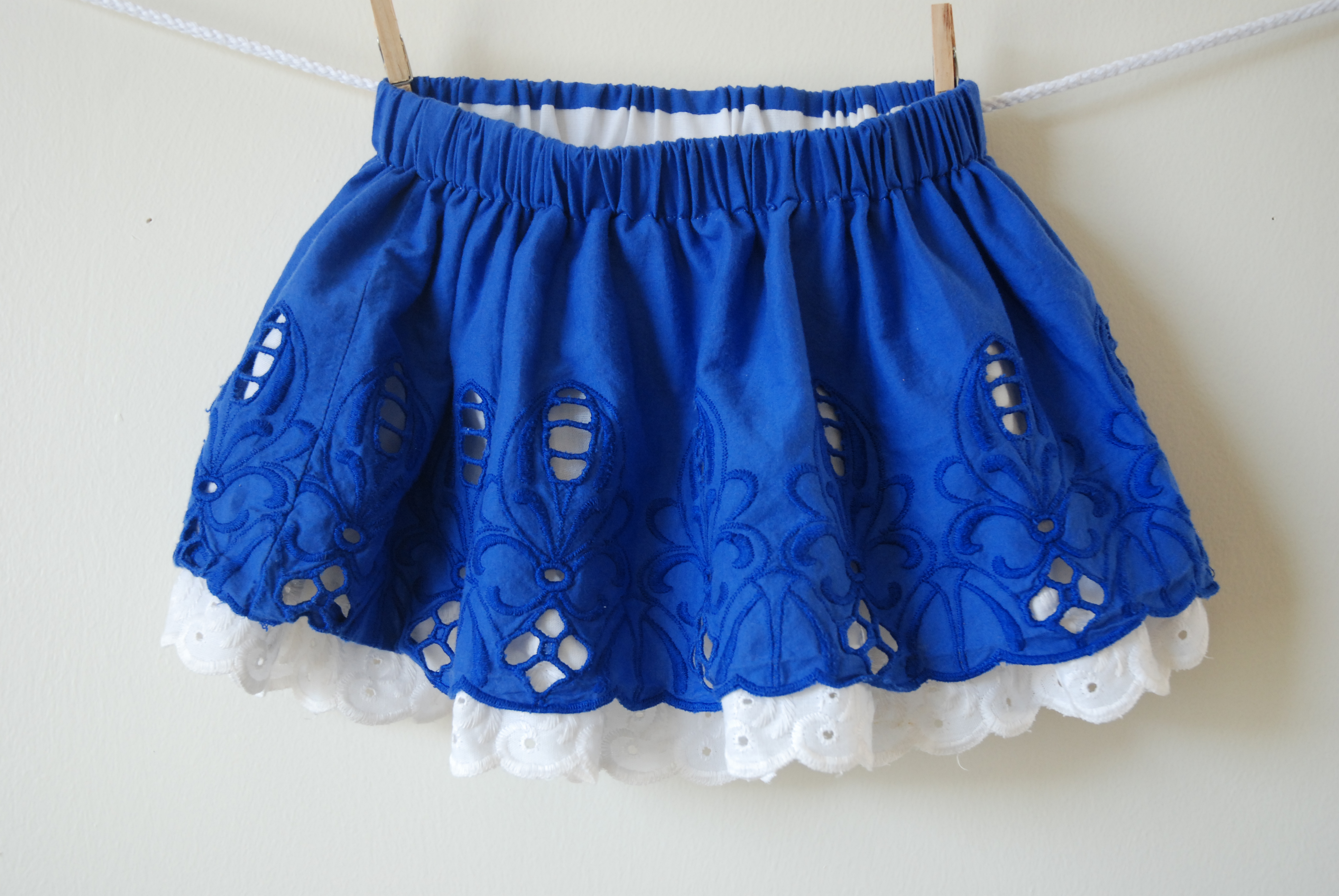
 I’m so excited to share this skirt with you! It’s kind of a Sew & Tell, Tutorial and Repurposed Project all in one! I wanted to do an add-on to the Simple Skirt Tutorial to show you an easy way to add another layer and get a fun new look. I also had some fabric laying around that needed repurposing, and this was the perfect way to use it.
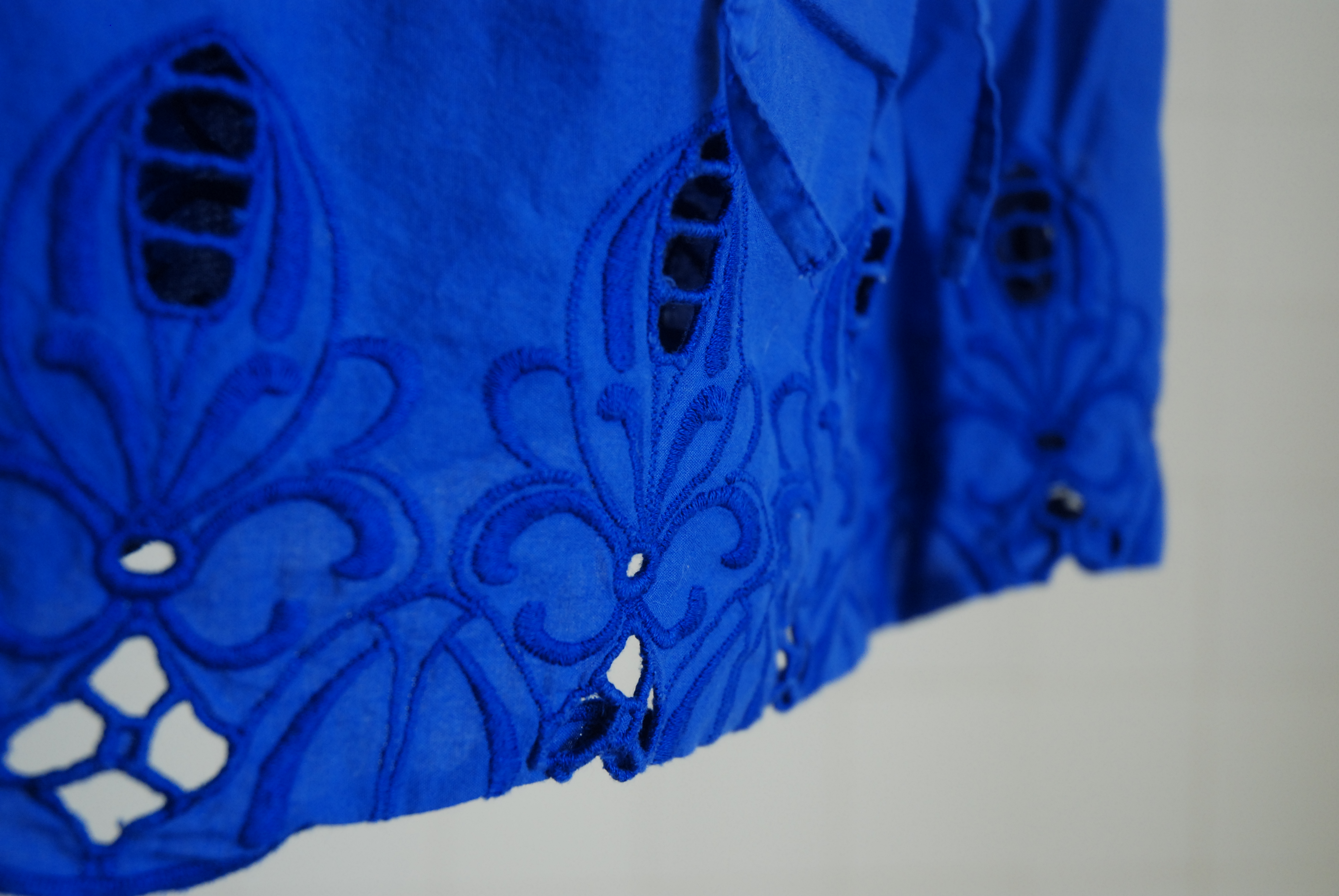
 I started off with a tank top that had a stain smack in the middle of it. I was ready to let go of it as a tank top, but I loved the unique scalloped eyelet bottom.
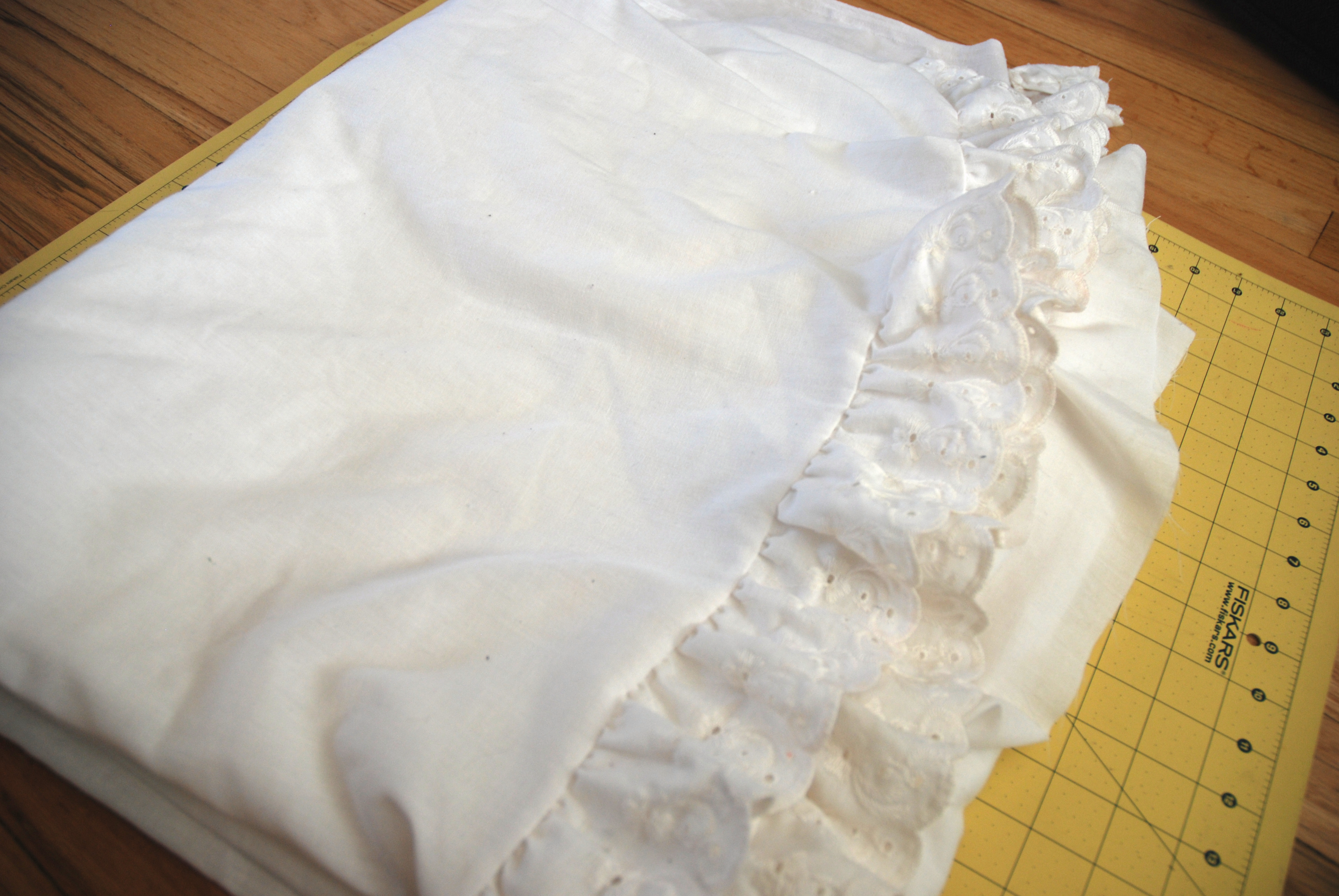
 I thought I’d be able to use the material for a skirt for Yuki. Since it has large eyelets I knew I needed another layer underneath so it would be appropriately modest for my little one 🙂 Luckily I had this old bed sheet I had bought at a thrift store for about a dollar. I’ve used it to make lining for a pillow case, a mock-up for a jacket, and now this skirt and there’s still tons of fabric left. What a great deal! The sheet had a ruffle of eyelet fabric on the bottom that I thought might add some volume and why not add small scalloped eyelet to big scalloped eyelet? Wouldn’t that be fun??

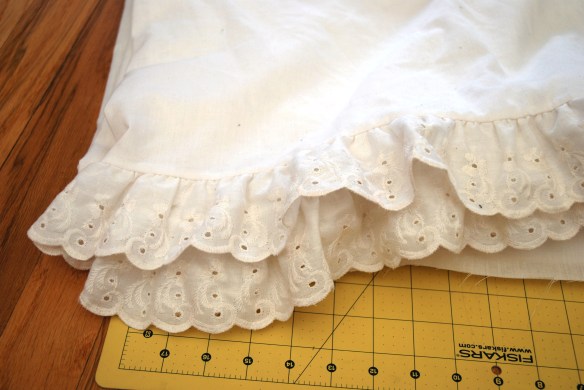 So let’s make the skirt!! Like I said, this is variation of the original Simple Skirt Tutorial. The first tutorial includes more information about materials, measurements, and hemming, which is NOT included in this tutorial, so please refer back to that one if you have any questions.
Materials:
Fabric – You can use two different fabrics, or the same fabric for both layers. You can also repurpose something or use new material. It’s up to you!
Elastic – I used 1″ wide elastic and you’ll need it to be as long as the waist measurement plus 1 inch. If the kid’s (or adult’s) waist measurement is 17 inches, cut 18 inches.
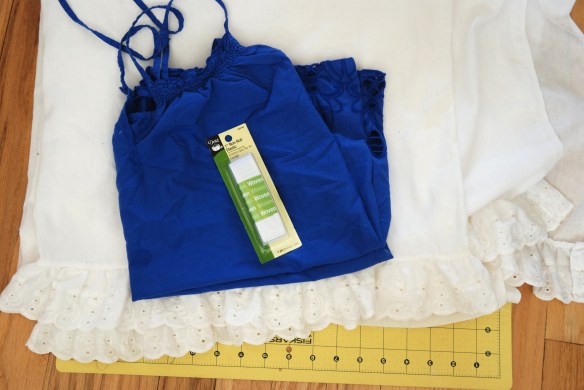 You’ll also need the essentials – sewing machine, iron, thread, scissors, pins, and though it’s optional, a safety pin is super handy.
Let’s get started.
First (and always), wash, dry and iron your fabric. Then it’s time to cut it. For more details about measurements, see the Simple Skirt Tutorial. For this project, I wanted to keep the width of the skirt fabric the same as the tank top so that I wouldn’t lose any of the eyelet and I wouldn’t have to re-sew up the sides (basically, I didn’t cut the tank top yet). For the bottom layer of the skirt (white) I folded it in half and measured the same width as the top (blue) material plus a 1/4 inch for seam allowance.
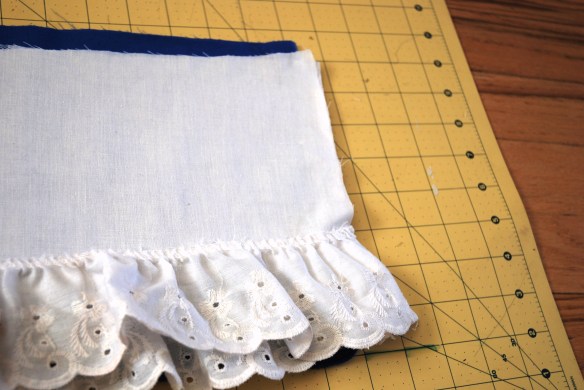 For the length, I measured the bottom layer first. I cut it at exactly the length I wanted the finished skirt to be. The great thing about using these fabrics is that the bottoms were done and required no hemming! And yes, you do need a bit of room for seam allowance on top, but you’ll see later why I didn’t add any length to the bottom layer.
For the top layer (blue fabric) I laid it on top of the white fabric at the length I wanted it to be. Then I added about 1/2 an inch to the top and cut it.
If you are using fabric that needs to be hemmed at the bottom, be sure to add another inch.
Here is my cut fabric:
 Make sure the white fabric is folded in half with right sides together, pin and sew up the short end.
If you are using new fabric that is unfinished on all 4 sides, you will need to sew up both short ends on both fabrics.
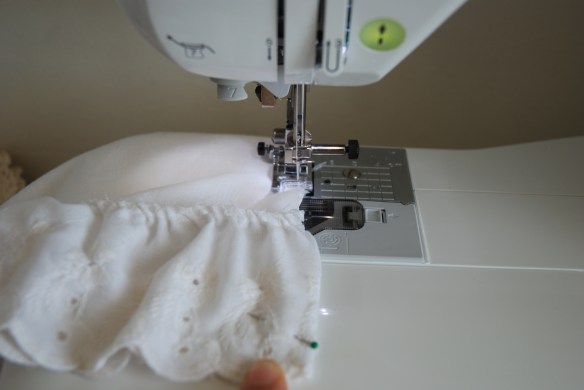 Turn your fabric right side out and press the seam. Now you should have two tubes of fabric that are the same width.
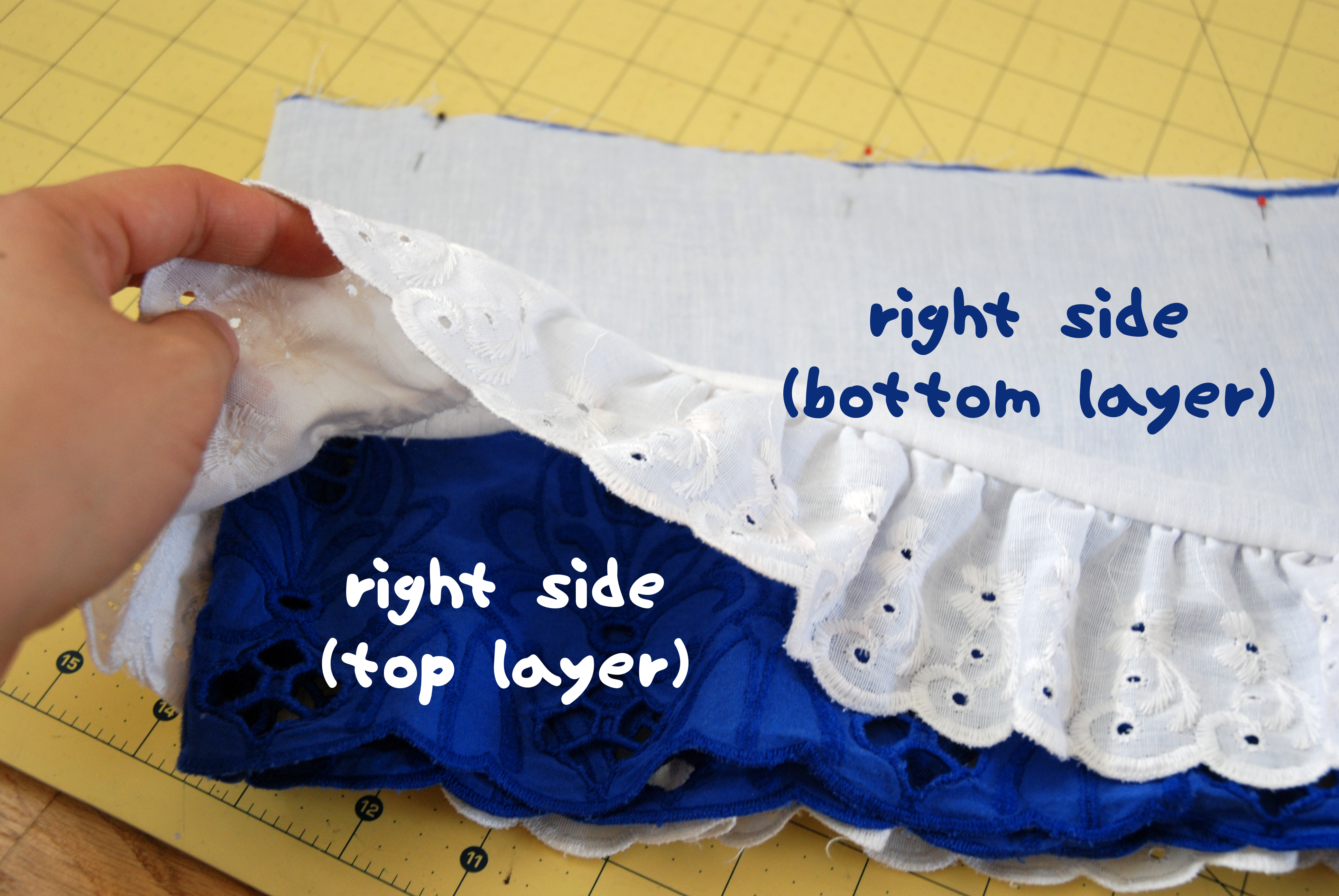
 Now, with both fabrics right side facing out, you’re going to insert the top layer inside the bottom layer. So in this case, the blue tube was inside the white tube. Line them up on the top and pin all the way around.
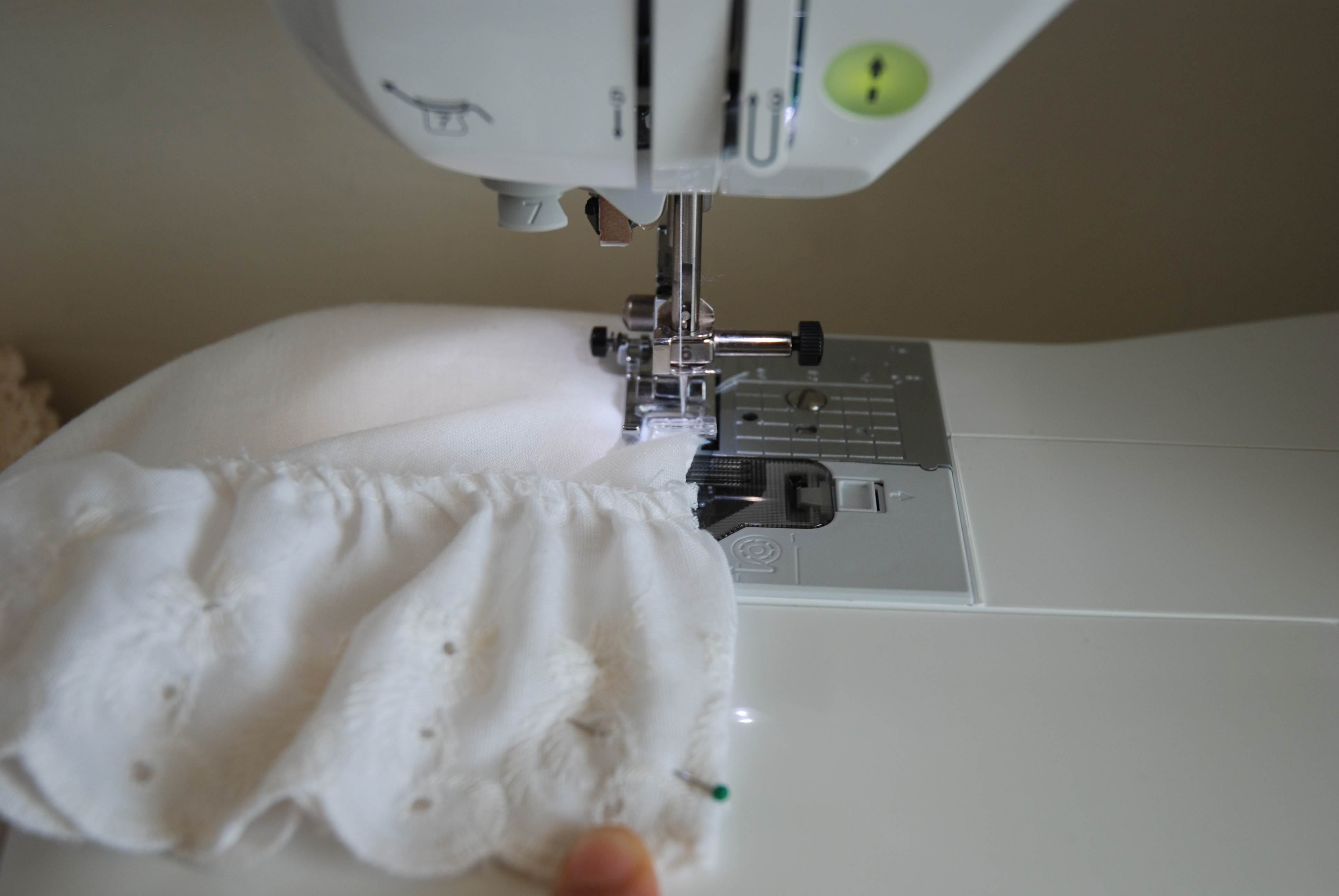
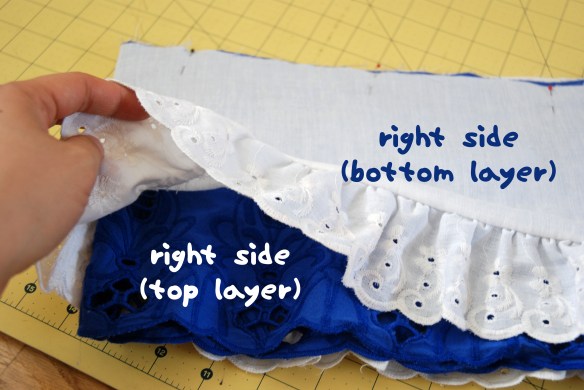 Sew along the top edge around the entire waist, using a 1/4 seam allowance, back stitching at the beginning and end.
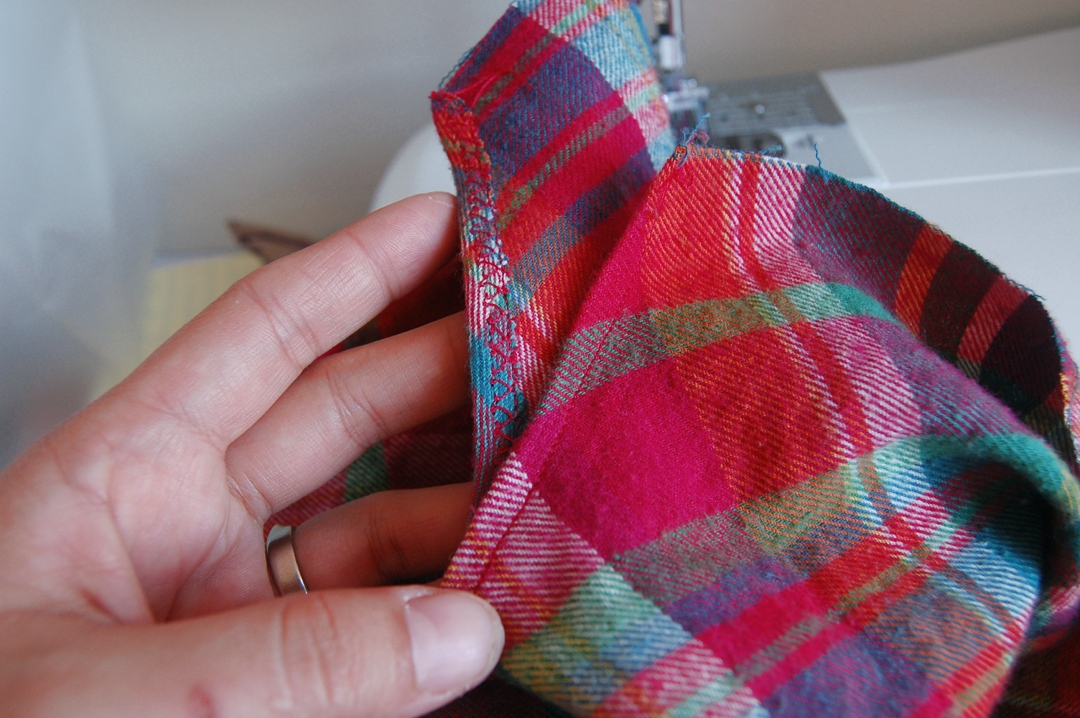
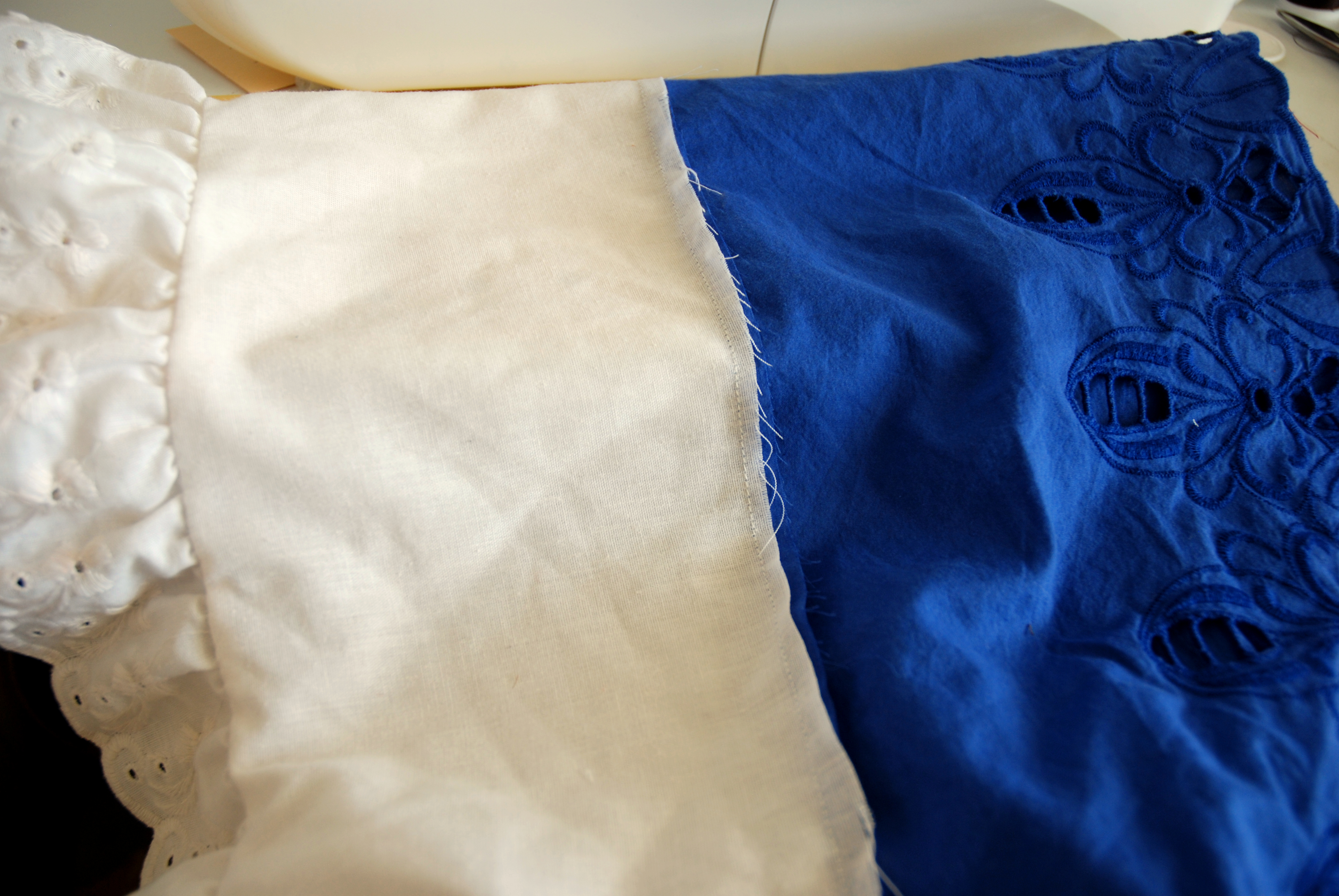
 When you are done and you pull the material out from inside, it should look like this. On the left is the bottom layer, right side up, and on the right is the top layer, wrong side up.
 Flip the top layer down over the bottom layer. I did not want any of the white fabric to show at the top of the skirt, so instead of pressing it open right on the seam, I made the fold with about a 1/4 inch of the blue fabric on the inside of the skirt. This is why I didn’t add any seam allowance to the bottom layer fabric when cutting the length, but I added an extra 1/2 inch to the top layer – a 1/4 inch for seam allowance and another 1/4 inch to fold over to the inside of the skirt. Does this make sense??
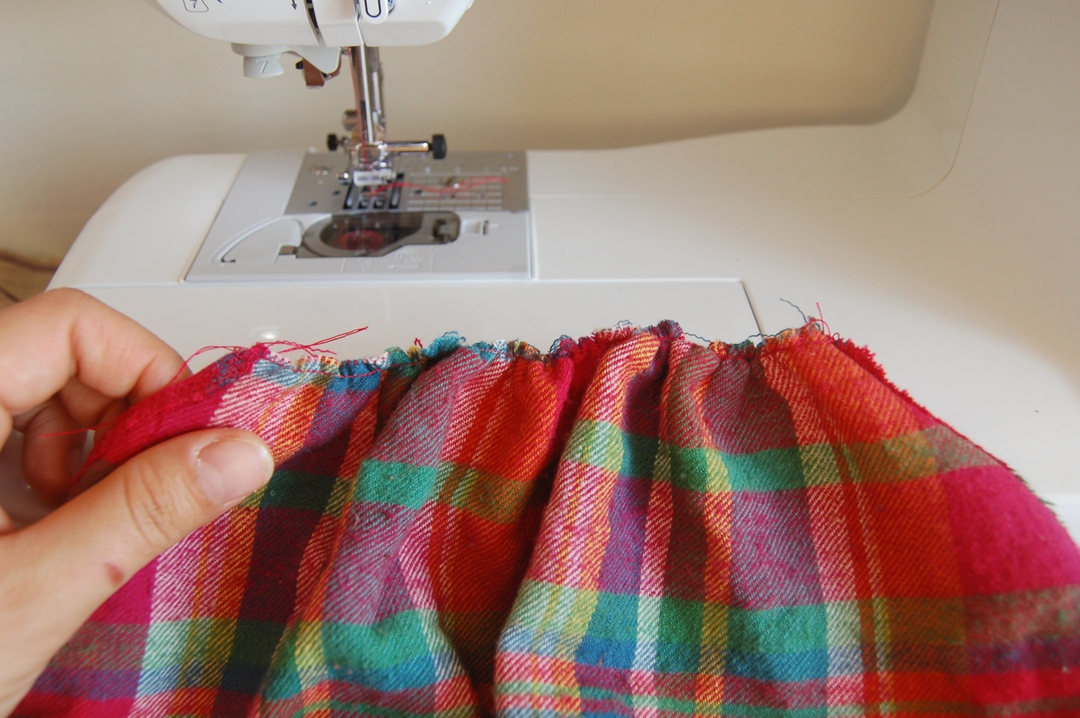
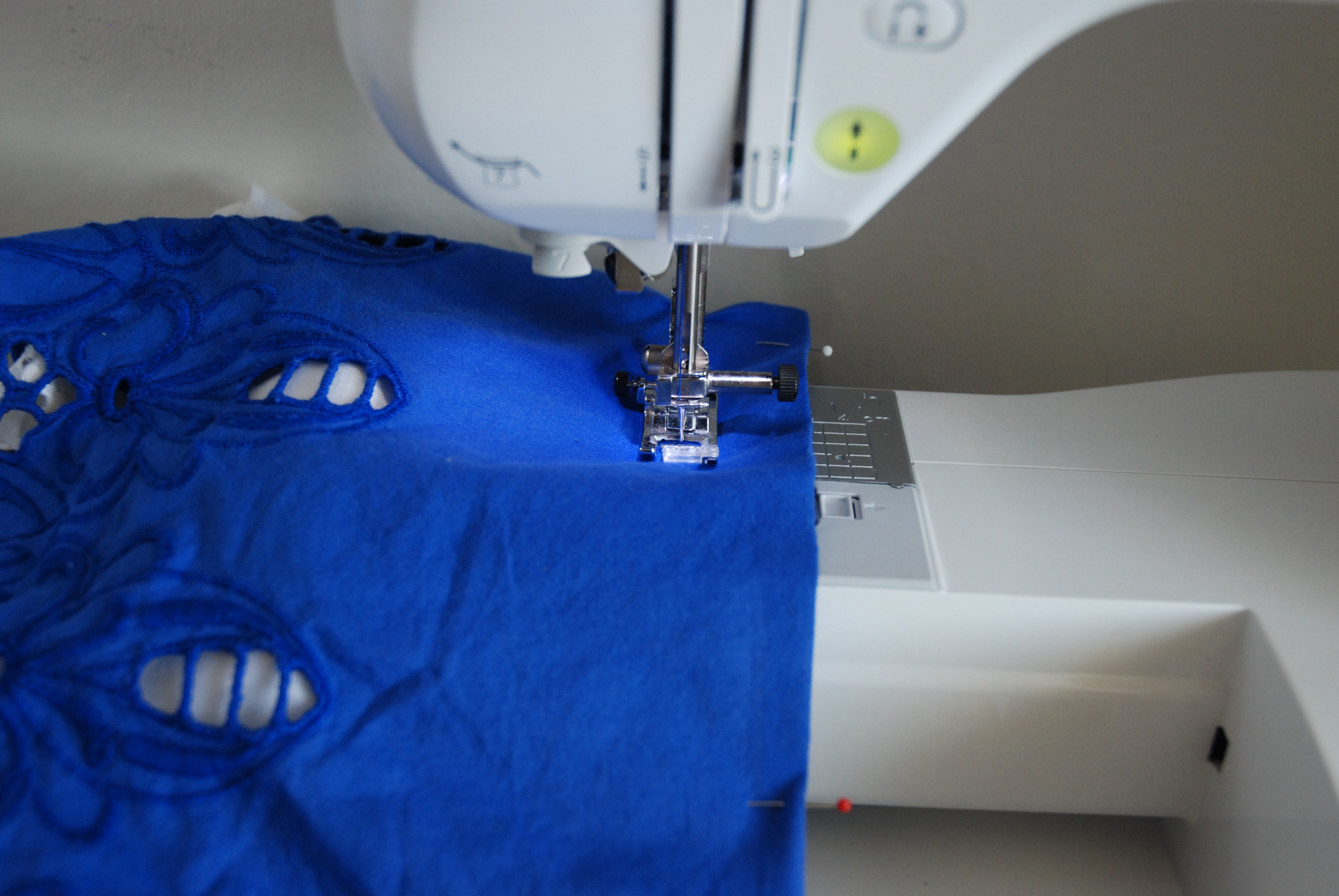
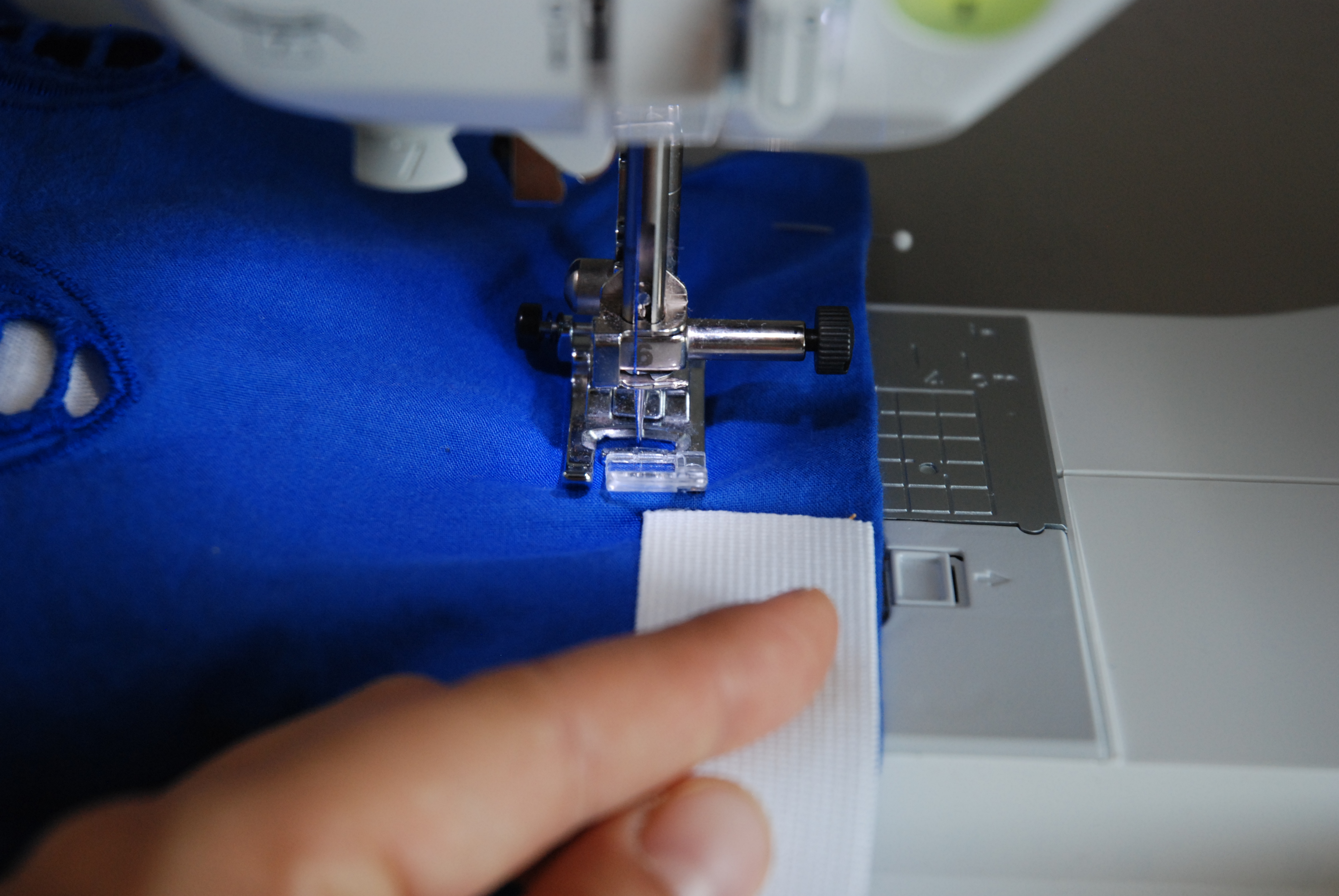
 Press all the way around and pin. Now we’re going to make the casing for the elastic. Leaving about a 2 inch opening, sew all the way around the waistline, making sure your casing is wide enough for your elastic.

 In the picture above, I was using the elastic to make sure I was sewing my casing wide enough. After you’re done, you should have a 2 inch gap that is open for you to slide the elastic through.

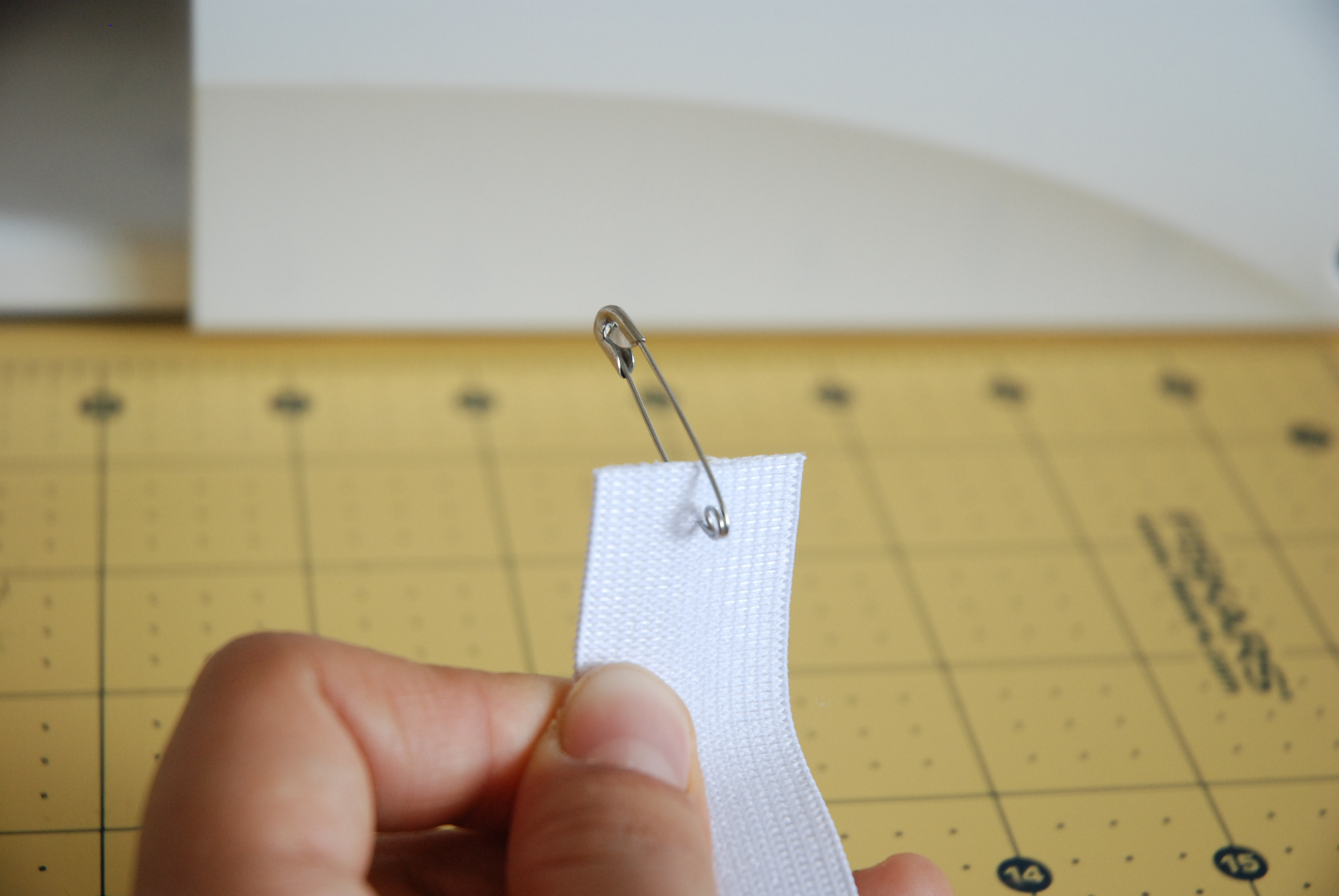
If you have a safety pin, insert it into one end of the elastic. This will help you guide the elastic through the casing.

Pull apart the two layers to find the opening for the elastic. Using the safety pin, pull the elastic through the casing.
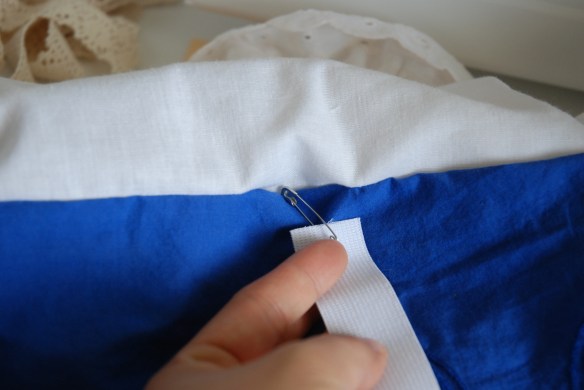
Pull the elastic all the way around the waist and back out through the opening. Make sure the elastic hasn’t twisted at all and is laying flat the entire way around. Overlap the elastic by about an inch and sew them together.


Finish sewing up the casing and you’re done!!

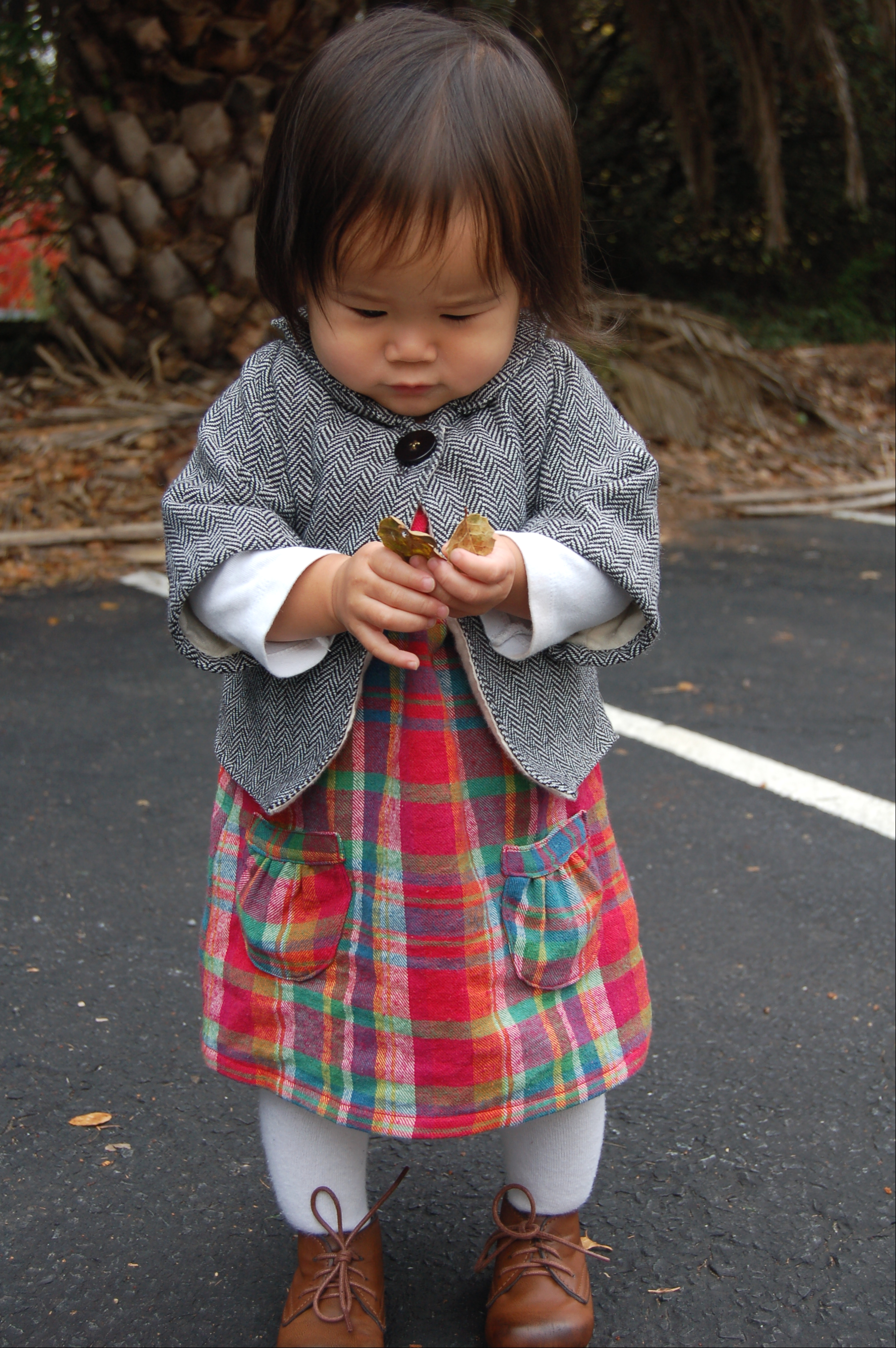
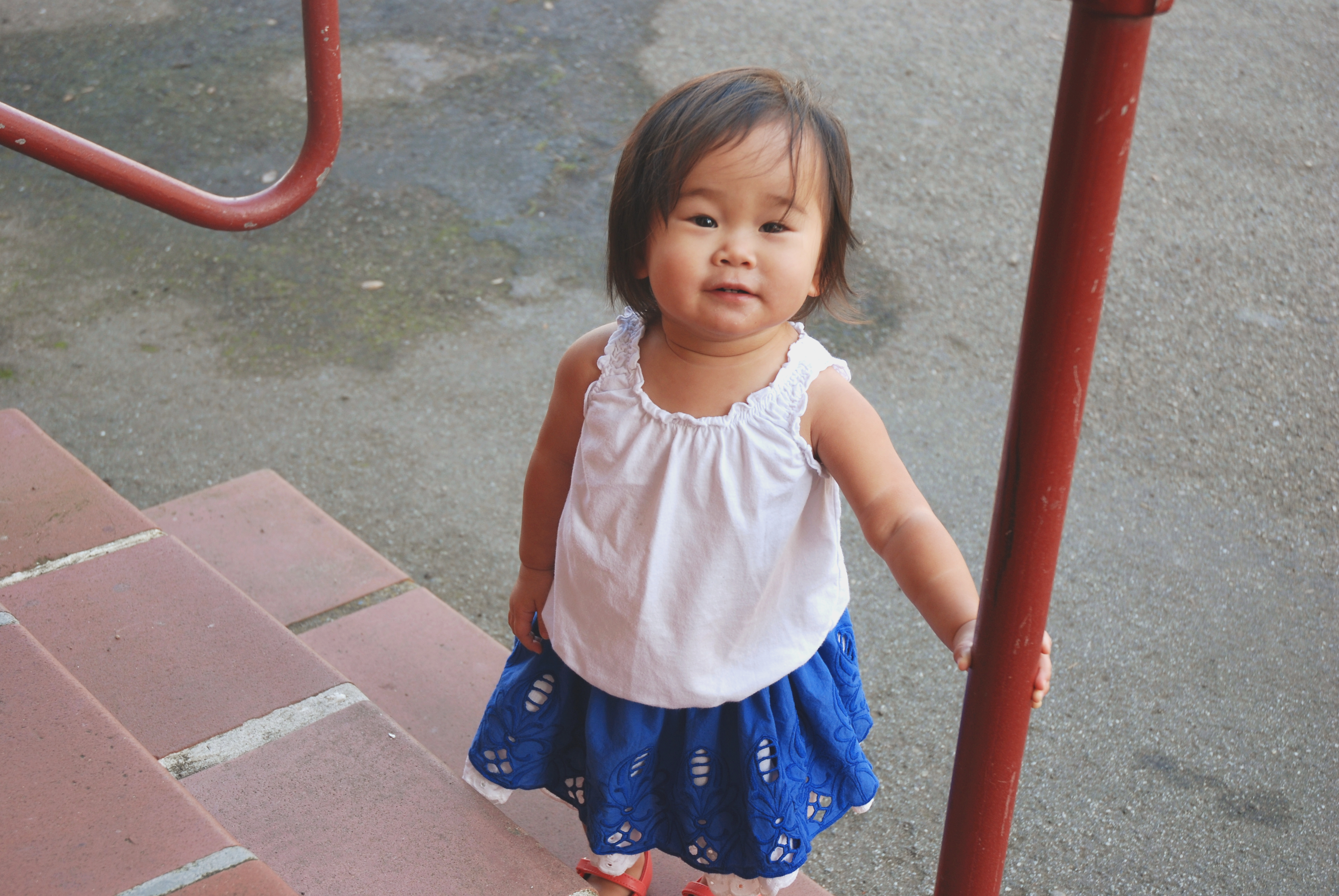
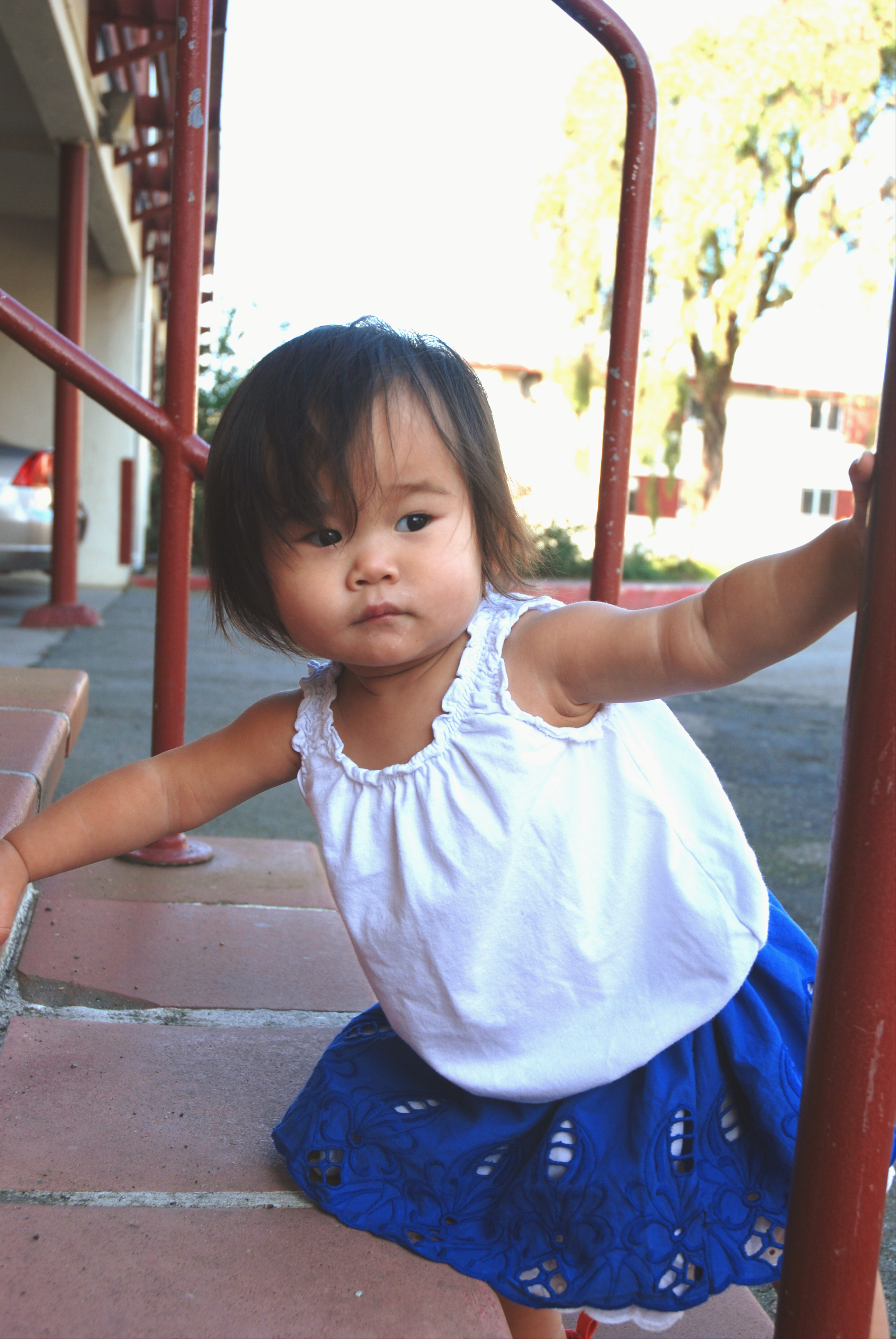
 Now, I don’t know if you noticed this, but in the original simple skirt tutorial, I said you needed about double the waist measurement for the width of the fabric. So for a 17 inch waist, you need 34 inches of fabric. For this skirt, I didn’t want to cut any of the blue fabric away, so I left it at it’s original width, which was at least 42 inches. All the extra fabric, plus the extra layer made this skirt really full!!


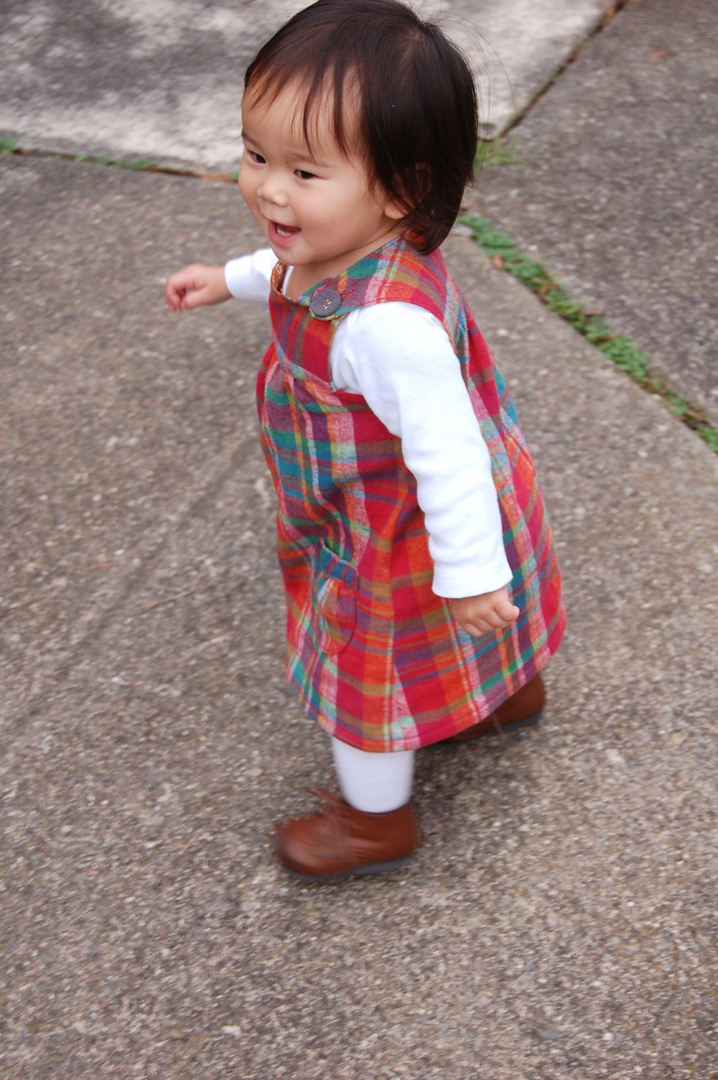
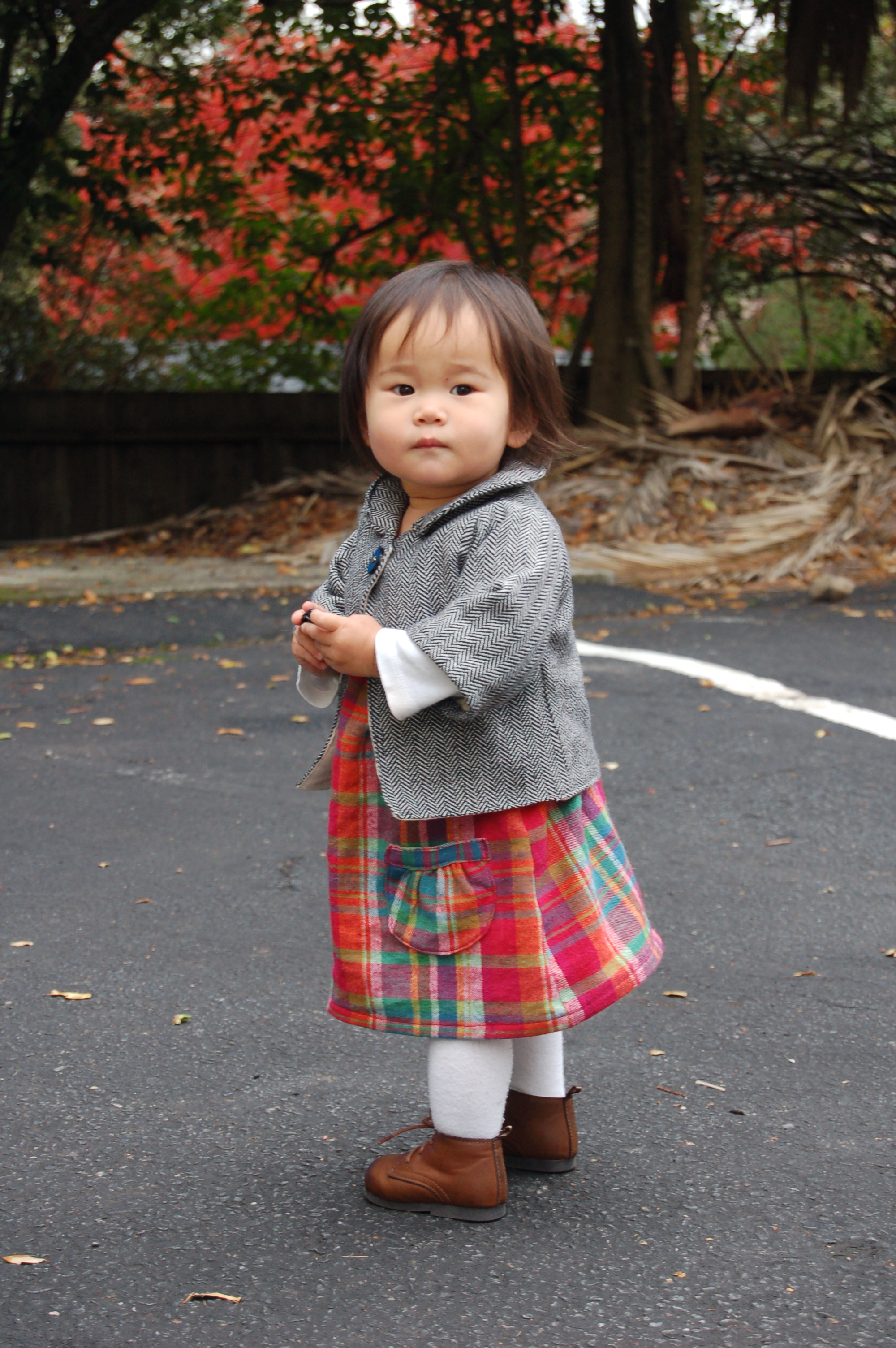
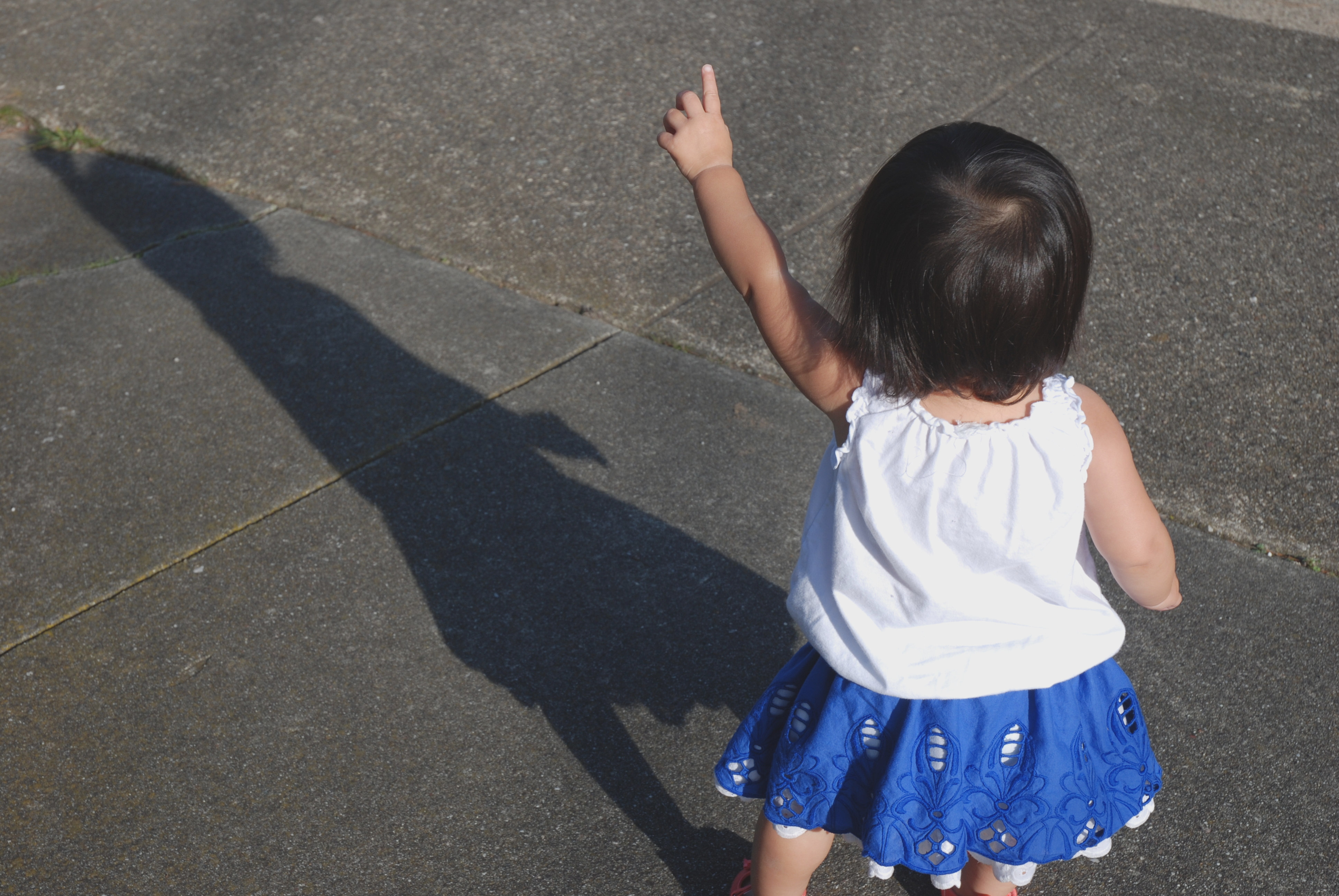
 This skirt reminds me of something you’d wear to a tea party or something. But all our lil’ tomboy wants to do is climb things and play with dirt and rocks. That’s our girl!
Luckily, we live in California where an outfit like this might still be appropriate for November. But it won’t last long, so I promise I’m going to start focusing on more winter-ish clothes soon. Fleece, flannel, and sleeves, here I come.
As for this tutorial, I’d really like some feedback. When I’m trying to explain the steps, I feel like I’m not being clear and that it’s too confusing. If you have any suggestions for parts that need clarifying, I’d really appreciate you letting me know. Or asking me questions if you need help. I want to help! 🙂 I hope you try a Double Layered Simple Skirt. And if you do, please send me a photo!! Have fun!


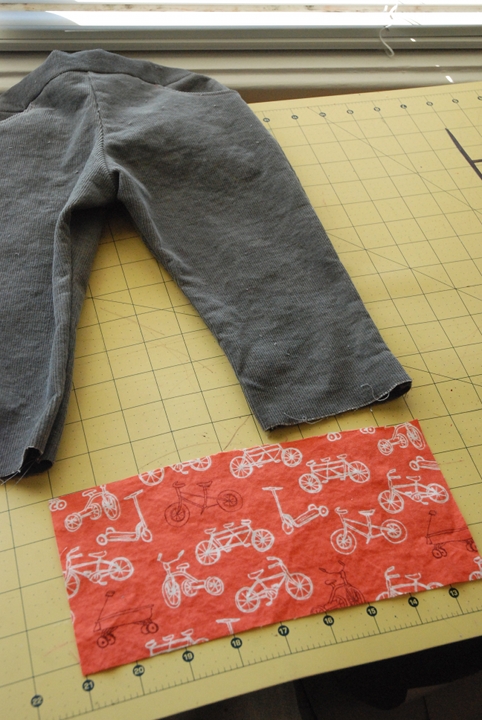
 This could be fun for a hippie costume or if you just like wide leg pants! Here’s what you need:
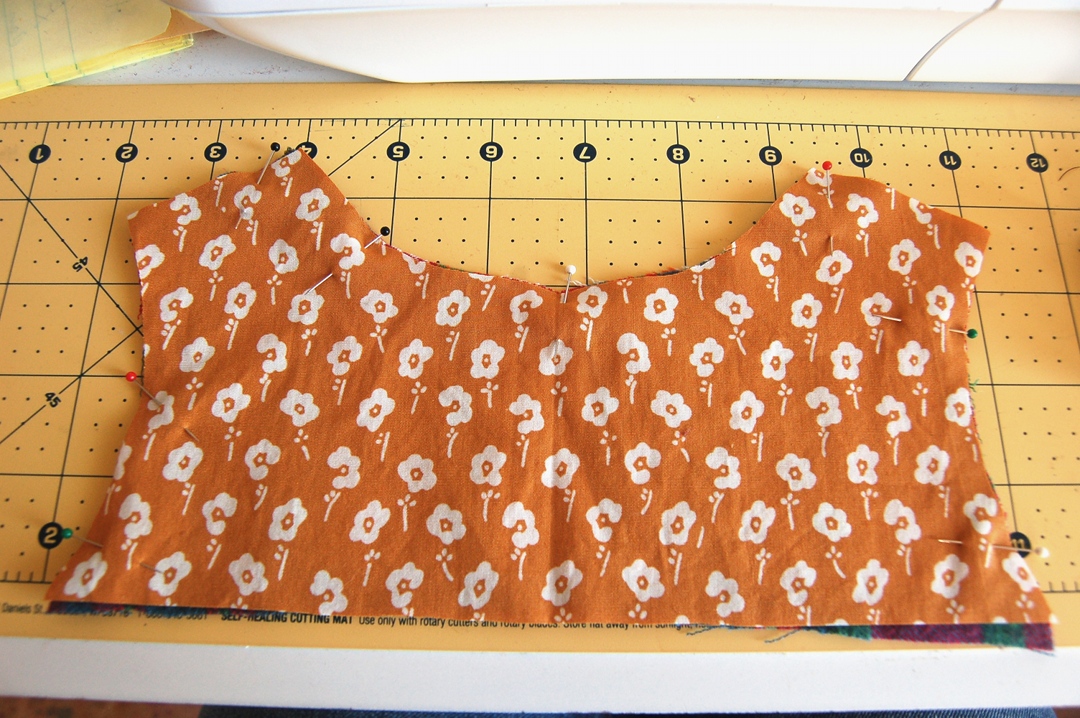
 Now we’re going to cut 2 triangles from our inset fabric. The hemmed side will be the bottom of triangle (again, I didn’t hem, so just pretend :)). You want your triangle height to be about half an inch taller than the cut you made in your pants’ side seam. I cut about 8 inches up the pant leg, so the height of my triangles are 8.5 inches. As for the width of the bottom – that’s up to you. The wider the triangle base, the wider the flare. You decide!!
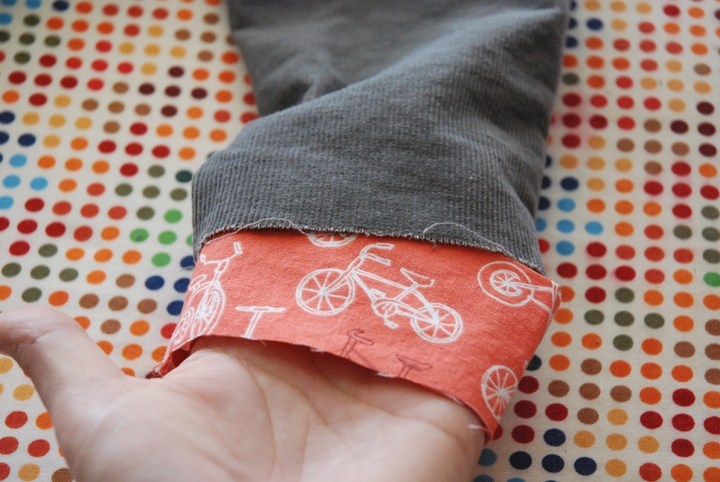
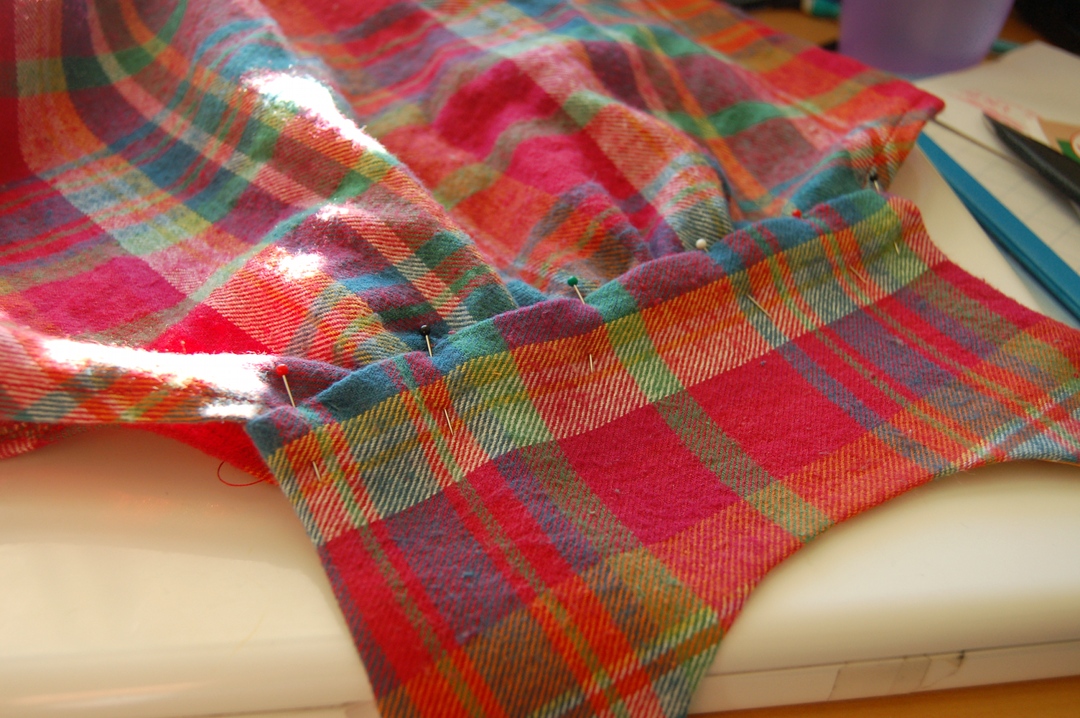
 Now it’s time to sew! Line up one side of the triangle with one cut edge of the pants, right sides together. You want the bottom seams lined up. Pin and sew starting from the bottom with about a 1/4 inch seam allowance (my inset fabric looked the same on both sides, so there was no “wrong” side, but make sure your fabric is wrong side facing up).
 When you open it up, it should look like this on the right side.
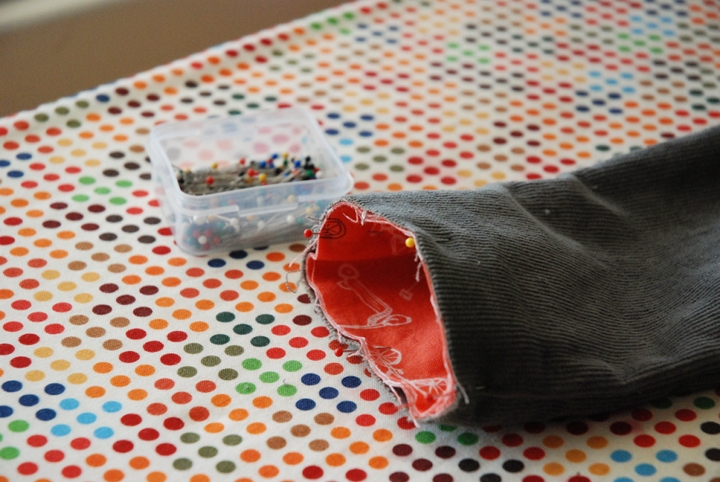
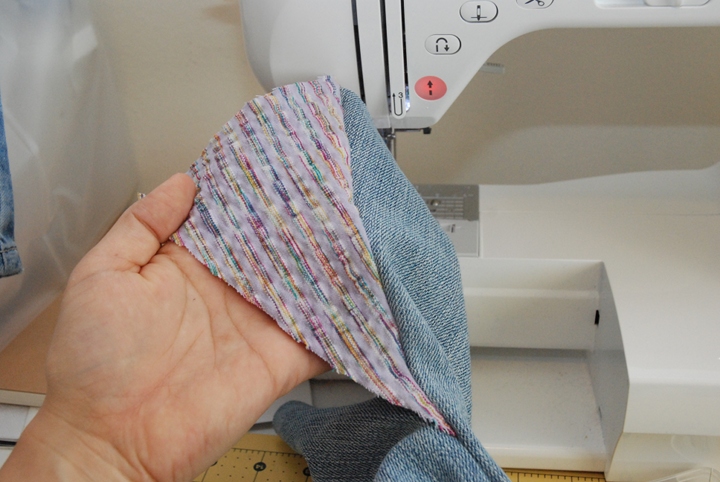 Now turn your pants inside out and line the other sides up, right sides together. Pin and sew. You want to try and get your seams to meet in the middle at the top of the triangle.
 When inside out, your pant leg should look something like this.
 Turn the pants right side out and iron. Repeat with the other pant leg and you’re done!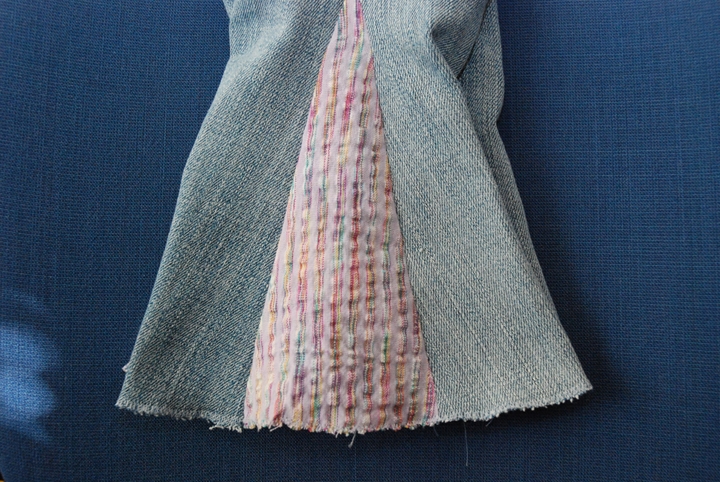
 I hope your little hippie enjoys their pants!!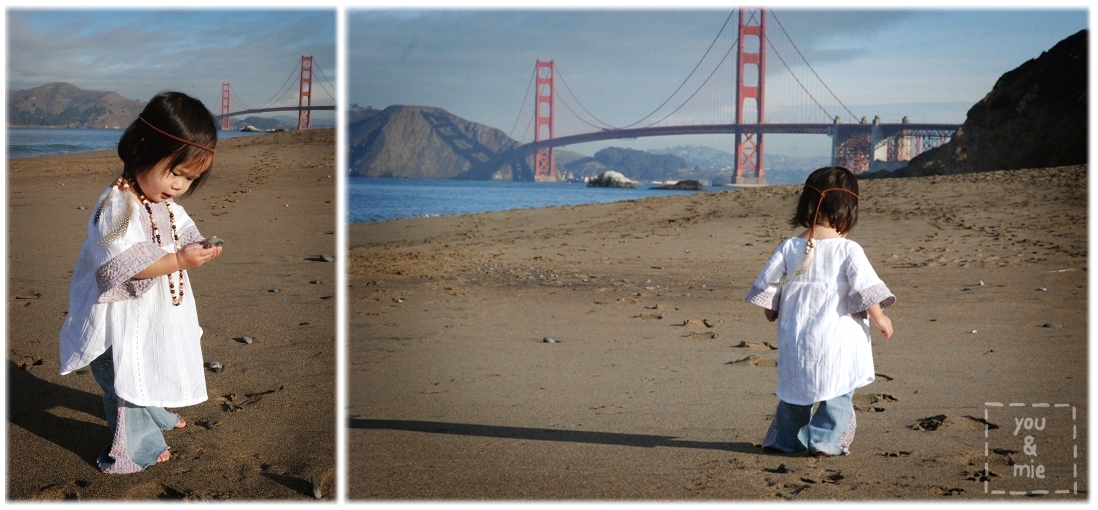










































 you and mie