Yuki’s Nursery: Last Day and a (sorta) tutorial

(click the button to see the whole series!)

So we made it to the last day!  I just wanted to share a couple more things and a super easy and cheap home decor idea.

First is this quilt.  My first real hand-quilted quilt ever.  Probably the last 🙂

Don’t you love how the 2010 creeps upwards?  Hah!

It was a fun project and I’m pretty proud of it, but I really don’t know if hand quilting is for me.  I love quilts though!  I think, from now on, it’s either machine quilted or knots. 🙂

This next project was a mobile I made after Yuki was born.  I realized that it would be handy to have one hanging right above her changing table to keep her distracted during diaper and clothing changes.  We had a hand-me-down mobile but it wasn’t right for our room.  So I decided to make some black and white cards and attach them to the mobile frame with fishing wire.

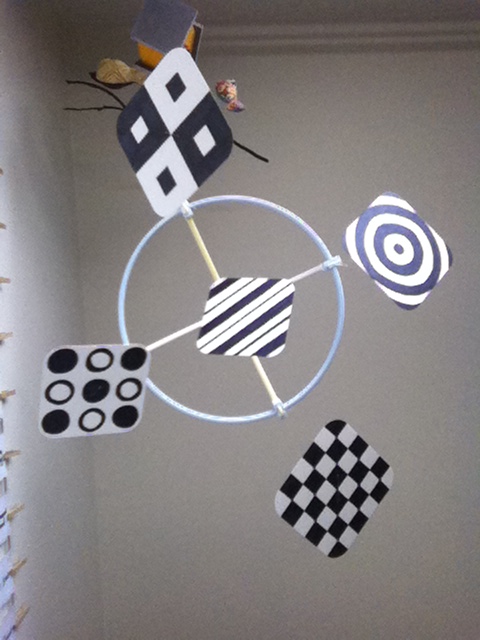
It was great because it still had the music and rotating mechanism, but she LOVED the black and white designs.  This was, by far, the most practical and well used item that I made.  And it was so cheap and dinky!  It was literally white pieces of cardstock that I drew on with a black marker.

She loved it for a loooong time, but eventually was able to sit up and then grab them and since they were just paper, they didn’t last long after that.  I plan on making them again when we have another baby, but I’ll probably make them with felt (or at least laminate the cards) so they are more sturdy.

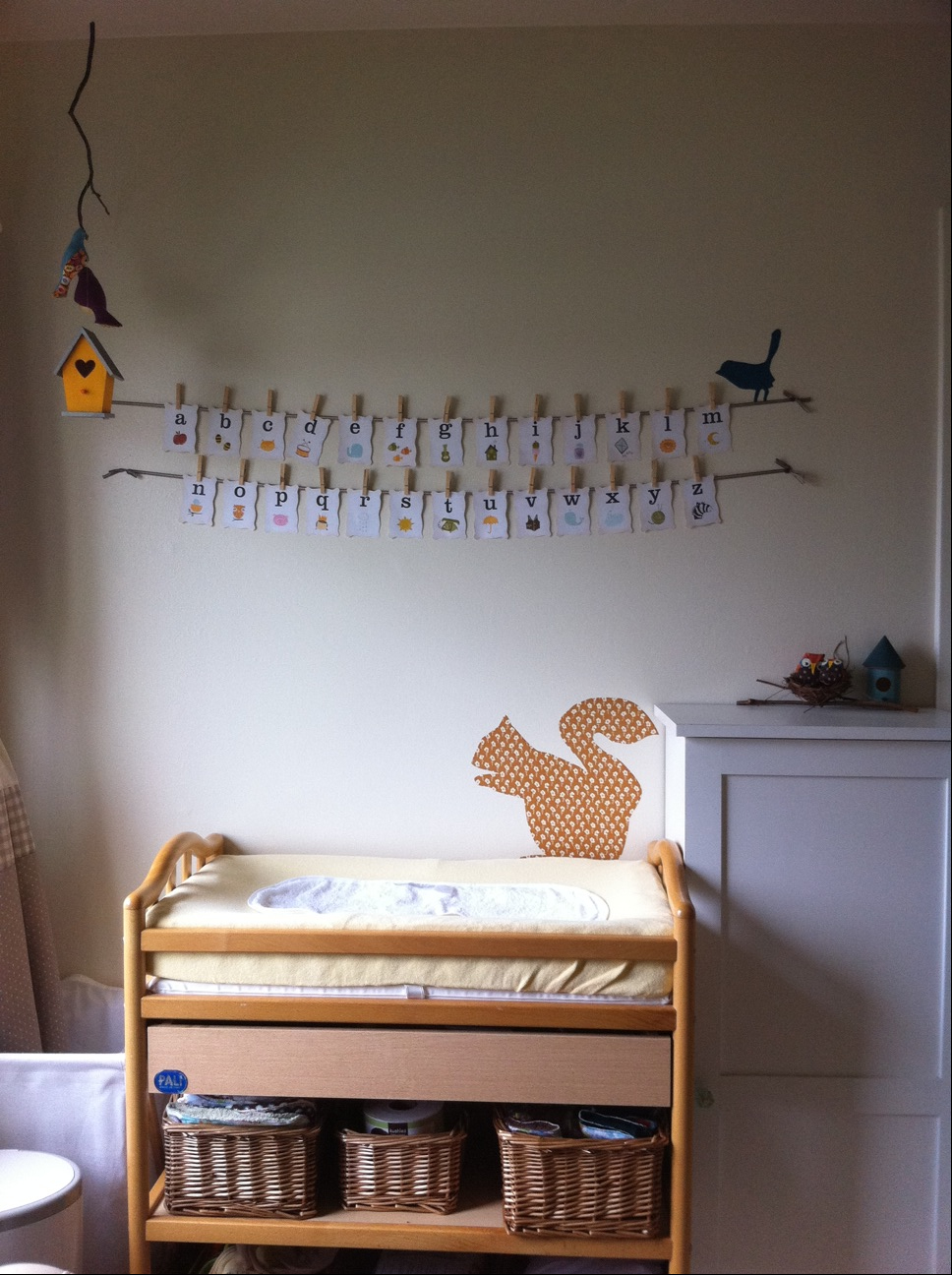
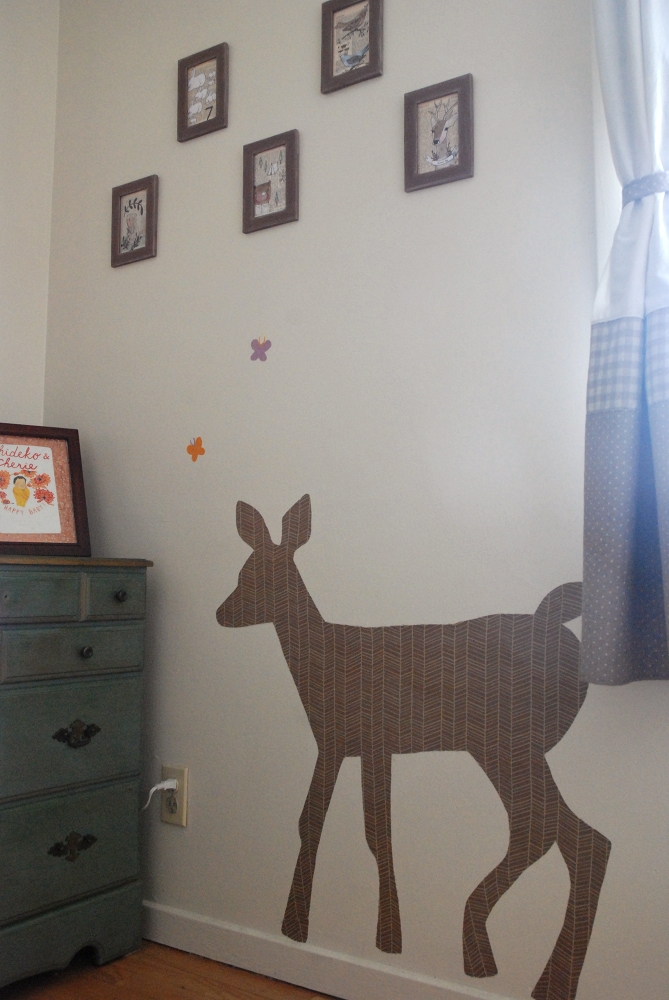
This next piece is a combo of a fun find and a DIY project.  While in Portland we found this awesome gift shop and I picked up these super cute postcards.  I can’t remember how much they were, but I’m assuming pretty cheap.  They fit perfectly with the feel and theme of the room.  It’s hard to see, but they are copies of oldish dictionary pages with hand drawn and colored ADORABLE illustrations.  Birds, rabbits, a dear, a bear and a squirrel?  Yes please!

So here’s where the sorta tutorial comes in.  I wanted to show you how I painted these cheap-o frames to look vintage-y and distressed, but I didn’t have the time or any extra frames to demonstrate.  So I thought I’d just describe it, since it’s pretty simple.

Just go and pick up a 3-pack of these RAM frames from Ikea for $1.99.  They are unfinished pine and have a plastic sheet instead of glass making it totally safe for a kid’s room.

All you need is acrylic paint in the color you want the frame, and white.  Paint a few coats of your main color to make sure it’s nice and well coated.  In my case, I did about 2-3 coats of brown paint.

Once the frame is completely dry, take a dry brush and dip it very lightly in the white paint.  You can brush some of the excess paint off if you need to, because you really only need a tiny bit.  You want to lightly brush the white paint along the edges of the frame a few times all the way around.  Do it on both the outside edge and inside edge of the frame.  You can very lightly run it over the rest of the frame too.

The nice thing about this, is if you accidentally get too much white on the frame, you can always take another dry brush with a tiny bit of your base color and brush it over.  Keep going until it’s got the amount of distressing you like.

And that’s it!

Thanks so much for coming on this little tour of Yuki’s room.  For me, it was a trip down memory lane!  Though some of this stuff is still up in the room, a lot has changed, and most of it has just become part of the mess.  I don’t really appreciate it anymore.  But looking back, I remember all the love and thought that went into it AND it makes me a little excited to plan another nursery!!  Not that we’re ready for that yet . . .

And in case you want to go back and see the other days, here are the links:
Day 1: Fabric Wall Decals
Day 2: Bird Mobiles
Day 3: Punched Fabric Flowers
Day 4: Fun Finds

Anyways, have yourself a great weekend!!  I’ll see you next week for some fun green activities in honor of St. Patty’s Day 🙂
Yuki’s Nursery: Day 3 and a Tutorial: Punched Fabric Flowers

(click the button above to see the rest of the series)

It’s Day 3 of Yuki’s Nursery Tour!  Sorry this post is later than I hoped because not only is Yuki sick, but she got me sick too!!  Last night I went to sleep BEFORE Yuki and only woke up today because she was up and Hideko had left for work.  I slept for over 12 hours but I feel like I could have slept forever.

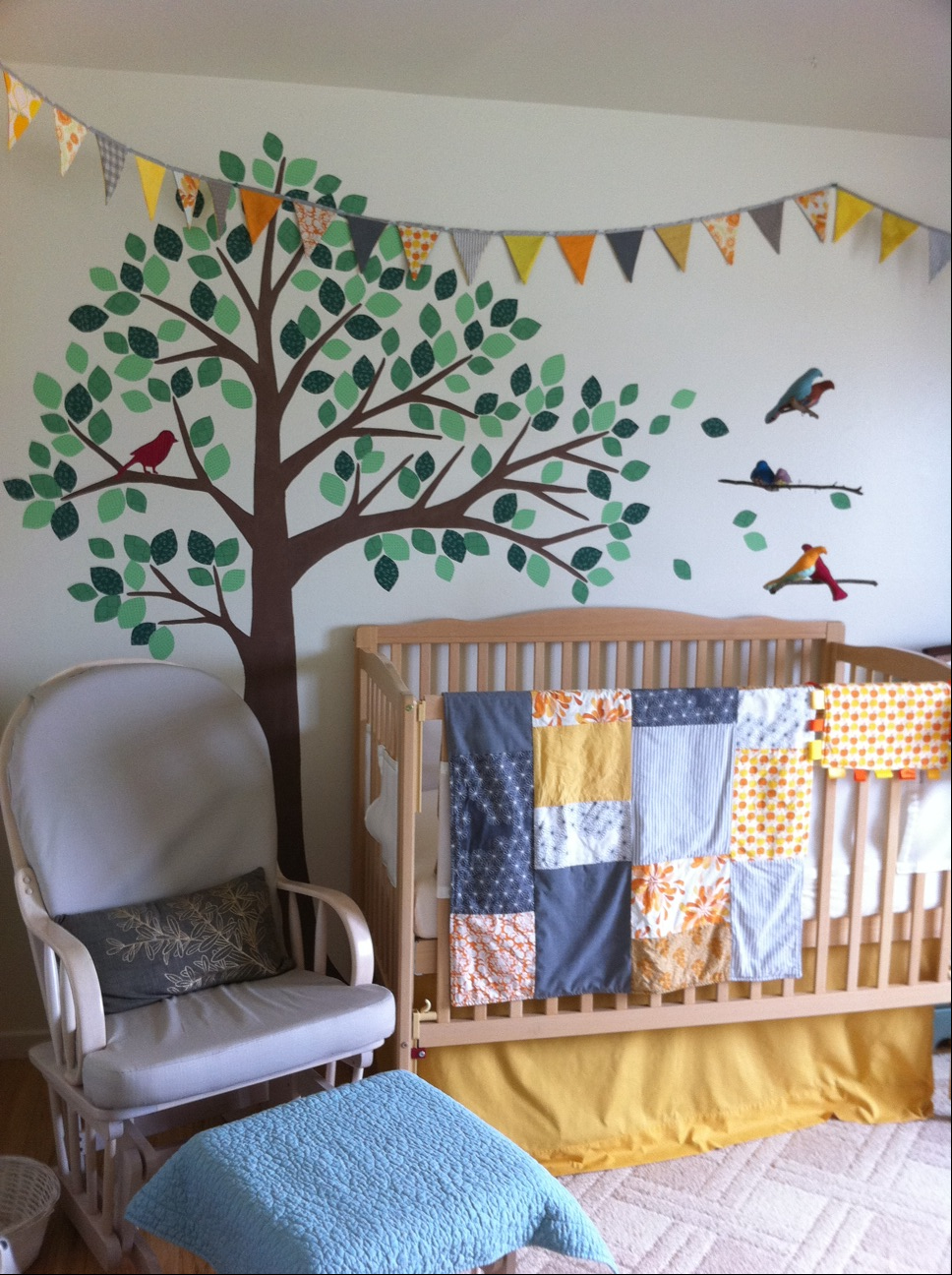
Anyways, continuing on with Yuki’s Nursery Tour, I’ve got more pictures, projects and a tutorial.  These are the only photos I could find of the whole room.

We used a lot of colors for her room, but the main colors were yellow, orange, gray and a splash of turquoise.  One of the first things I made was a bunting using a variety of yellow, orange and gray fabrics and sewed them to a gray ribbon.  I really love it and actually took them down to use at her birthday party (6 months ago) but never bothered to put them back up 😦

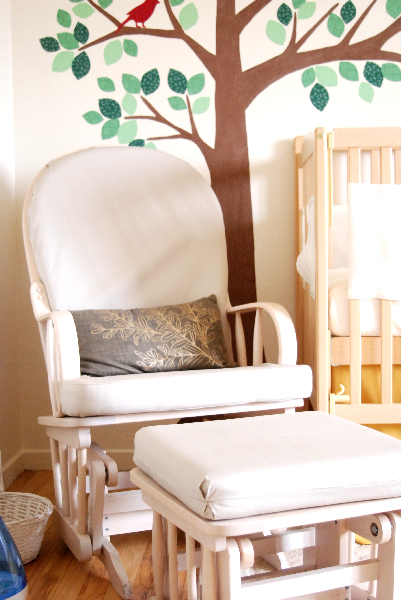
Another big project for the room was reupholstering this rocker.  It was a hand-me-down from Hideko’s sister and we love it so much (and still use it!), but the original cushion covers were not really my style (yes, that’s putting it lightly ;)).  I was really proud of how it came out.  And then I saw a photo of a friend’s reupholstered rocker and they had repainted the frame too!  Why didn’t I think of that!?  Oh well, maybe that’ll be one of my nesting projects before baby #2 comes along.

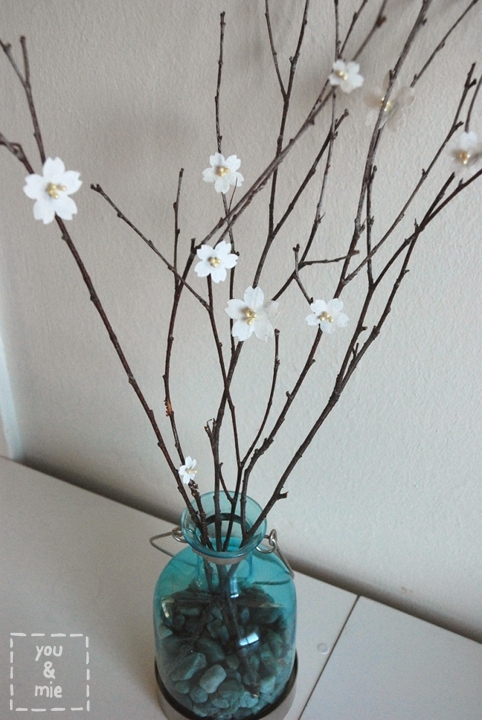
For today’s project, I’m going to show you how I made these fabric punched flower branches.

The flowers are made out of fabric that’s been made stiff with fabric stiffener and then punched out with flower punches.  Sounds easy right??  Well IT IS!

Here’s what you need:
Scraps of fabric
Fabric stiffener
Paint brush
Craft punches (in flower shapes)
Awl, ice pick or other pointy object
Artificial flower stamens (I’m not sure what they’re really called, but you can see a pictures below)
Hot glue gun
Fallen branches
Vase
Yellow (or other color) permanent marker (optional)

Take your fabric and apply the stiffener following the directions on the bottle.  I like to use wax paper on a cookie sheet to lay the fabric out on.  I usually apply a few coats to make it nice and thick but not unbendable.  Let it dry completely.  I didn’t have time to label these photos, but you can see the regular fabric on the left, the fabric stiffener and brush in the middle, and two sheets of already stiffened and dried fabric.

Here are the two sheets of stiffened fabric up close.  They are pretty hard, like cardstock, and you can bend them a bit to give them shape, but they don’t crease like paper.

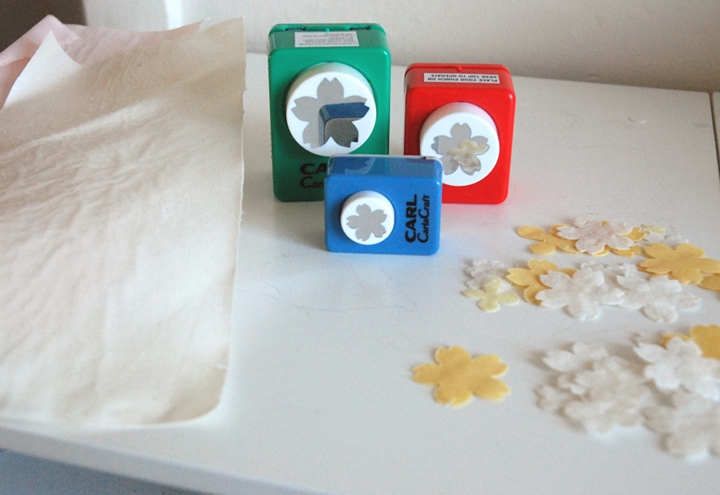
Now take your stiff fabric and punch out a bunch of flowers!  I used cherry blossoms here, but you can use any shape flower.  In fact, if you don’t have any flower craft punches, you can just freehand cut some out.

The white ones on the right are Martha Stewart and the cherry blossom punches on the left are Carl brand.

Fun!!!  Because the fabric is thick and stiff, these suckers were pretty tough to punch out.  I recommend putting the punch on a flat hard surface, like your desk, placing your fabric in the punch and then using your palm and your body weight to push down into the desk.  Yeah, it can hurt after awhile.

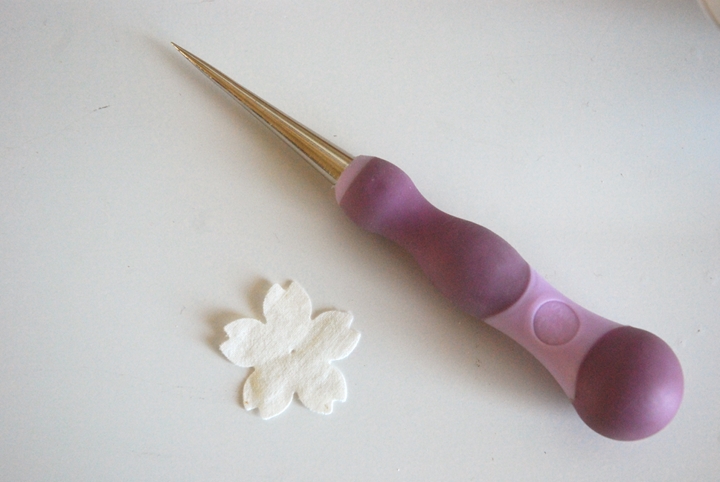
Use your awl to create a small hole in the center.  You’ll need to make it a bit wider than in this picture to fit the stamens in.  Press gently or else you’ll tear the fabric.

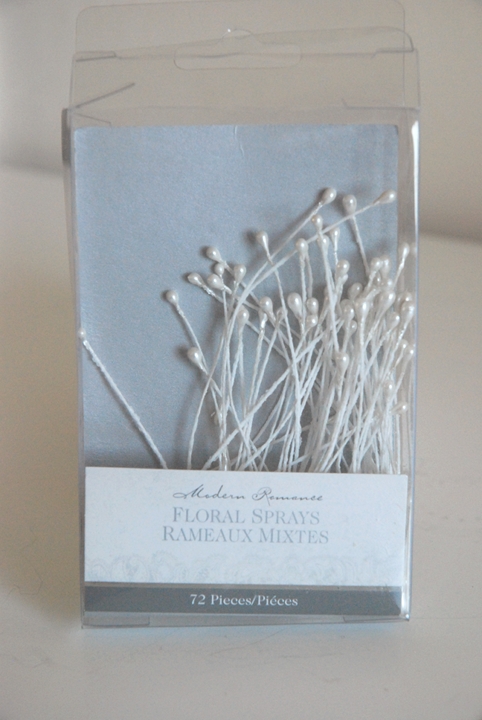
These are the stamen.  I bought them at Michael’s I think, but you can find them at most craft or hobby stores.  This is optional, but I took a yellow permanent marker and colored in the bulb of the stamens to give them some color.  You can probably also buy colorful ones, but these are the only ones I could find.

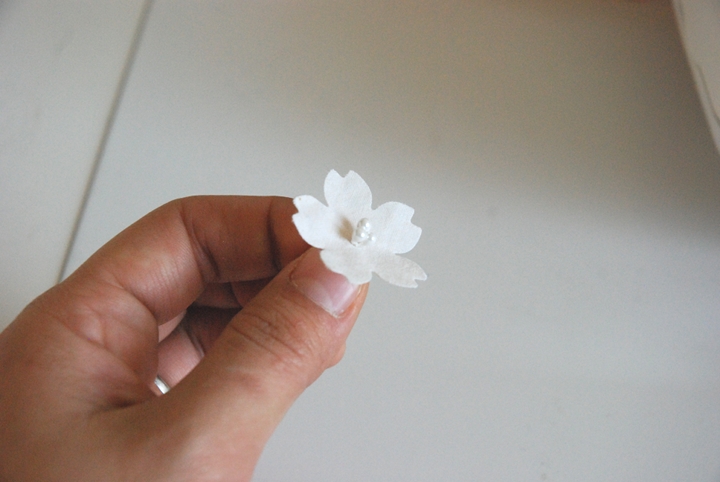
Cut them in half (the stamens come with two on each end of a string) and pull them through the center of the flower.  Decide how many you want.  I used between 2-4 depending on the size of the flower.

If you want you can bend the flower petals up a bit to give them more depth.  Now trim the ends of the stamens in the back, apply a generous amount of hot glue and stick it on to your branches.  The glue is going to hold the stamens in place and adhere the flower to the branch.  I found that placing the flowers in the nook where one branch splits into two was a good place for it.  Here is what it looks like from the back.

Not super pretty, but not too noticeable either.  But knowing that there was going to be a back, I put all my flowers facing the same way and put the back side up against the wall.  If I wanted the branches to be pretty from all angles, I’d probably place two flowers back to back to cover up all the glue.

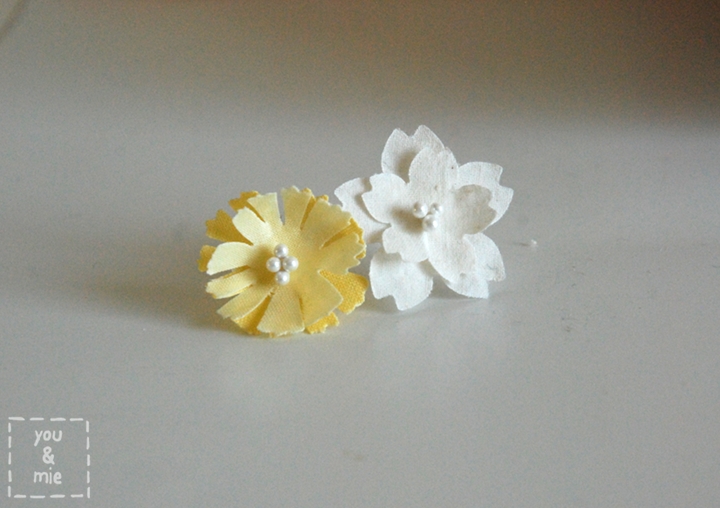
I did simple one-color, one-layered flowers, but if I were to do it again, I’d probably play around with layering flowers that are different sizes and/or different shades.

And looking at these, I realize that they don’t just have to be home decor, but these would make awfully cute hair accessories too!  In fact, I’m going to glue these extra ones to pins right now!

Thanks for stopping by!  I’ve got a bit more to show you from Yuki’s nursery later this week, including other DIY projects, some fun finds and another tutorial.  Hope you’re all staying warm and healthy!

Tutorial: Fabric Wall Decals

See the whole series here:
This week I thought I’d share Yuki’s nursery with you. I noticed someone had asked about the rest of the nursery a couple weeks ago when I shared this tutorial on delia creates. Most of you have probably seen this post, but I wanted to share it here as well.

So today I’m reposting this tutorial, but later this week I’ll take you on a little tour of the rest of the nursery and share some of the other projects I did. The best thing about these projects is that even though I used them in the nursery, they can really be used in any room of the house!

Anyways, here we go…

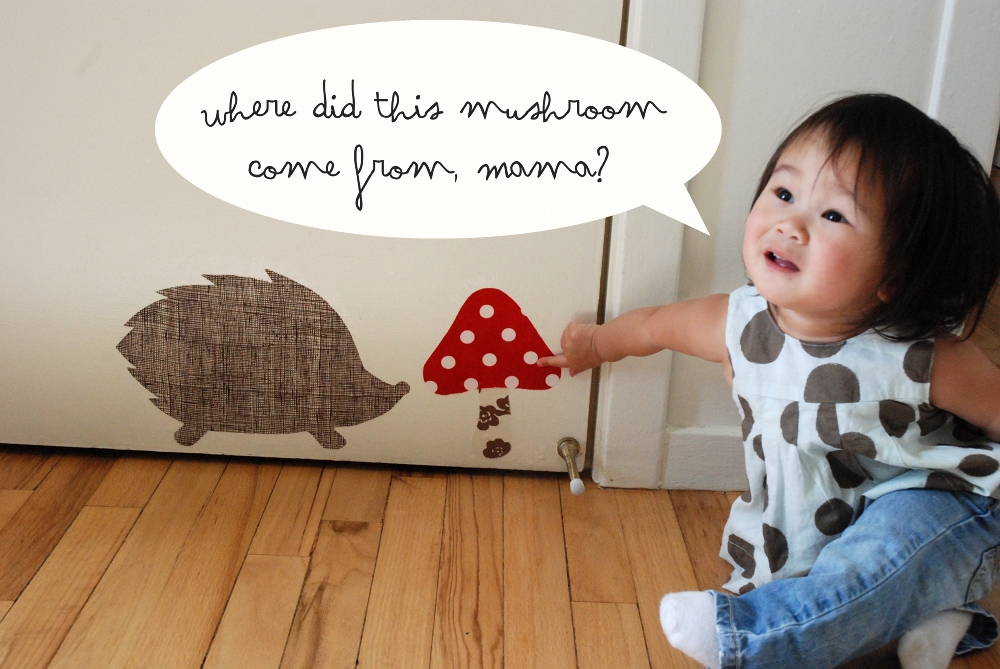
These fabric wall decals were my favorite part of decorating the nursery. I can’t say that this is an original idea of mine. I first saw it on How About Orange, and she had seen it on another blog and so forth. But today I’m going to show you how perfect these decals are for a sweet little nursery.

When we found out we were having a baby we moved into a 2 bedroom apartment so our daughter could have her own room. But our building has strict rules about painting the walls so I knew removable decals were the way to go. There are some amazingly cute ones out there, but they can be pricey and I thought it’d be fun to make my own. Not only do you have the freedom to create any image you want, but it’s easy and cheap! You probably already have all the materials you need and it’s super safe for your little one.

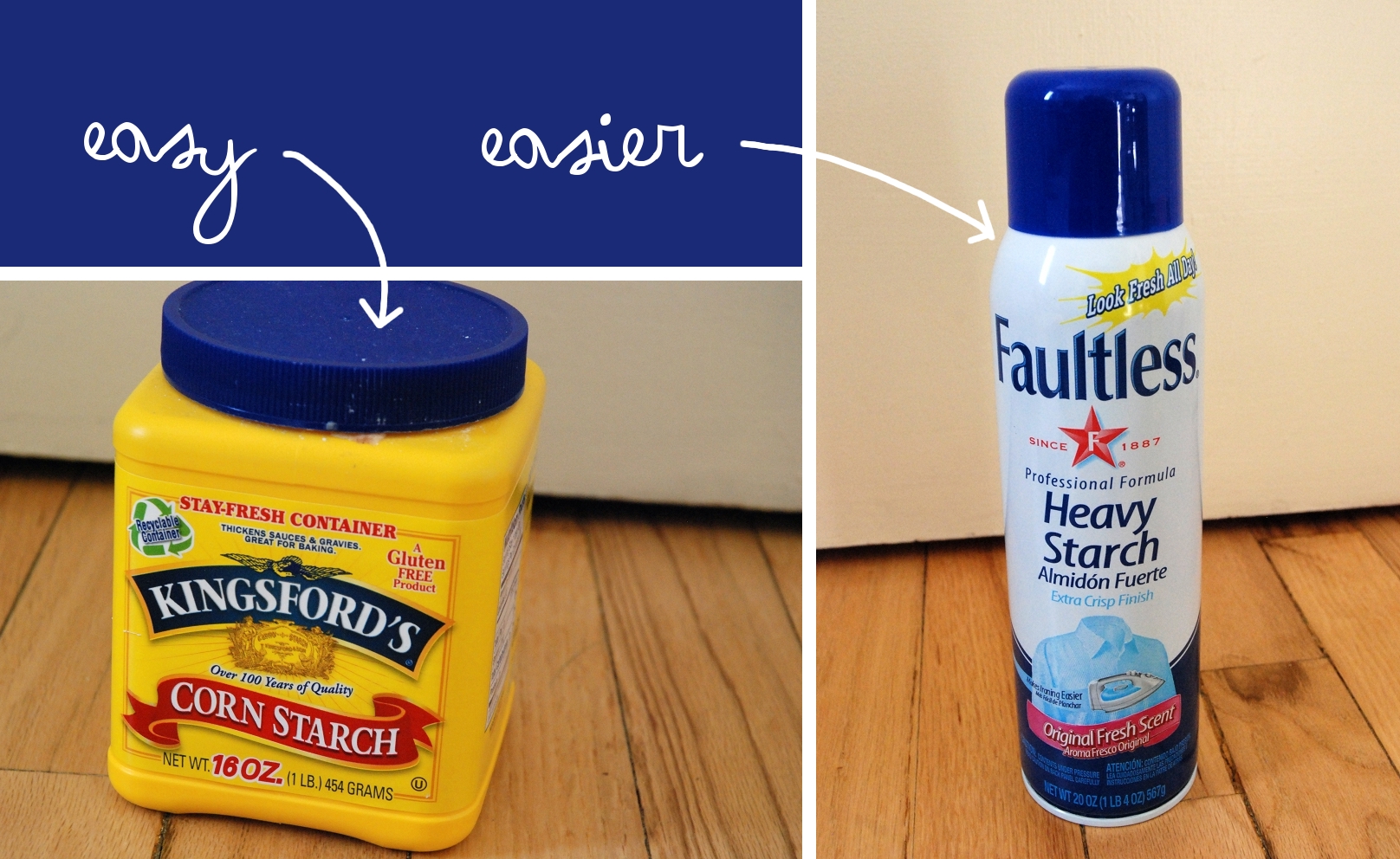
And it’s completely removable. Perfect for renters OR people who want to have the option of changing up their decor every once and awhile. I’m going to show you two ways to do it. I’ll call one, “the easy way” and the other, “the easier way.” 🙂

Here’s what we’ll be making today . . .

and here’s what you’ll need:
Paper, pencil and scissors for making your pattern (or you can download this hedgehog, mushroom and grass one I made HERE)
Fabric (lightweight cotton works best)
Fabric scissors
A tub, tray or baking sheet
Towels (to protect your floor)
Disappearing ink pen (optional)
Sponge brush (optional)

And lastly,
for the easy way: cornstarch
for the easier way: heavy starch spray (used for ironing)

The first step (and hardest, in my opinion), is deciding what you want to make and where you want to put it. Once you’ve decided, measure out the wall space. Mark the placement on the wall with pencil if necessary. On a piece of paper, measure out the appropriate size and draw out your pattern.

If you need help with the design, you can do an image search and it helps to use the word “silhouette” in your search, for example, “squirrel silhouette.”

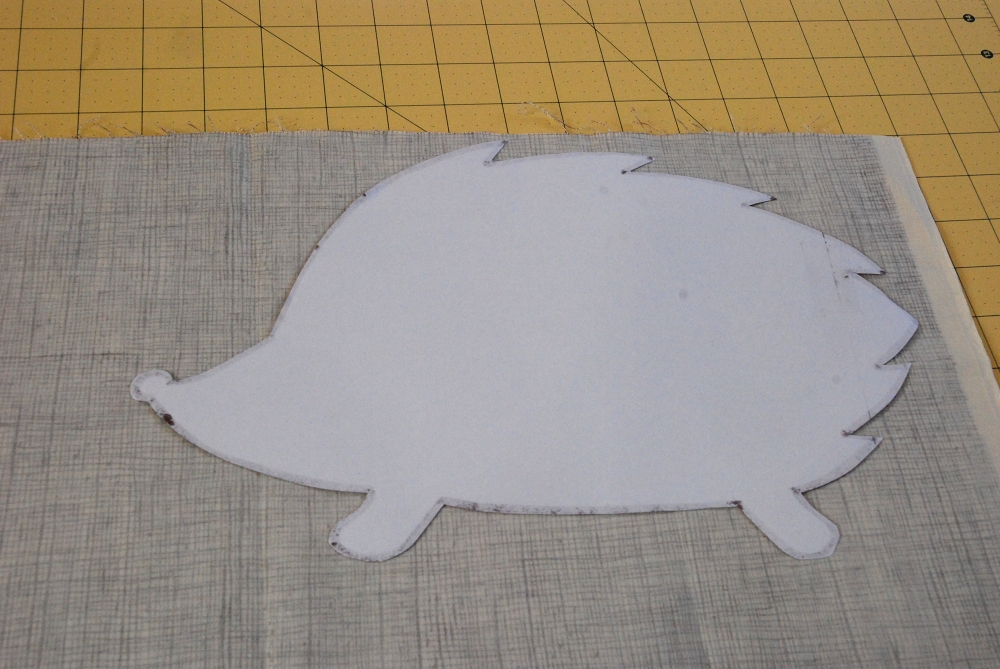
Once you’ve drawn out your pattern, cut it out and trace it onto your fabric. Remember, if you are drawing it onto the wrong side of your fabric, you need to turn your pattern around too!

Cut out your decal pieces and you’re ready to make it stick!

First wipe your wall clean of any dirt or oil and dry it. Place towels on the floor under where you’ll be working to catch any drips.

I’ll start with “the easier way” because, well, it’s easier! This method requires the heavy starch spray.

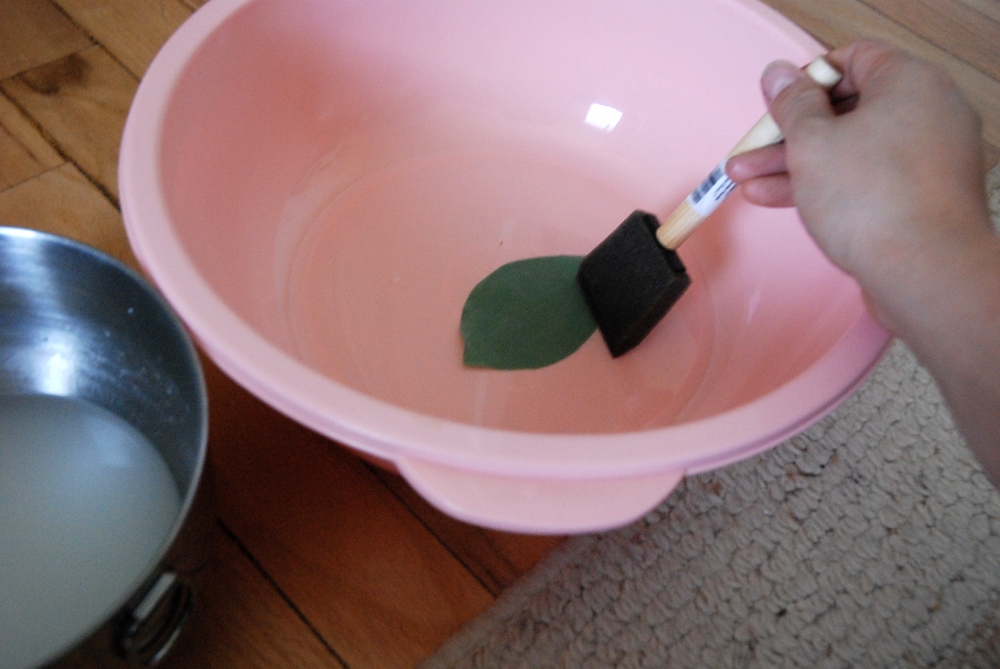
Place your fabric onto your tray, baking sheet or small tub. Just use whatever you have around your house, but for bigger pieces of fabric, you’ll want a bigger surface. Lay it out flat and spray it with the starch spray. You want it to be well saturated. Using your brush (or your fingers), spread the liquid and remove any excess starch (you want it to be wet, but not necessarily dripping wet).

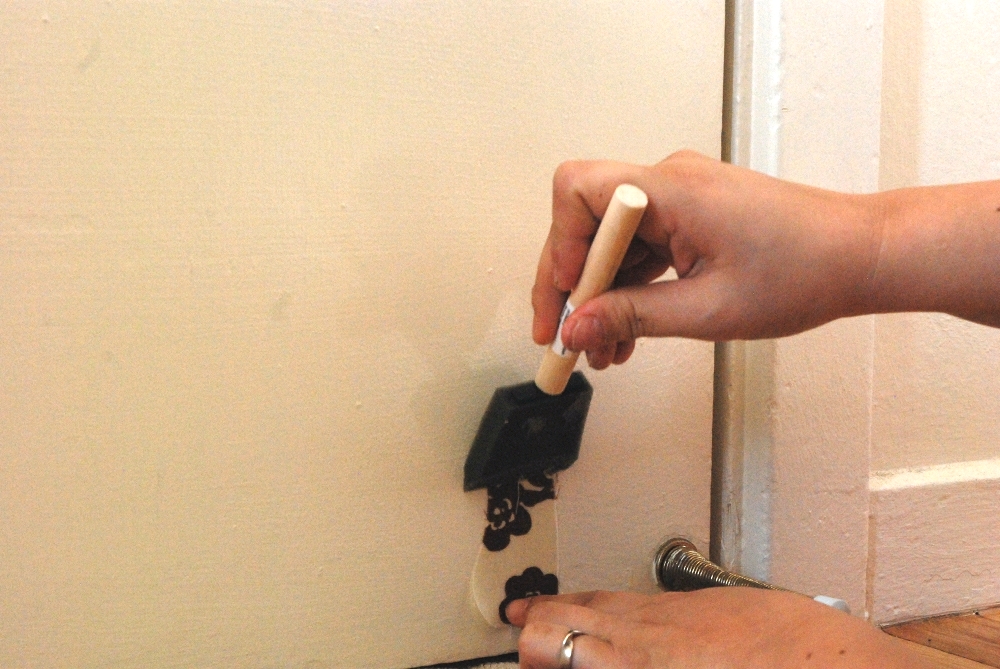
For small pieces of fabric, you’ll be able to just place the entire decal on the wall and then move it slightly if you need to adjust. Smooth it out using your brush or fingers. Using some of the excess spray on your tray, brush over the entire decal.

For larger pieces, start with one corner or edge and slowly work to the other side smoothing the fabric and pressing out any air bubbles with your brush or fingers. For REALLY large pieces (like the tree), see the helpful hints below.

Your fabric may start to fray a bit around the edges. Just use your brush or fingers to gently push the threads back along the edges of your fabric.

Repeat with all your decals. Use a damp towel or sponge to wipe any excess cornstarch away from around the decal (it may leave a white residue if it dries on the wall). Let it dry for a few hours or overnight, depending on the size of the decal and voila! You’re done!

Now, for “the easy way,” the only difference is that you’ll be making your own corn starch solution out of water and corn starch instead of using the spray. There are a few extra steps involved, but there are some great benefits. 1) You probably have cornstarch at your house and it’s cheap! 2) This method is totally natural! If you are concerned at all with unnatural products around your baby, this is perfect for you. You know, if you’re afraid that your child will, say . . . lick the wall (what!? whose child would do that!?). I don’t know if the starch spray is actually bad for you, but there are ingredients listed that I don’t recognize. There’s no question with corn starch and water. 3) And avoiding aerosol cans is better for the environment!

To make the solution:
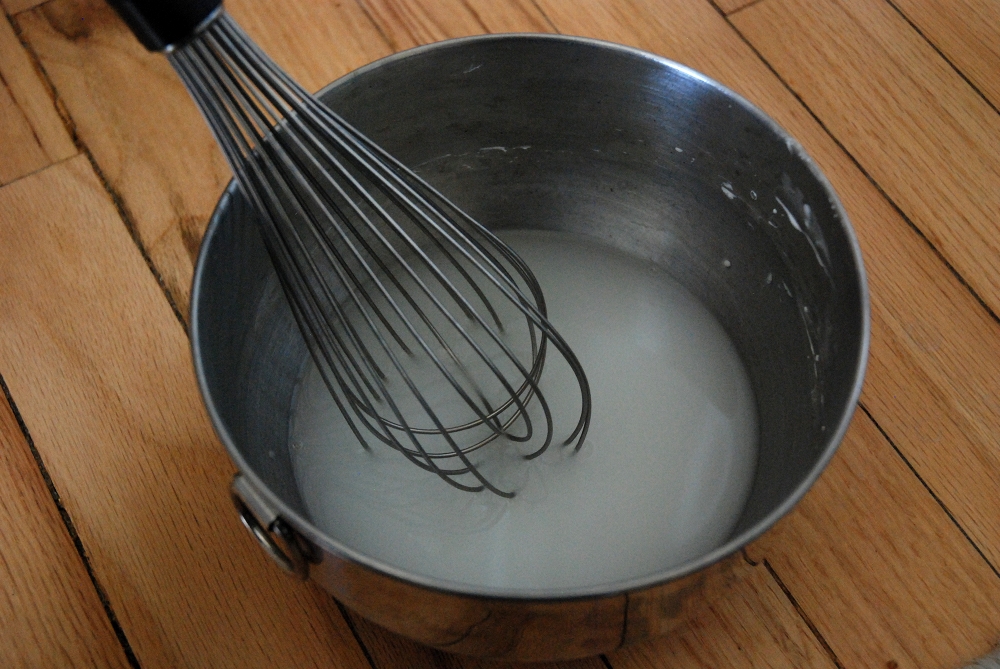
Mix 3 teaspoons of corn starch with 2 tablespoons of cold water in a medium bowl. Add 1 cup of boiling water, stir and let cool. The solution will be cloudy and very thin.

The rest of the process is the same. Brush the solution onto the fabric and place it on the wall making sure to smooth out any wrinkles or air bubbles. Wipe away any excess drippings and you’re done!

Step back and enjoy your unique wall decals!

TIPS AND TRICKS:

Fabric – Lightweight cotton fabric will be the easiest to adhere and will stick to the wall the best. Medium weight fabrics can work too, but it might be a bit trickier.

Placement – These are removable, even for little fingers. My daughter enjoyed peeling any leaves she could reach from the crib off the wall, but she hasn’t messed with any of the other ones that she can reach. Just something to consider when deciding where to place your decals.

Extra large decals – For large images, cut your fabric into several smaller pieces. It will make it MUCH easier to put up. Just try to line up each piece right up against each other so it looks continuous and no one will be able to tell! The large tree was cut into 5 pieces and the deer was 3.

Removal – You can easily peel the decal off with your fingers when they are dry and then use a wet towel to wipe away any starch residue. This may cause the fabric to fray. For even cleaner removal, dampen the decal with water and it’ll slide right off. These decals CAN be used again if you remove them gently. Rinse the fabric, pat dry and then adhere them the same way you did before!

And really, the possibilities are ENDLESS! I’m already brainstorming new ideas for when I get tired of these. I hope you have fun making yours!

Tutorial: Twisted Petal Flower

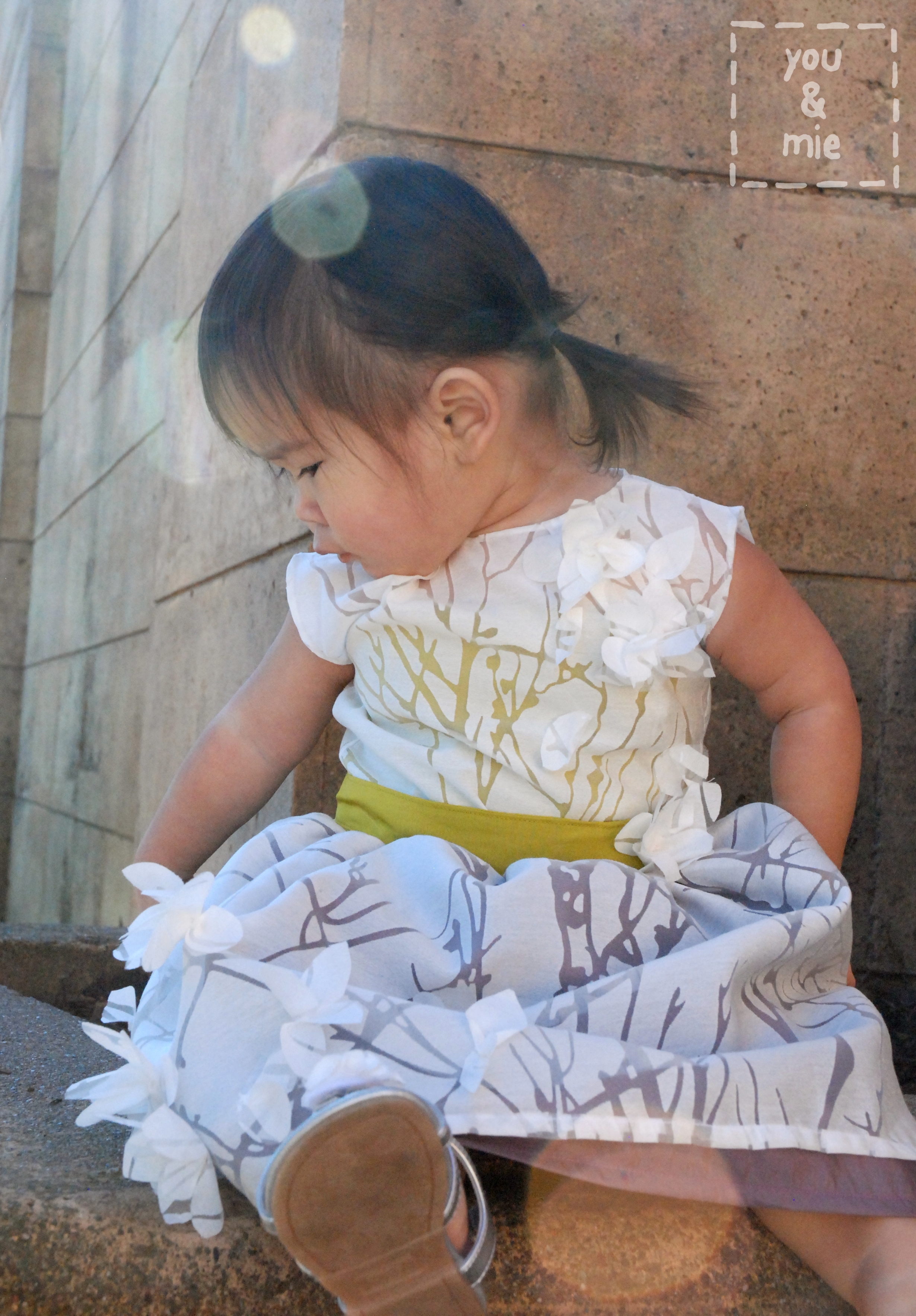
Yes, another fabric flower!  This is the one I used to decorate Yuki’s Blossom by Blossom Dress.  I just made the flowers and stitched them directly to the dress, but you can use this to decorate just about anything – a shirt, a bag, or you can stitch it to a headband, a pin backing, etc.  It’s called the Twisted Petal Flower because you make it by cutting out petals, twisting them and stitching them together.

You’ll need:
Fabric
Scissors
Thread and needle

I used a sheer fabric and I would recommend something thin (though sheer is not necessary).  Since you’ll be twisting the fabric, both right and wrong sides will show, so you may want to keep that in mind when choosing your fabric.  Also, depending on what kind of look you want, you may want to pick something that won’t fray too much since you’ll be leaving the edges raw.

Here we go!

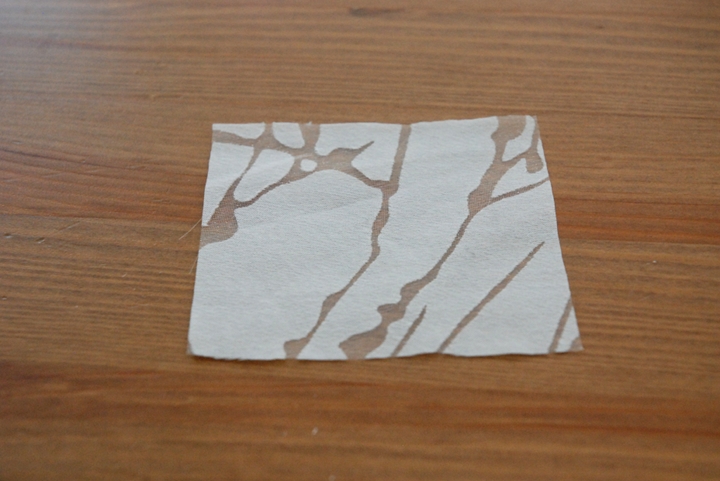
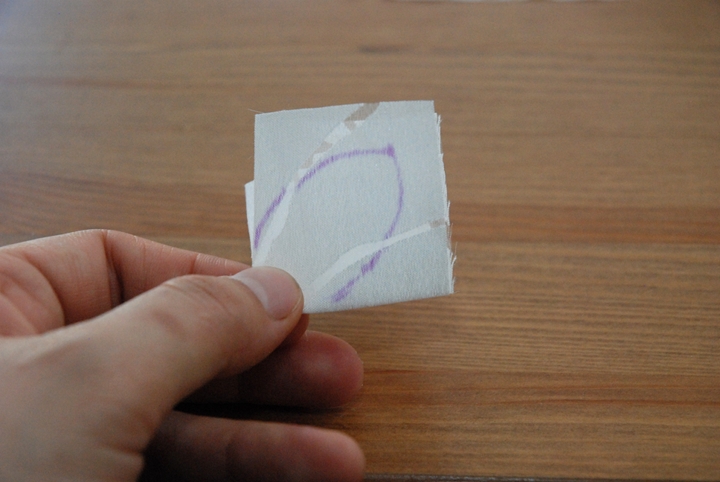
First you’ll need to cut 2-3 fabric squares about the desired size of your finished flower (yes, there is only one here, but you will need 2 or 3.  If you cut 3 squares you will have more petals.  More on that later).

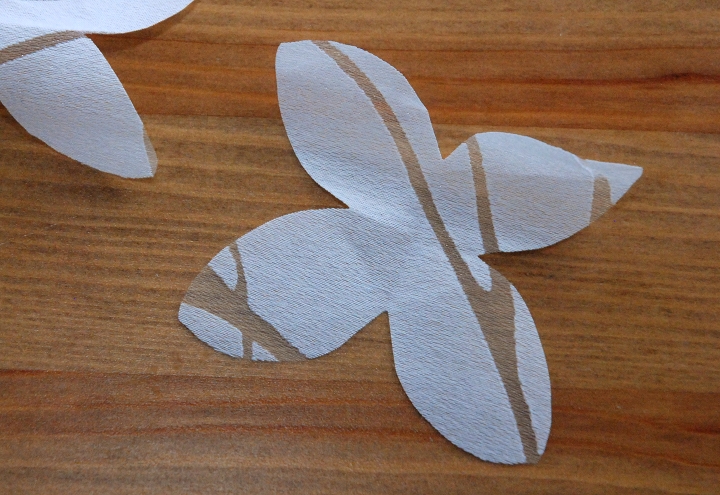
Take one square and fold it in half and then in half again, so it is in fourths.  Making sure the folded tip is in the bottom left corner, draw and cut out a petal shape like so.

It should look like this when it is unfolded.

Next you will need to cut petals from the other squares.  Start by cutting the squares in half so you have rectangles.

Fold the rectangle in half and cut it out in the shape of a petal again.

So you should have one 4 petal piece and two or four 2 petal pieces.  In the flower I’m making here, I only ended up using 2 of the petals.  But if you want a more full flower, you’ll use all four.

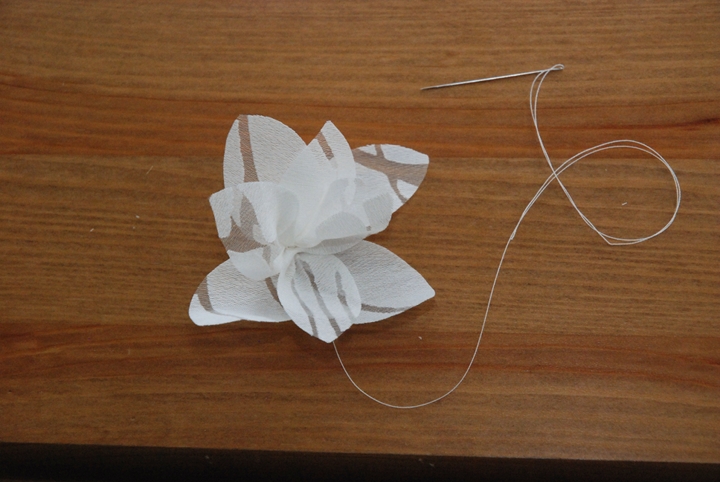
First you’ll want to thread up your needle and tie a knot at the end.  Then take one of the 2-petal pieces and twist it in the center.  You only need to twist it 180 degrees so that one side will be right side up and the other half will be wrong side up.

Do the same with another 2-petal piece and place it on top of the first one creating an X.

Place that X on top of the 4-petal piece at an angle so that all 8 petals are showing (no twisting necessary).  The two twisted petal pieces go on top of the 4-petal piece.

Just to show how the petals should be place on each other, I’ve drawn Xs.  The blue X is the 4-petal piece on the bottom.  The pink X is the 2 twisted petals on top.

Starting from the back of the flower (ignore the picture), put your needle through the center of the flower and stitch it 2 or 3 times.

It will look like this, and you could very well be done . . .

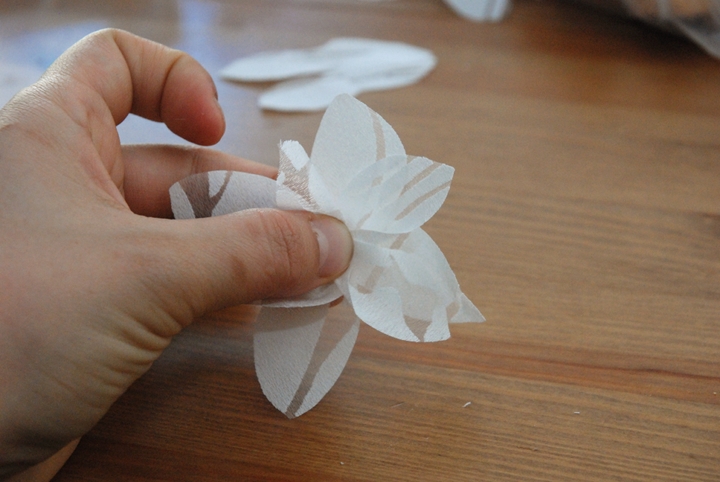
but I wanted the flower to have even more dimension, so that all the petals would stick out from the dress.  So, fold the whole flower in half (doesn’t matter which way) and stitch the center of the flower a few times (where my thumb is).

Open the flower and fold it in half the other way and repeat.

By pinching the bottom of the flower and stitching, you’ll get the whole thing to pucker up a little bit.

At this point, I decided I was done with this flower and just hand stitched it onto the dress with the remaining thread.  If you want to add more petals, just repeat what you did with the first two petal pieces (twist them in the center and make an X), and stitch them on to the BACK of the flower making sure to place the petals at an angle where they’ll be seen best.

And that’s it!  Like I said, you can easily stitch these onto clothes, or attach them to a pin, or a headband, a purse, etc.

Here are the flowers in action.  Some I made just like this, some with more petals and some were just single petals stitched on.

Hope you have fun adorning things with flowers!  I sure did 🙂

Tutorial: Felt Flower Pin

I didn’t originally intend it, but I’ve been posting a tutorial from a piece of each of my Project Run & Play Sew Along outfits.  I’m a little late with this one, but I thought I’d share how I made the pin for the blazer I made 2 weeks ago.

Now I know there are a billion fabric flower tutorials out there, but why not one more?  I’m really sorry for the horrible pictures – I work at night in my poorly lit crafting area.

So here’s what you need:
Wool felt
Hot glue gun
Pin back
Scissors, thread and needle

You can definitely use different fabric or even polyester felt, but I LOVE wool felt for this pin.  It’s nice and thick and gives the flower great shape.

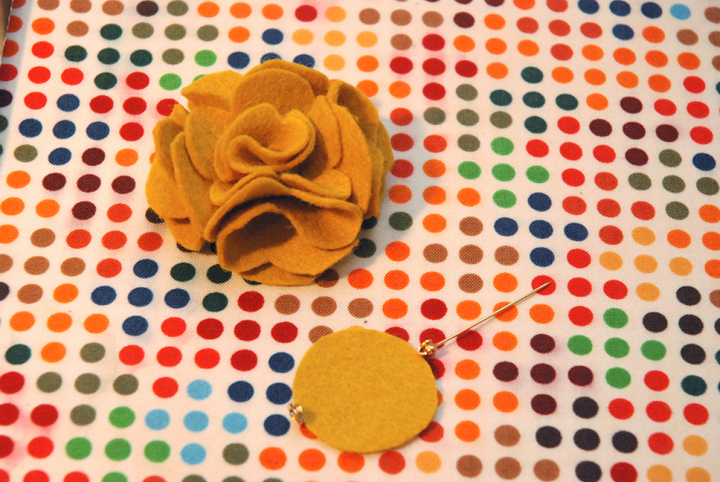
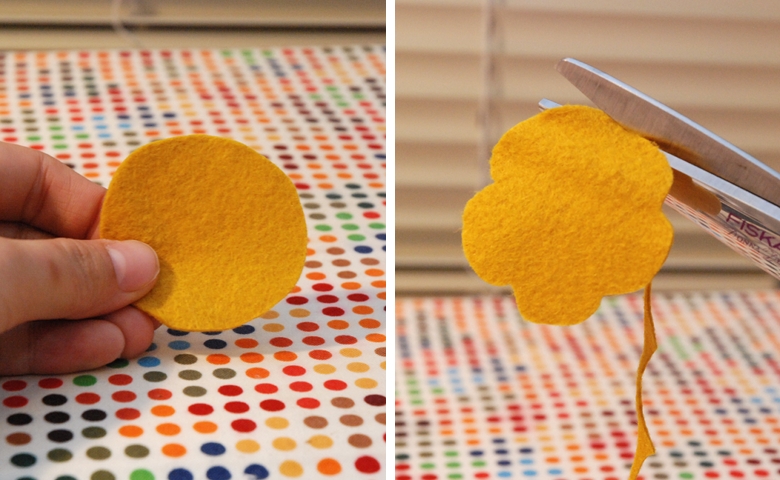
First you’re going to need to cut your felt into little 5-petal flowers.  These are actually going to be the petals.  You’ll need 4 that are about the size you want the finished flower to be.  Then you’ll need 2 that are slightly smaller.  You’ll also need 2 circles – one that is smaller than your flower pieces and then one that fits inside the pin back.

(ignore the finished flower, but you can see how the smaller circle fits perfectly inside the width of the pin back)

Here’s how I cut the 5-petal flowers shapes.  First I cut the felt into circles slightly larger than I want the finished flower to be.  Then I slowly go around the circle and cut 5 little divots to make the petal shapes.  If you want, you can draw the design on first and then cut slightly inside the line.

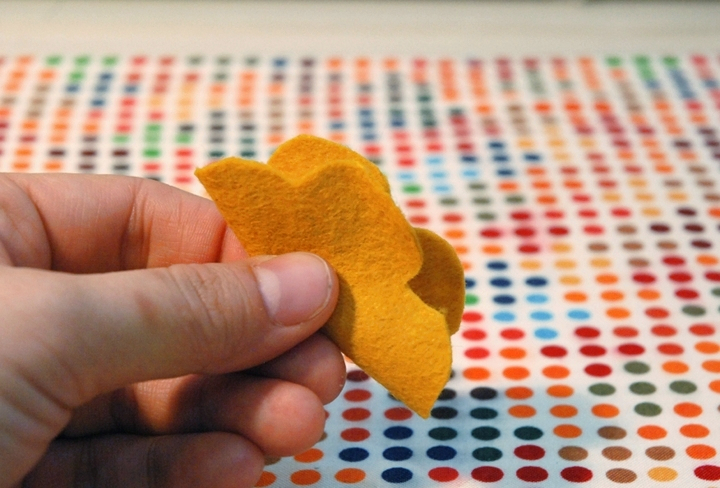
Before you start, you may want to thread up a needle and tie your knot at the end, so you’re ready to sew.  Now take one of your large petal pieces and fold it in half.

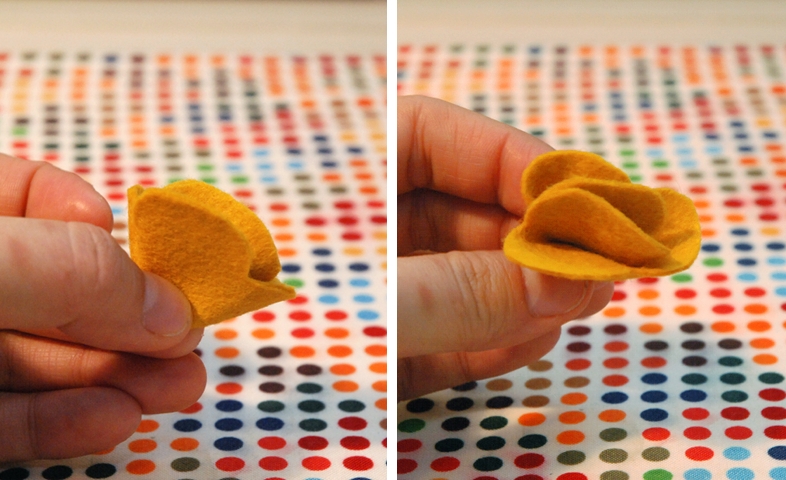
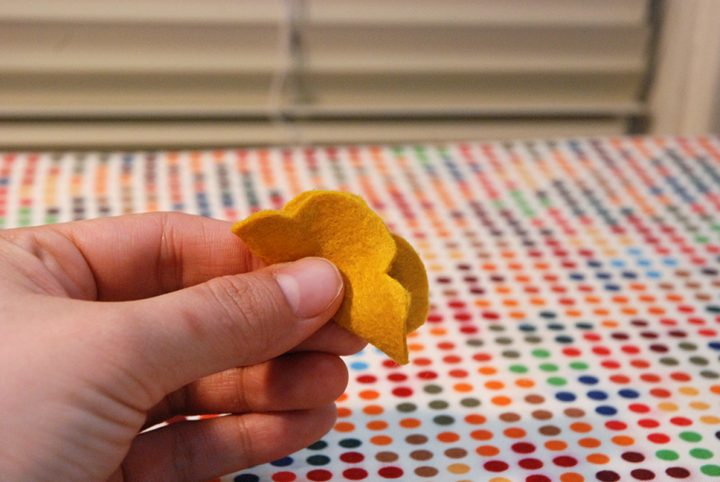
Then fold it in half again.  It should look like this (side and top view).

Take the larger of your two circles and place the tip of your folded petal piece in the center of the circle.

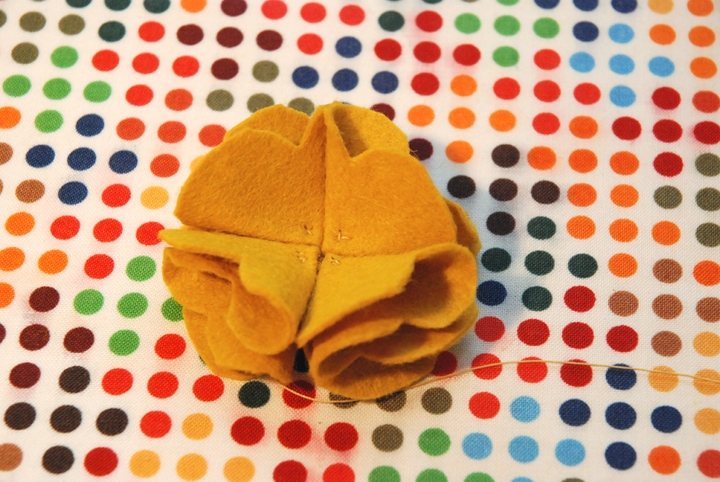
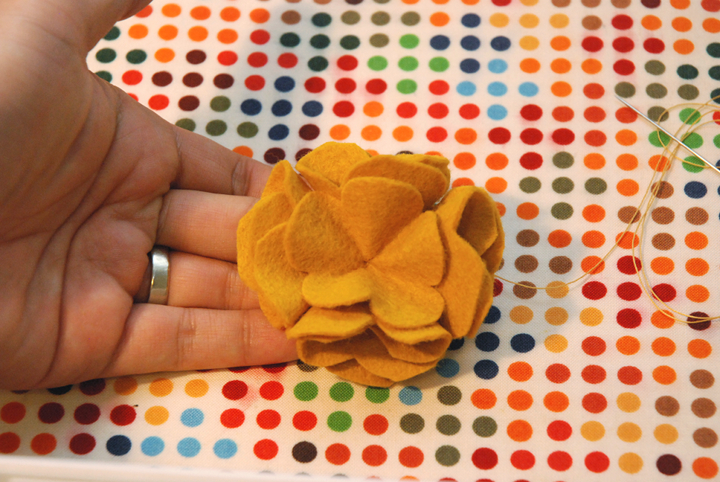
Starting from the back side, put through needle through the tip of the folded flower and stitch it in place.  Don’t tie off or cut the thread, continue using it for the entire flower.  Repeat with the other 3 petal pieces arranging them around the circle to cover the entire circle.  It should look something like this.

Now take one of your smaller petal pieces and place it on top (without folding).  Put the needle through the flower (from the back) slightly off center and then back down a millimeter or two over.

When you pull your thread tightly, it will pull the center of the flower in and the petals upward (because of the small space between the stitch).

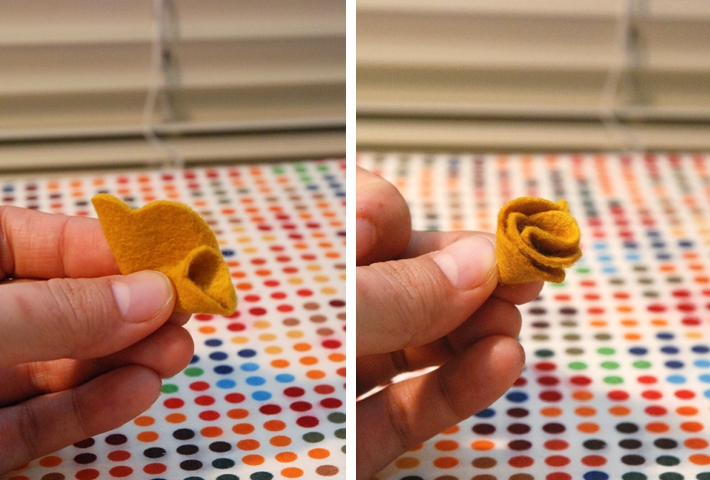
Now, for the center of the flower, you’re going to take the last petal piece and fold it in half.

Then roll it into a cone.

Insert your needle back through the center of the flower and through the tip of the cone.  Pull the needle through the cone and back down the center of the flower.  Stitch it into place a few more times, then tie off the thread at the back of the flower and snip.

The back of your flower will probably look something like this, messy stitches and knots all over.  Heat up your glue gun and adhere the pin back to the center of the flower.

Take your smaller circle and hot glue it to the back covering the pin back (and all those unsightly stitches 🙂

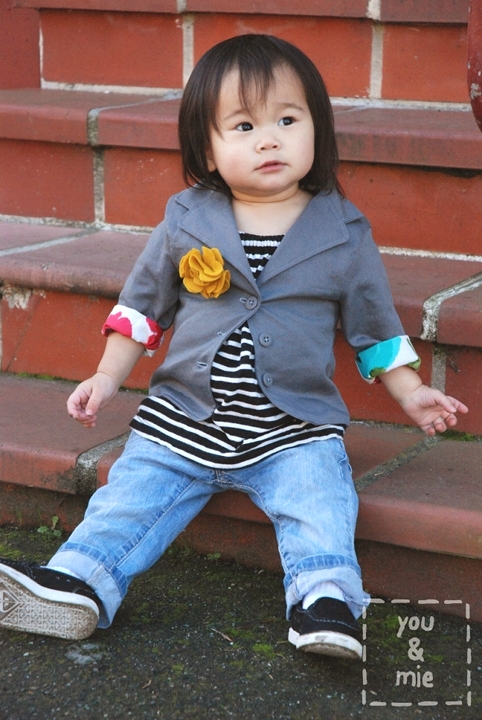
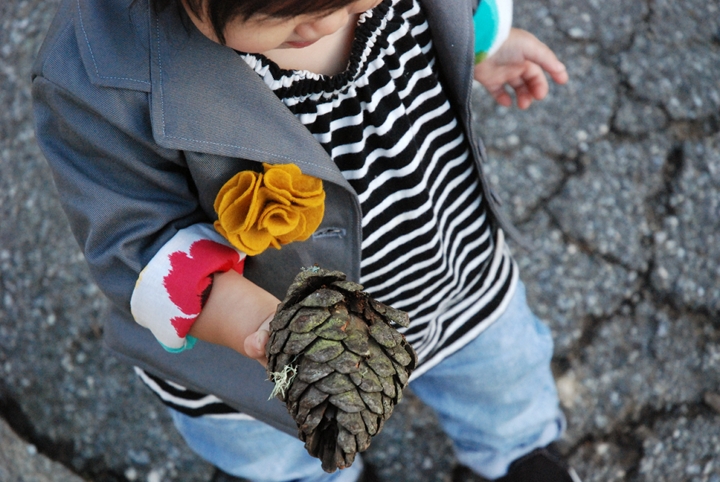
At this point, I didn’t totally like the shape of the flower and it’s petals, so I took some scissors and trimmed it a bit.  Then you’re done!!  Add it to anything for a fun finishing touch.  I used it on this blazer, but I love that I can add it to any other coat, or a bag, or a headband, etc.

There you have it!  One more flower tutorial for ya!

Tutorial: Making Bell Bottoms From Regular Pants

I meant to post this last week, but got caught up in sewing.  So here’s a quick tutorial from my 60s Flower Child outfit from 2 weeks ago.  I’m going to show you how I made regular pants into bell bottoms.  It’s super easy and you can do this for kids or adult pants to add a little extra flare.  Get it!??  Wah waah.

This could be fun for a hippie costume or if you just like wide leg pants!  Here’s what you need:

Pants (you’ll want to use something that is pretty fitted on top, baggy pants won’t look as good)
Fabric for the inset (either a decorative fabric, denim, or something that will match your pants if you want a less noticeable look)
The usual sewing necessities (sewing machine, scissors, thread, ruler)

First, you want to hem up the bottom of your inset fabric.  To figure out how much fabric you’ll need to hem, just decide how wide you want the bottom of your inset to be (my little toddler pants insets were about 4 inches wide) and then double that (because you’ll need two) and always add a couple inches for good measure.  I skipped this step because I left the bottom of my pants unhemmed, but if I had, I would have hemmed about 10 inches of my inset fabric.

Then, cut the outside seam of your pants up to the point where you want the pants to start flaring out, usually right below the knee.  I just cut as close to the seam as possible on one side, and then cut up the other side of the seam and trim the seam to remove it.

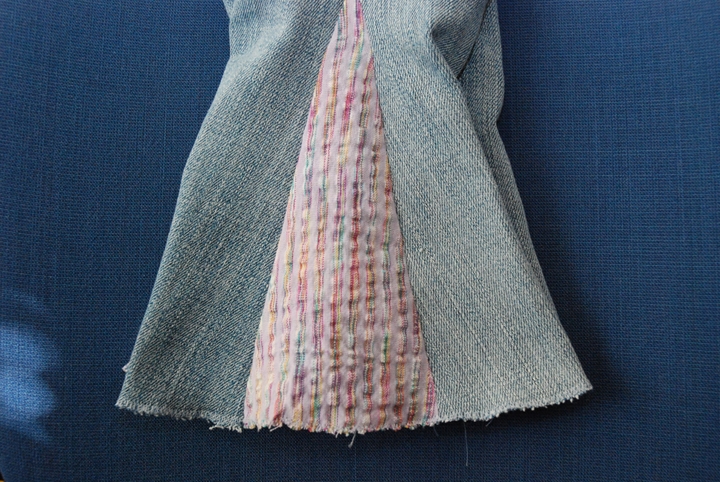
Now we’re going to cut 2 triangles from our inset fabric.  The hemmed side will be the bottom of triangle (again, I didn’t hem, so just pretend :)).  You want your triangle height to be about half an inch taller than the cut you made in your pants’ side seam.  I cut about 8 inches up the pant leg, so the height of my triangles are 8.5 inches.  As for the width of the bottom – that’s up to you.  The wider the triangle base, the wider the flare.  You decide!!

Now it’s time to sew!  Line up one side of the triangle with one cut edge of the pants, right sides together.  You want the bottom seams lined up.  Pin and sew starting from the bottom with about a 1/4 inch seam allowance (my inset fabric looked the same on both sides, so there was no “wrong” side, but make sure your fabric is wrong side facing up).

When you open it up, it should look like this on the right side.

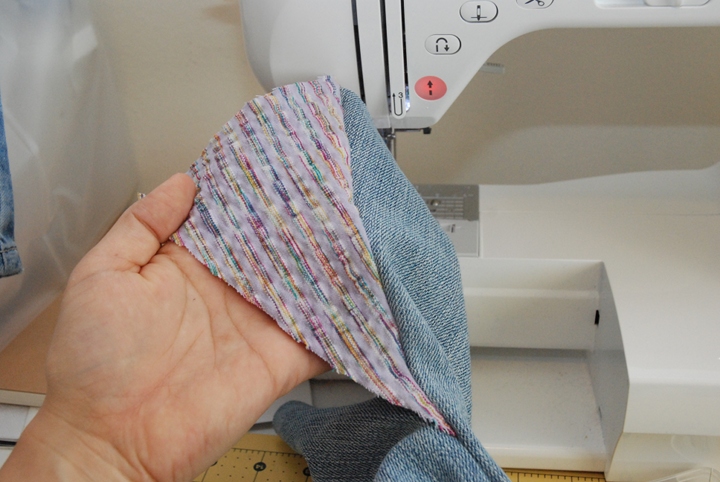
Now turn your pants inside out and line the other sides up, right sides together.  Pin and sew.  You want to try and get your seams to meet in the middle at the top of the triangle.

When inside out, your pant leg should look something like this.

Turn the pants right side out and iron.  Repeat with the other pant leg and you’re done!

I hope your little hippie enjoys their pants!!

Tutorial: Easy Pants Cuffs

For my last week’s Project Run & Play outfit for Boys Week, I wanted to make some pants with a cuff.  At first I was thinking about making fully lined pants with a fold up cuff, but I decided to simplify and just make a fold up cuff to attach to the bottom of the pants.  It’s a super easy way to add a fun accent or add length to pants that are a bit too short.  I thought I’d show you how I did it.

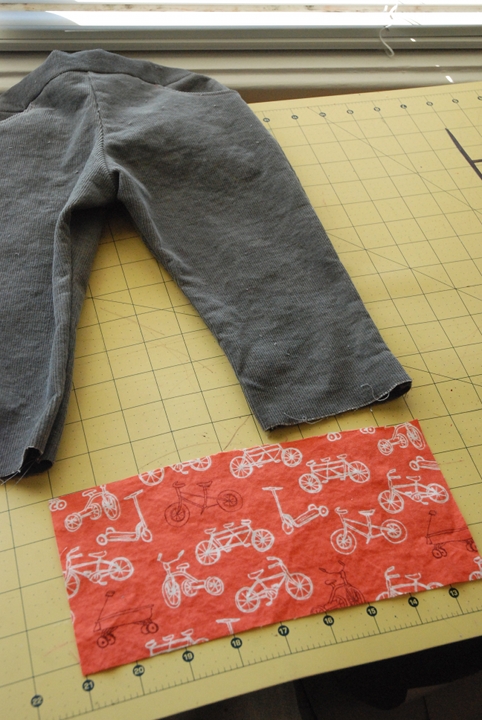
First, start with a pair of pants, either an already finished pair, or if you’re making pants you can stop before hemming the bottoms.  You want the length of the pant legs to be about a half inch longer than the final desired length of the pants.  If you are trying to lengthen pants, don’t worry.  Start with what you have and you can add the extra fabric to the cuff.

Cut two rectangles out of your cuff fabric.  Your rectangles will need to be twice the width of the pant bottom plus 1/2 an inch for seam allowance.  The leg openings here were about 4 inches, so I doubled that and added 1/2 an inch to get 8.5 inches (the fabric here is more like 9 inches because I usually cut extra, just in case).

The height will be twice the desired cuff height, plus 1/2 an inch.  I wanted my finished cuffs to be about 1.75 inches, so I doubled that and added .5 to get 4 inches.  If you are making cuffs to lengthen pants, you’ll want to add more fabric depending on how much longer you want your pants to be and how big you want the cuff to be.  You might have to play around with the measurements a bit.  I always cut my fabric big and then trim away what I don’t need later. 🙂
Fold your fabric in half, so that the short ends are together, right sides together and sew along the short ends using a 1/4 inch seam allowance.  Now you should have a tube.

Fold the top half of your tube down so that the right side of fabric is showing on both the inside and outside of your tube and press.  If your fabric has a top and bottom like mine, you want to make sure the print is facing the right direction and the folded part of the tube is on top and the raw edge is on the bottom (you may need to flip your tube inside out).

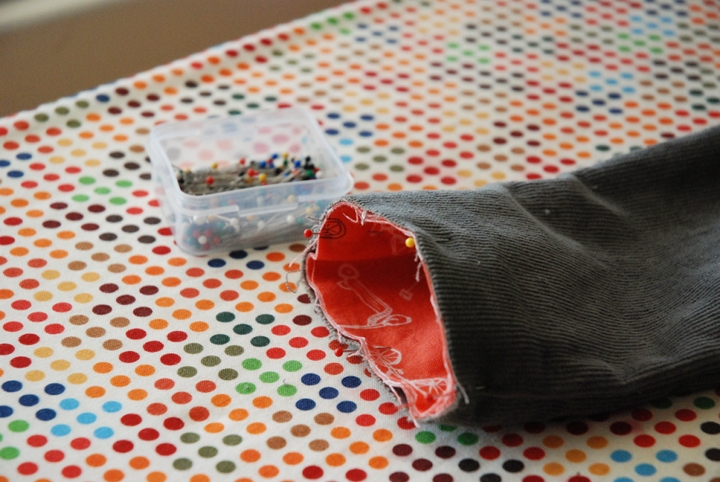
Now, with the folded edge still on top, insert the cuff into the pant leg.  Line up the side seam of the cuff with the inner seam of the pant leg.  The right side of the cuff should be facing the wrong side of the pants.

Line up the bottom of the cuff with the bottom of the pant leg and pin all the way around to hold the cuff in place.

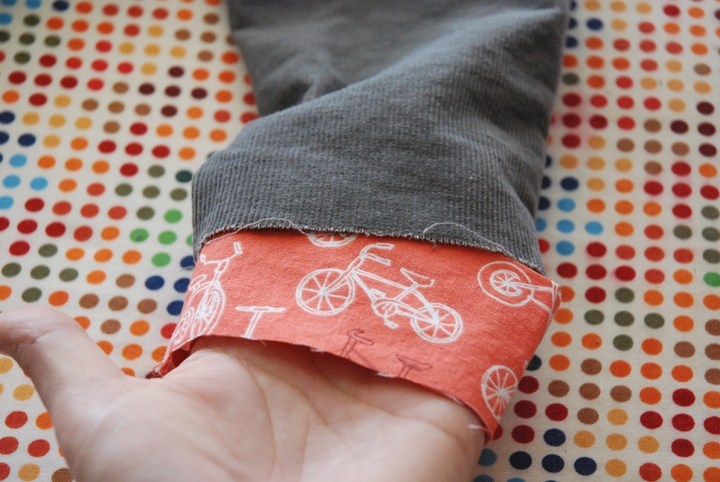
Sew the cuff to the pant leg using a 1/4 seam allowance.  You can also serge or zig zag the edges here for less fraying and a cleaner look.

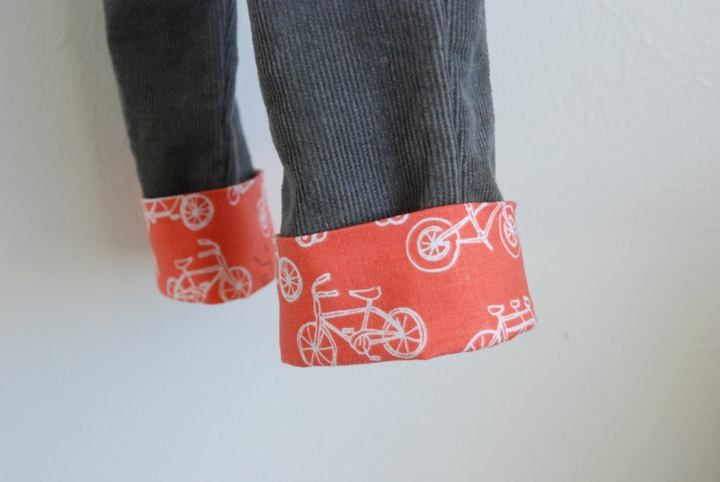
Pull the cuff out of the pants and fold them up.  Press and you’re done!!

Imagine the possibilities!  Now you can spice up just about any old pair of pants!  Have fun!

Tutorial: Classic Jumper

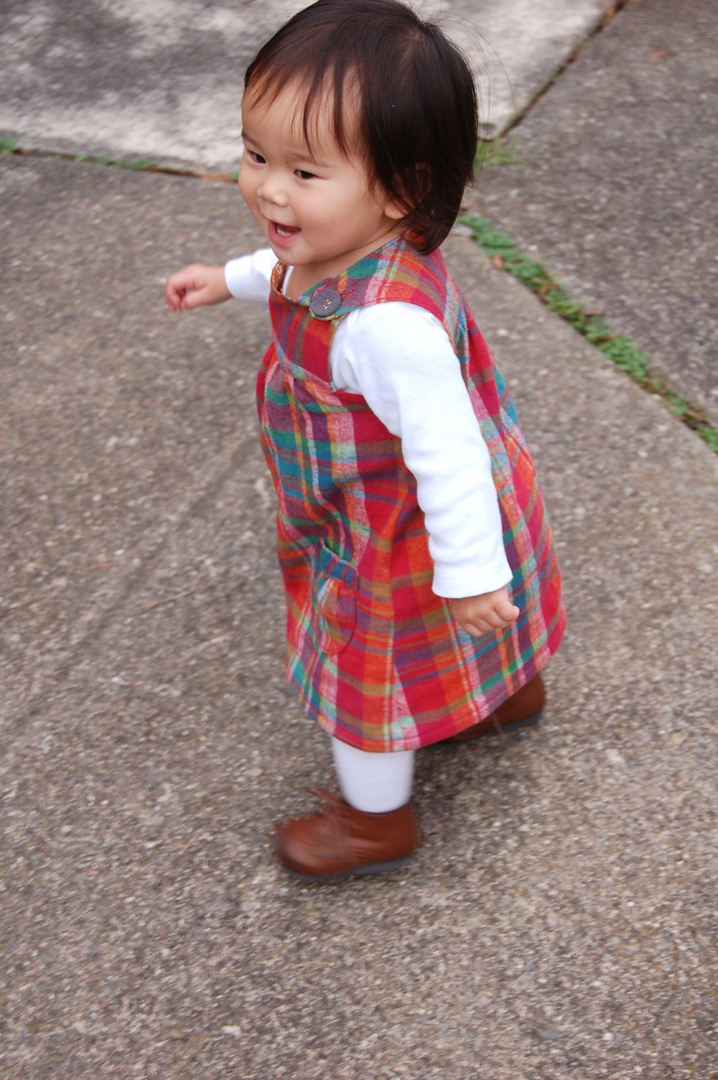
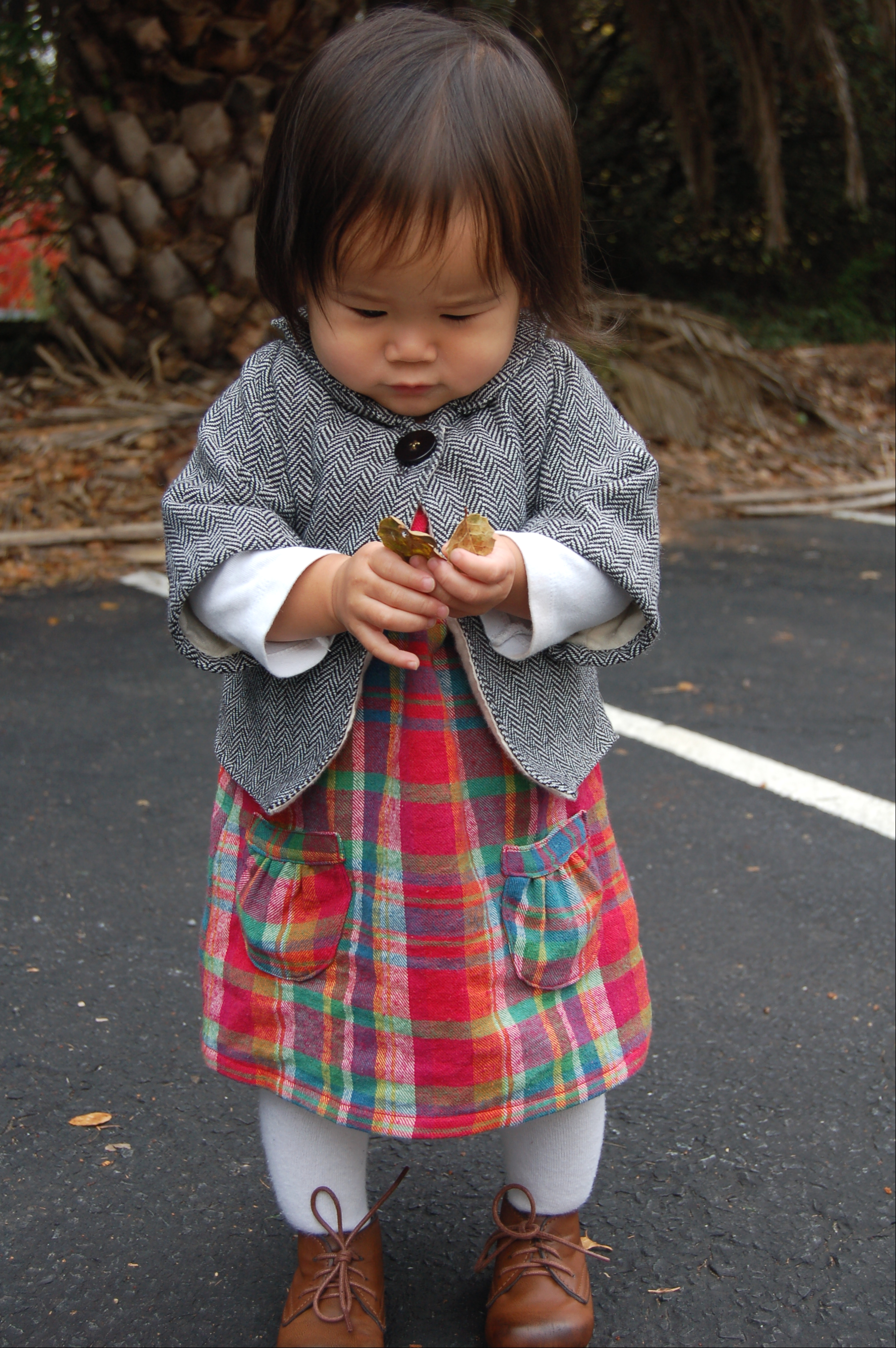
This post is long overdue!  I made this jumper for Yuki for Thanksgiving (along with the Herringbone Short Coat) and I’ve been wanting to share this tutorial ever since.  I hope you keep in mind that I just kind of make this stuff up as I go along, so I don’t know if this is actually the best way to make a jumper.  It’s just the way that I did it and in case you’re curious – here it is!

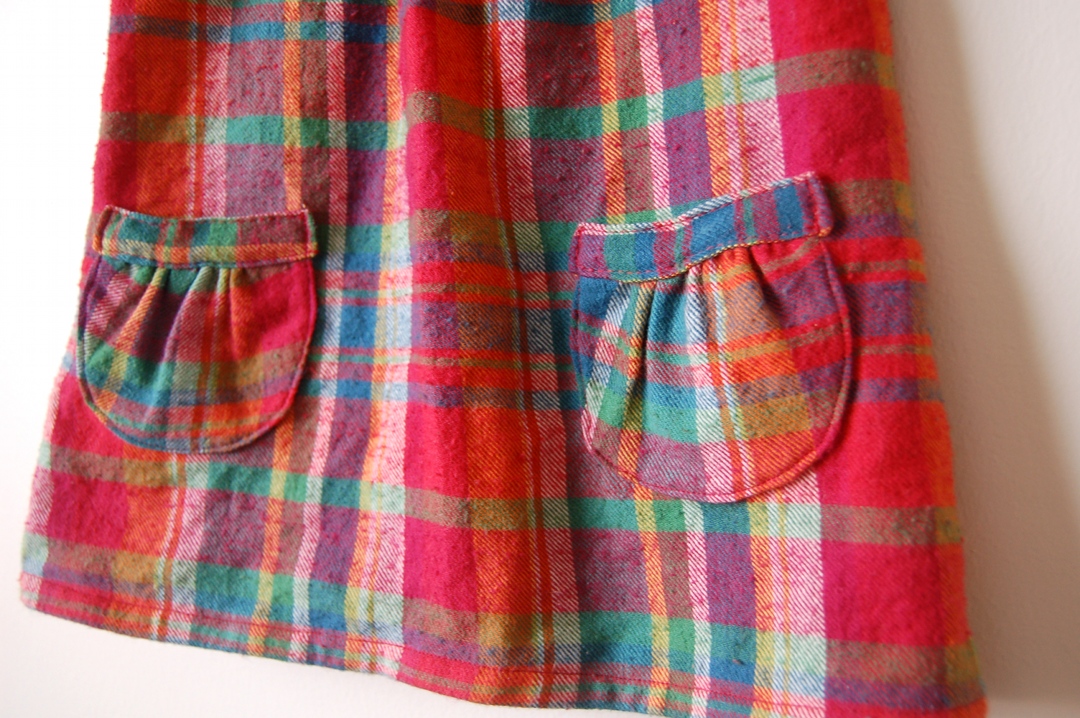
I’d been wanting to make a jumper for Yuki for some time.  It’s just such a fun and classic style.  And there is this super colorful plaid flannel (that I’m kind of obsessed with), that I thought would add a bit of a non-traditional, yet still holiday, feel to this piece.  Here is the sketch of the jumper I wanted to make.

You will need:
Main fabric
A little bit of fabric for lining
2 buttons

For this 12-18 month size jumper I probably used 3/4-1 yard of the main fabric and 1/4 yard of the lining material.

So first you need to draft your pattern.  I used a small jumper to get the pattern shapes, and a dress that fits Yuki to get the pattern size.  If you need help drafting a pattern, there are plenty of great resources out there like this one or this one.

The red lines are alterations I made as I was sewing, when I realized the size/fit was all wrong.  If you’re using this to get general shape ideas, make note of those changes!

The pieces you’ll need are:
Bodice front (1 main, 1 lining)
Bodice back (1 main, 1 lining)
Body front
Body back
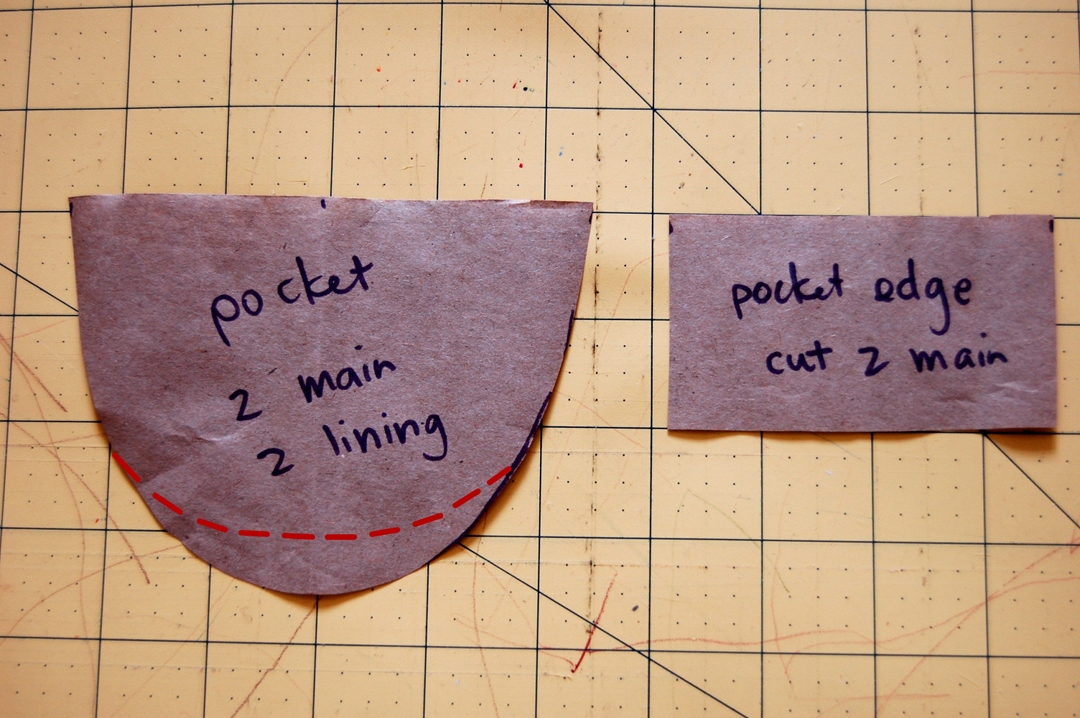
Pocket (2 main, 2 lining)
Pocket edge (2 main)

Let’s start sewing!

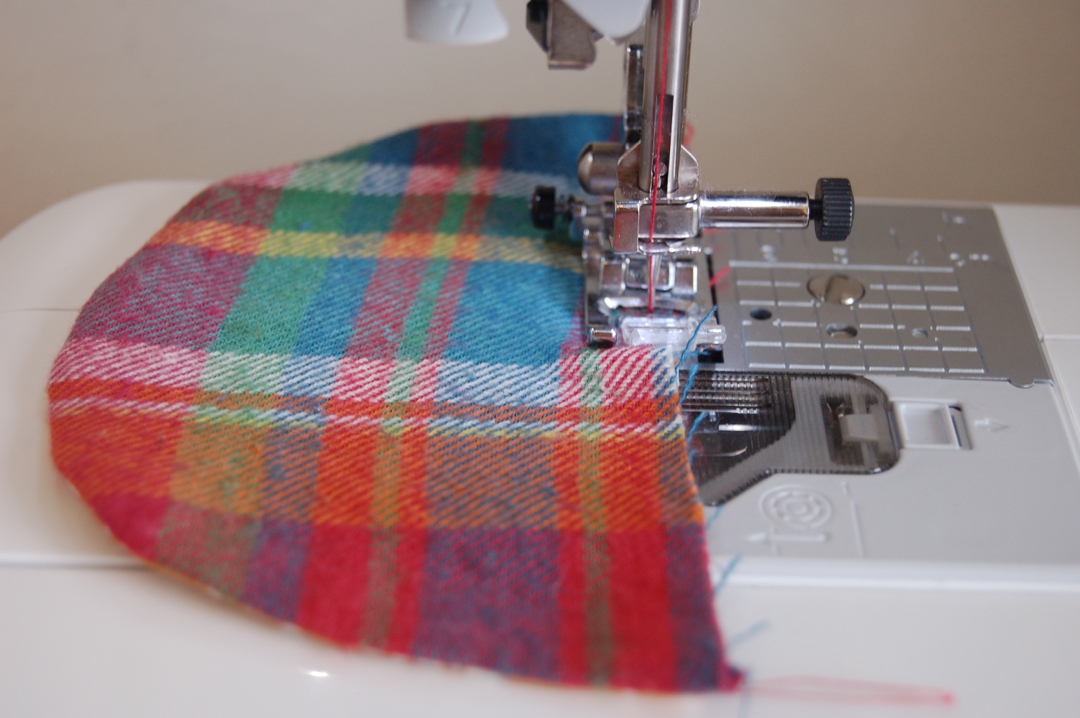
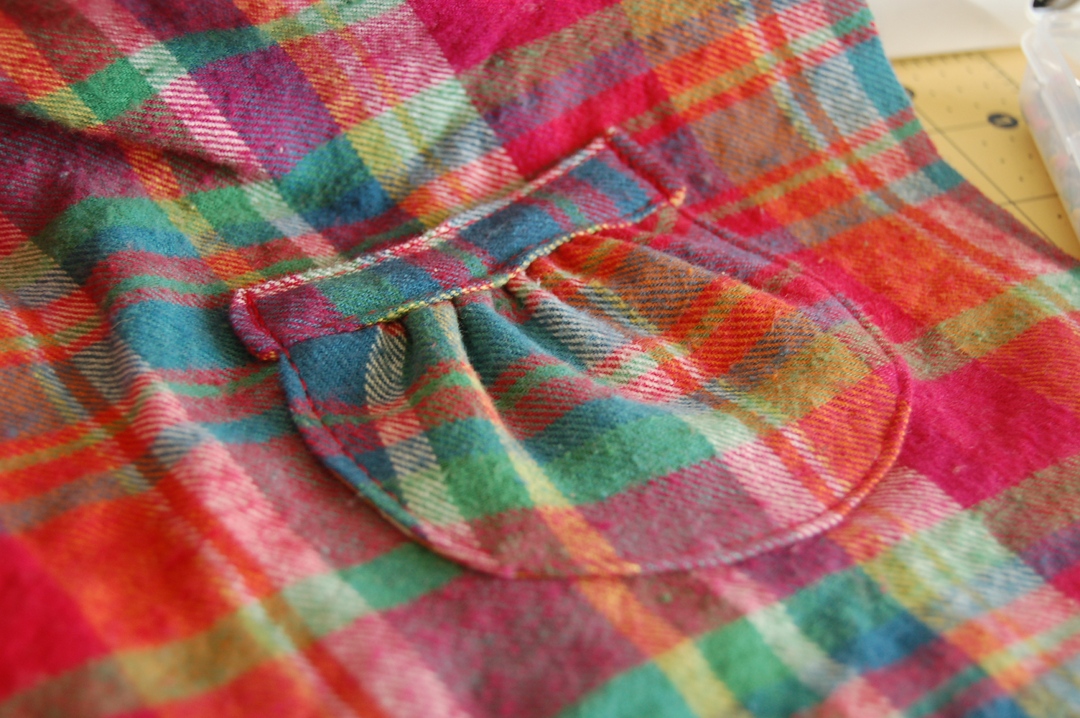
First we’ll do the pockets.  Take one main fabric pocket and one lining pocket and pin them together right sides together.  Do the same with the other pocket fabrics and sew the curved edge together.  Keep the top (straight edge) open!  Flip them right side out and press.

Now we’re going to gather the top of the pocket.  If you need help with gathering, here’s a great gathering tutorial.  I do it the way Dana calls the “proper” way, except I usually only do 1 line instead of 2 or 3, like you’re supposed to.

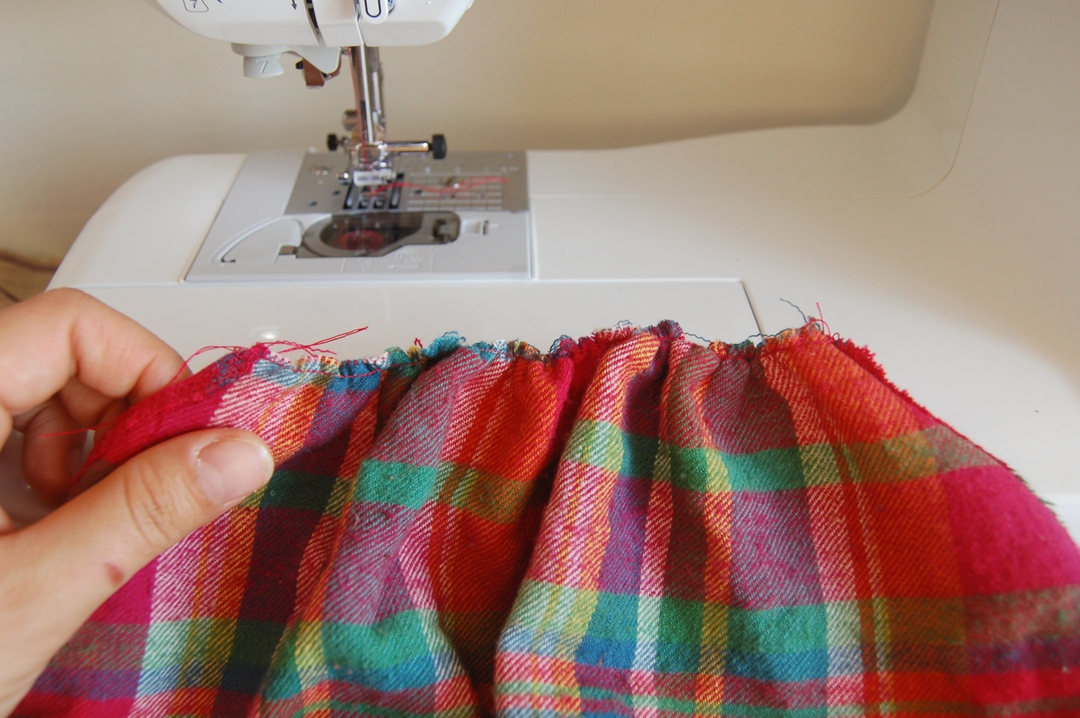
Sew a straight line across the top edge of the pocket with your machine set to the longest stitch.  Do not backstitch at the end or beginning!  Pull on one of the threads to gather the top edge of the pocket.

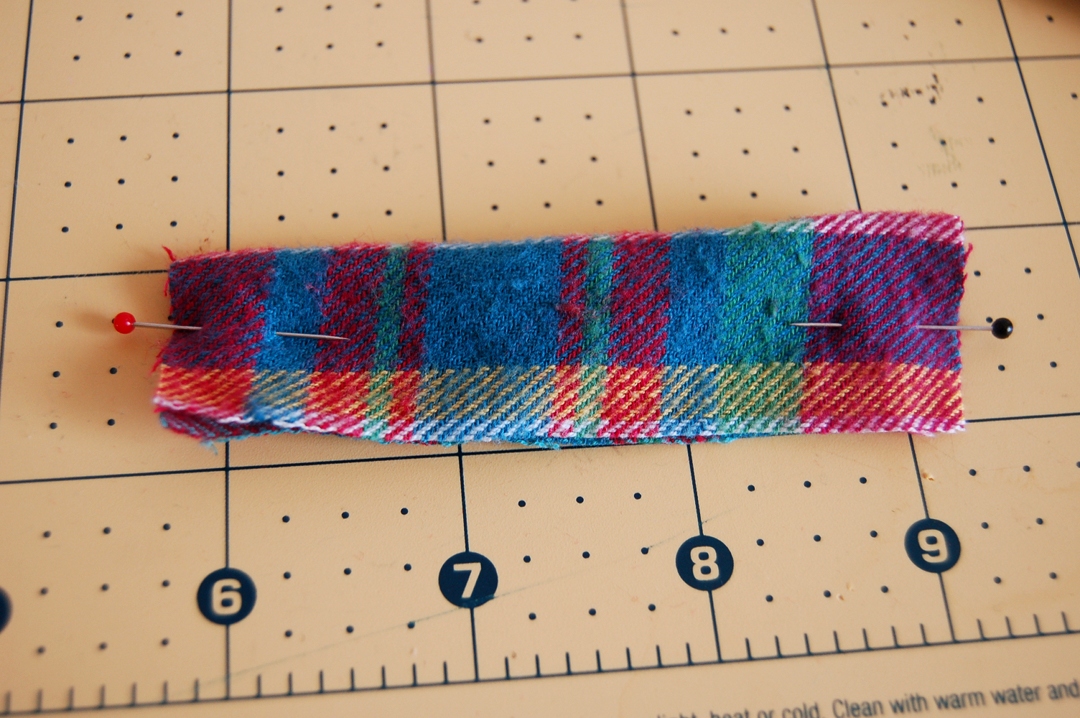
For the pocket edge, fold it in half along the long side with the right side in.  Sew up the short sides and leave the long edge open.  Flip it right side out and press.

Then fold the edge in about a 1/4 inch and press.  Now you have this little pocket to stuff the top of your pocket into 🙂  Confusing enough?

Slide the top of the pocket into the opening and sew around the edge.

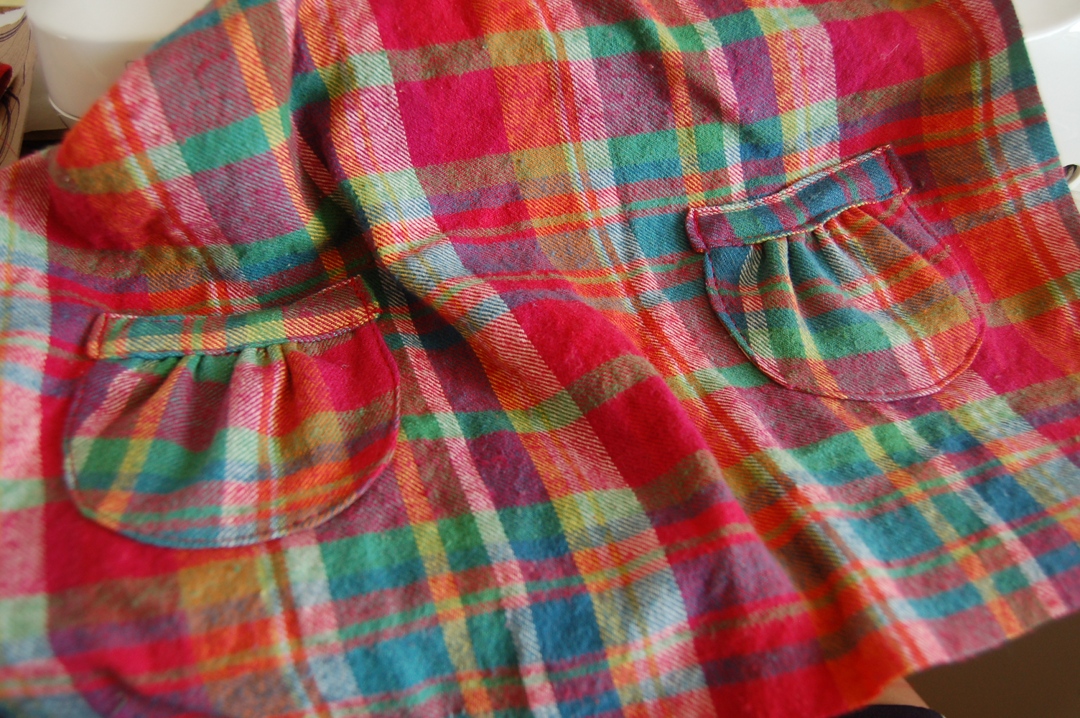
(why does one pocket look bigger than the other in this picture? 😦 )

Position your pockets onto the front body piece and top stitch around the pocket.  Make sure to leave the top of the pocket open and also sew back and forth several times at each end.  The top corners of pockets get pulled the most, so these extra stitches will make sure the pockets are securely attached.

Now lay the front and back body pieces together with right sides together and pin up the sides.  Sew up the sides and then press these seams open.

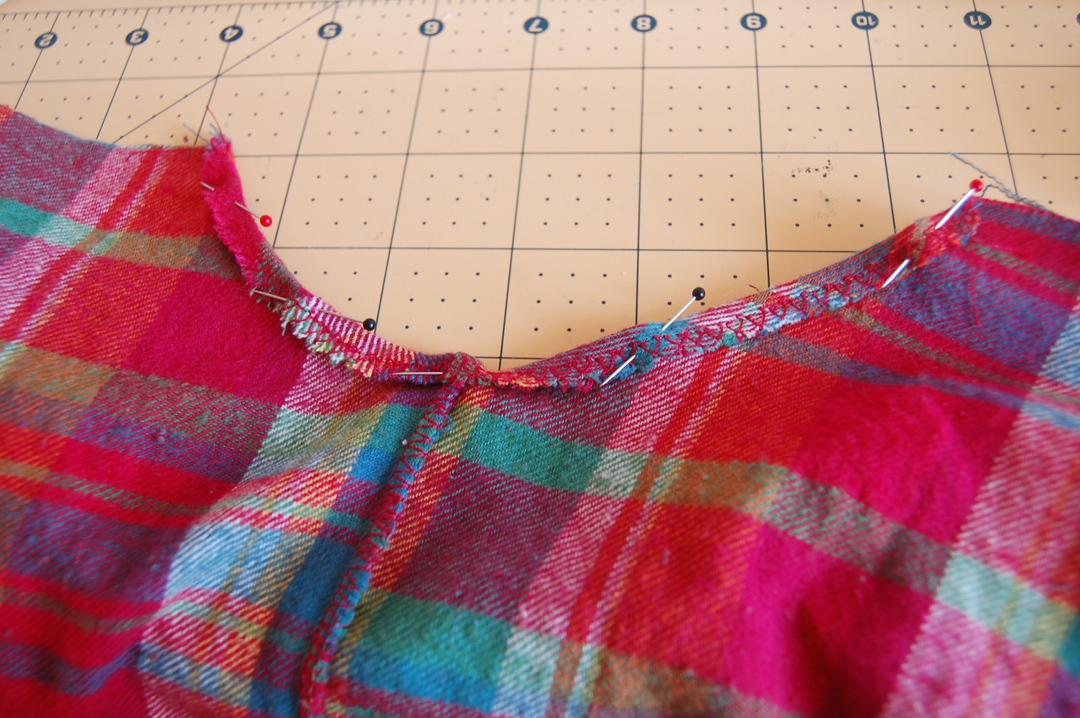
With the side seams opened up, serge or zig zag stitch along the arm hole.  Fold the edge down a 1/4 inch, press and sew.  If you can’t serge or zig zag, just fold the arm hole edge down a 1/4 inch and then another 1/4 inch, then sew (like you would a hem).

Now we’re going to gather the top part of the body piece.  Just like before, set your machine to the longest stitch and sew a straight line across the top of both the front and back of the body piece.  Pull one thread to gather the fabric (both front and back).  Set the body of the dress aside while we work on the bodice.

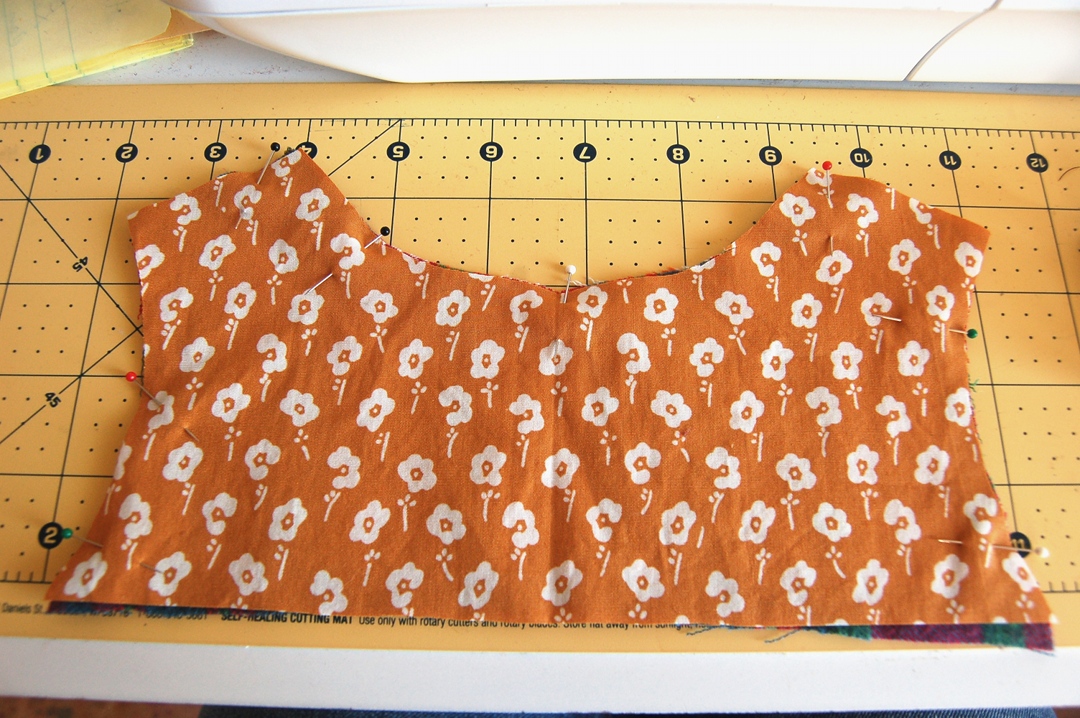
Pin the bodice pieces together: main fabric and lining of the front bodice piece and the main fabric and lining of the back bodice piece, right sides together.

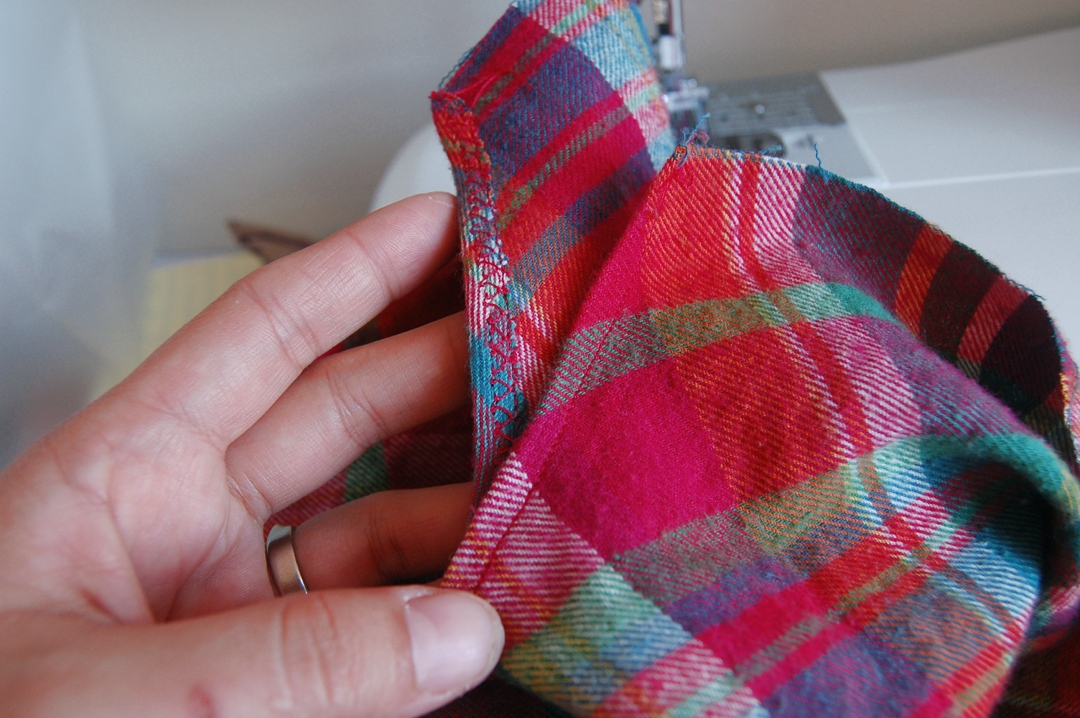
Sew around bodice pieces, leaving the bottoms (straight edges) open.  Trim excess fabric, corners and clip curves.  Turn right side out and press.

(I also added a label at this point, in the center of the back bodice piece.  I just used an iron on transfer that I printed on my inkjet printer).

Turn about a 1/4 inch of the bottoms in (the same way we did with the pockets) and press.

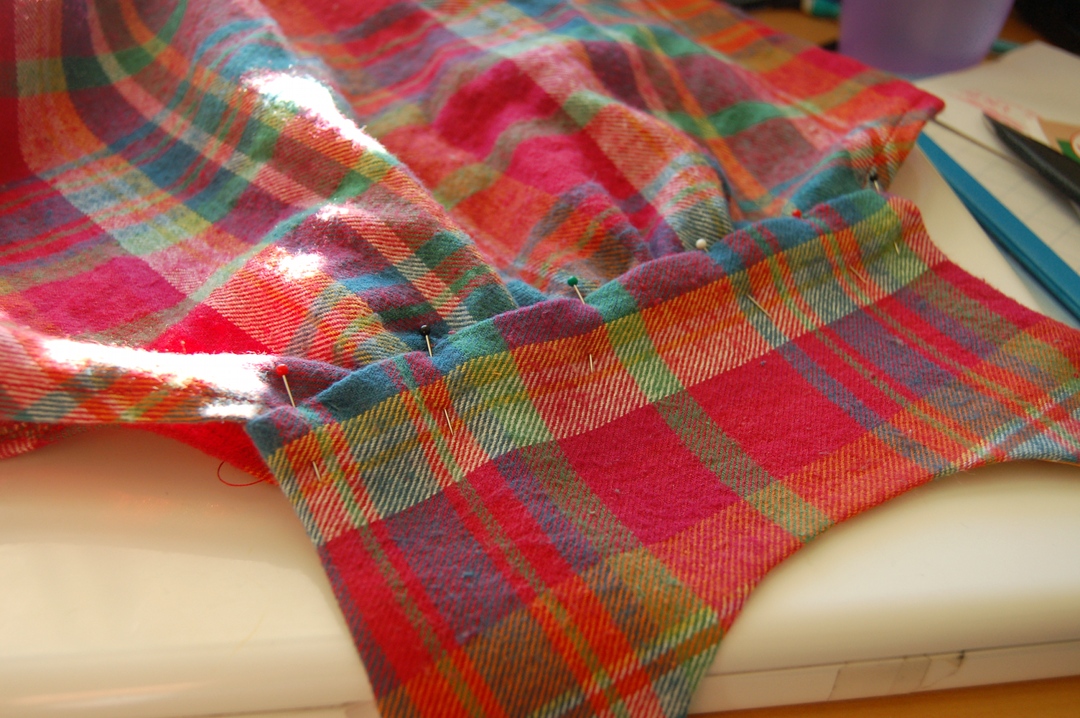
Now you’re going to slide the gathered edges of the body into the bodice pieces (just like we did with the pockets)!  Make sure to put the front of the jumper into the front bodice piece and the back of the jumper into the back bodice.  Pin and sew along the straight edge and continue top stitching around the entire bodice piece (both front and back).

You’re almost done!!  Sew button holes in the back bodice piece and buttons onto the front bodice piece.

Hem up the bottom by folding up a 1/4 inch and pressing, then folding another 1/4 inch, pressing again and top stitching.  You’re done!!!

I hope this wasn’t too confusing.  I’m still learning how to write and photograph for tutorials, so I know this wasn’t perfect, but I’m working on it!  In the meantime, don’t hesitate to contact me if you have any questions!

I love the jumper style because it’s so versatile.  Depending on the fabric and how you layer it, it can be appropriate for pretty much any season or occasion!

(It is getting harder and harder for me to keep this one still for photos!)

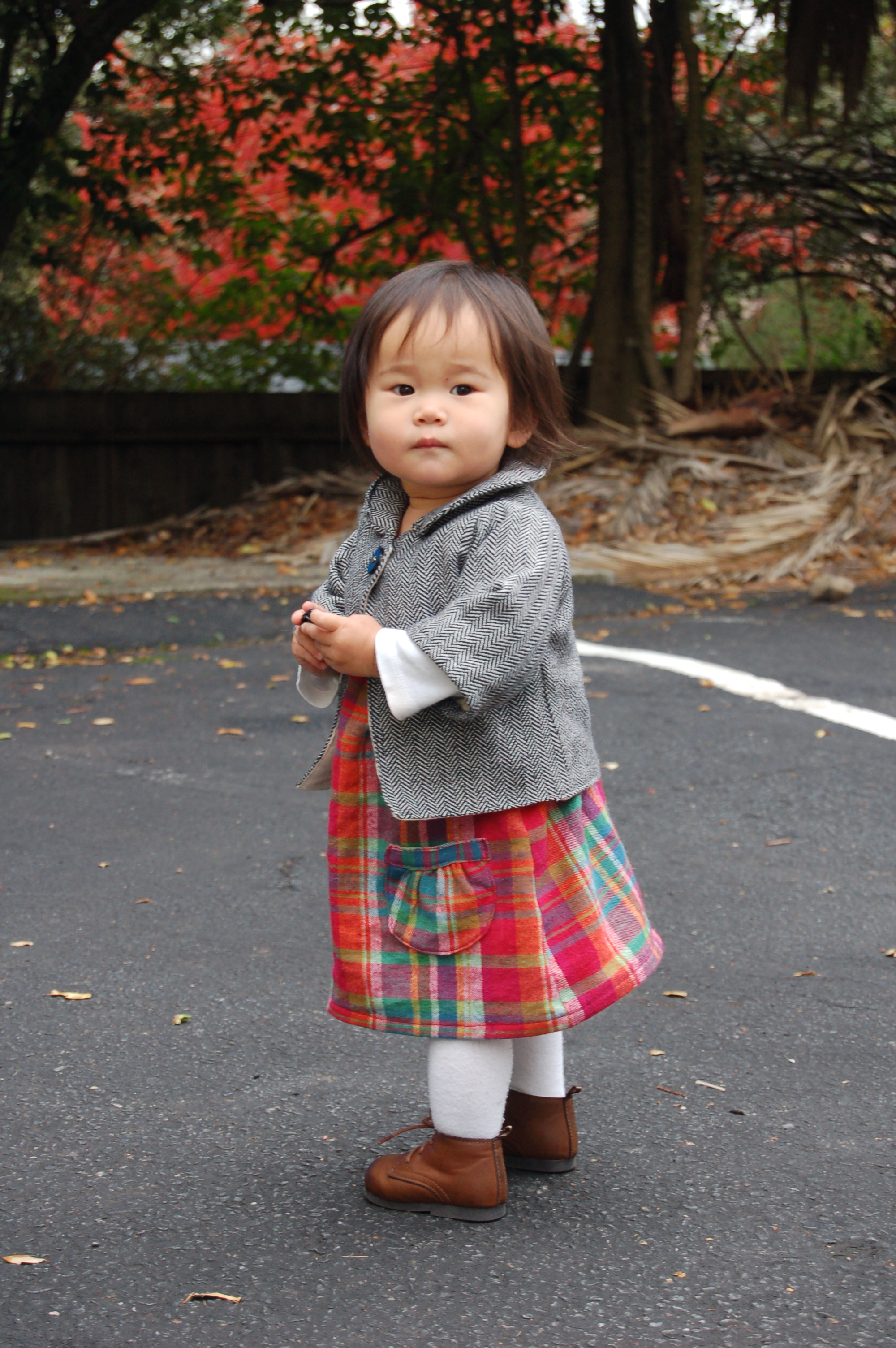
Pair it with a little coat and she’s all ready for the holidays!

Are you all done making holiday outfits?  I’m not!!  I only have 2 days left, so I better get sewing!

My very first (real) Christmas tree and it’s skirt

All my life I grew up with a fake tree.  An OLD fake tree that lived in several huge boxes in the basement that was lugged upstairs once a year, assembled and decorated.  It was a family tradition and all we ever knew of Christmas trees.  I loved it and never thought much about a real tree.  A fake tree just seems so practical and economical and easy, and traditional (for us).

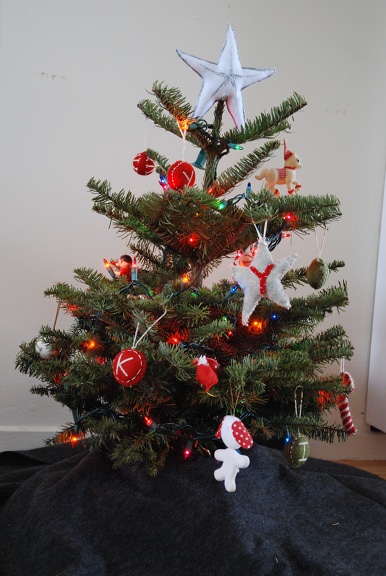
This year, Yuki will be 16 months old at Christmas.  She doesn’t understand what’s going on or what presents are and she certainly doesn’t know anything about Christmas trees.  I thought it would be unnecessary to get a tree in our tiny home and our small child would for sure would terrorize, climb, pull, and break any tree or decorations she could reach.  But Hideko thought it would be nice, so when I was at the store and saw these tiny 3-4′ trees I couldn’t resist but get one as a surprise.

After I bought it I kind of freaked out.  I don’t know anything about real trees!  Do I need to put it in water?  Does it need a stand?  Well, thank goodness for the internet!  I got all my questions answered and I think we did alright.

After I brought it home and unwrapped it (it was all tied up in a bundle when I bought it), I realized that it was a bit of a Charlie Brown tree.  The top half was a bit sparse 😦  It sat in our living room for over a week with no ornaments or lights or anything.  Yuki was intrigued by it, but she was gentle.  She didn’t try and rip off all the needles or knock it over like I thought she would.  We kept meaning to go out and buy ornaments, but we never had the time, so one day Yuki found my bag of holiday cookie cutters and started placing them all over the tree!  So creative!  She’s a little Martha Stewart in the making 🙂

And so our tree stayed like this for a week or so.  Yuki would occasionally take the cookie cutters off and put them back on.  It was a fun game for her.

Finally, 2 days ago, I went out and bought some lights.  There was something so magical about turning the lights on!  More like nostalgic.  I was suddenly very glad that I gave in to having a tree in the end.  This tree is the only sign of Christmas in our entire apartment!

I made a super fast fleece star and used fabric paint to add some glitter.  This was just a place holder until we found one that we really like.  Since then, one of my students gave me a Christmas ornament that was a beautiful glittery star (snowflake?) and it’s much too big and heavy for our little baby tree, so I used some wire to attach it to the top.  I took the cookie cutters off (sorry Yuki) and had her help me decorate with some handmade and vintage ornaments from our friend, Sanjai.  Our tree was almost done!

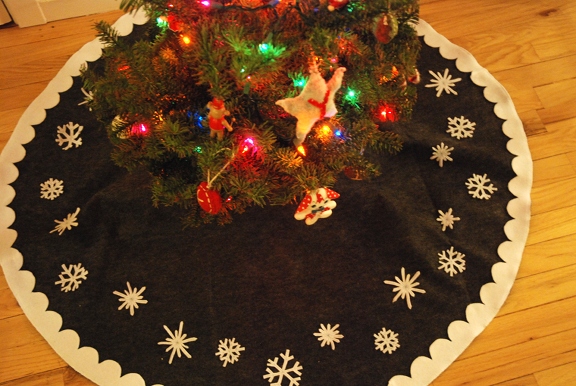
The only thing that was left to be done was the tree skirt.  This project took longer than I thought it would (as almost all of my projects do!), but I’m really pleased with the way it came out!

I had this huge piece of dark gray craft felt that I bought for another project, but never used.  I knew I wanted to use it up and it was the perfect size.  It was a bit dark though, so I planned on accenting it with white snowflakes or stars or something.  I’m a bit obsessed with snowflakes (considering I live in a place where it NEVER snows), so those won out.  I found this tutorial online for a cute snowflake stocking and used it to make my tree skirt snowflakes.  Here’s how I did it:

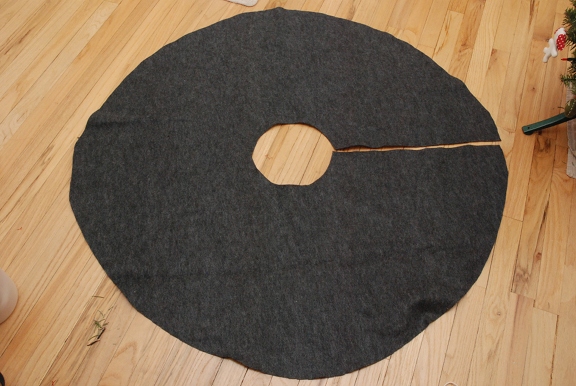
First I cut my main fabric (the gray felt) into a large square, about the size I wanted the finished skirt to be.  I folded it in half and then in half again, so it was a square.  Then I cut the fabric in an arc, from one edge to the other.  If you want to be precise, you can measure from the corner to the edge (which is your radius) and measure and mark (with chalk or pins) the same distance around until you get to the other edge.  Sorry, I didn’t photograph this part, I hope it makes sense.  I also cut a quarter circle from the corner for the center of the skirt.

This is when the fabric was still folded in fourths, after cutting:When you unfold it, it should look like this.  I cut a straight line from the outer edge to the inner circle for an opening.I wanted to make a scalloped border, so I took some white fleece and cut it into 2″ strips.  I had to cut about 5 strips and sew them together to make it long enough to go around the outer edge of the circle.

I used a round cap to make the scalloped design and then cut it out.

I lined the straight edge of the scalloped border with the outside edge of the skirt and zig zag stitched them together all the way around.  Then I considered top stitching the scallops down for some nice detail, but after realizing it would take too long and be really hard to make it look nice, I opted for some fabric glue 🙂

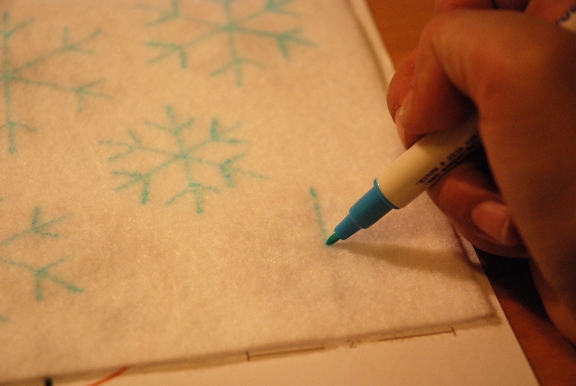
Now for the snowflakes!  The post I mentioned earlier has some templates for snowflakes that I printed out.  I traced them onto white felt.

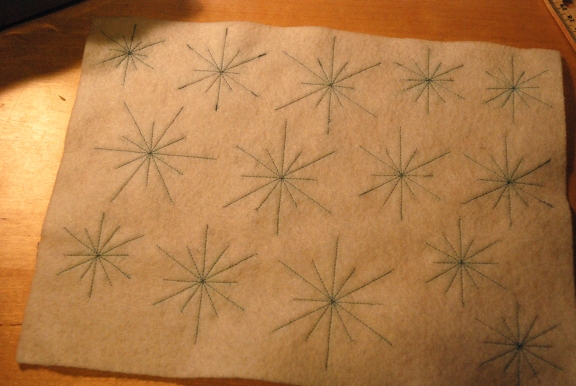
I used my machine to sew along the lines.

The most time consuming part of this project was cutting out the snowflakes, but I just turned on a movie and cut away!

Finally I glued them on with some fabric glue and I was done!

The best part about this project was that I already had all the felt, fleece and glue, so I didn’t have to buy anything extra.

Now all we need are some presents!!  Yikes, I better get started on that :[  And I want to make a stocking for Yuki too!

If only this little elf would stop sneaking cookie cutters onto our tree!! 😛

Tutorial: Double Layered Simple Skirt

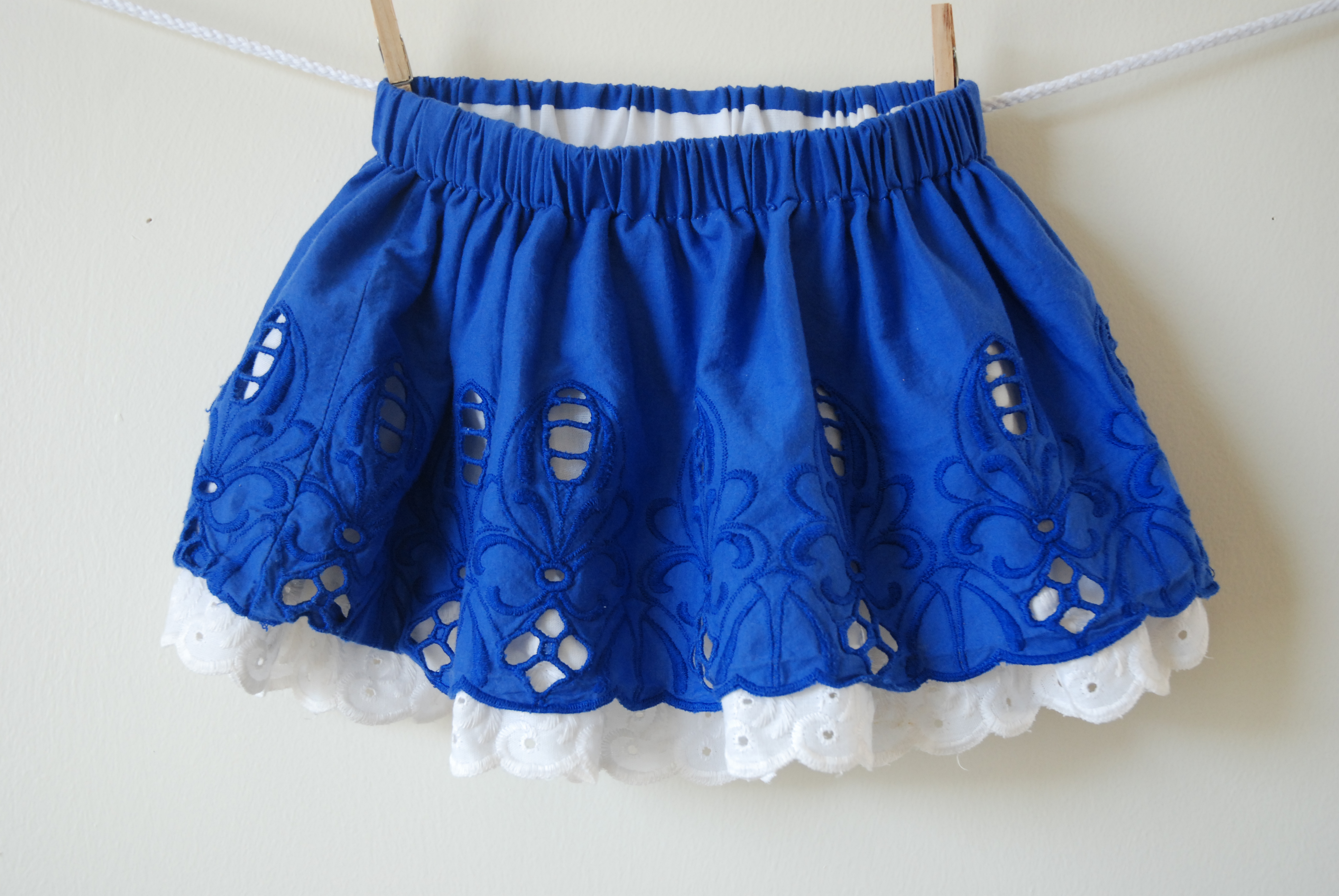
I’m so excited to share this skirt with you!  It’s kind of a Sew & Tell, Tutorial and Repurposed Project all in one!  I wanted to do an add-on to the Simple Skirt Tutorial to show you an easy way to add another layer and get a fun new look.  I also had some fabric laying around that needed repurposing, and this was the perfect way to use it.

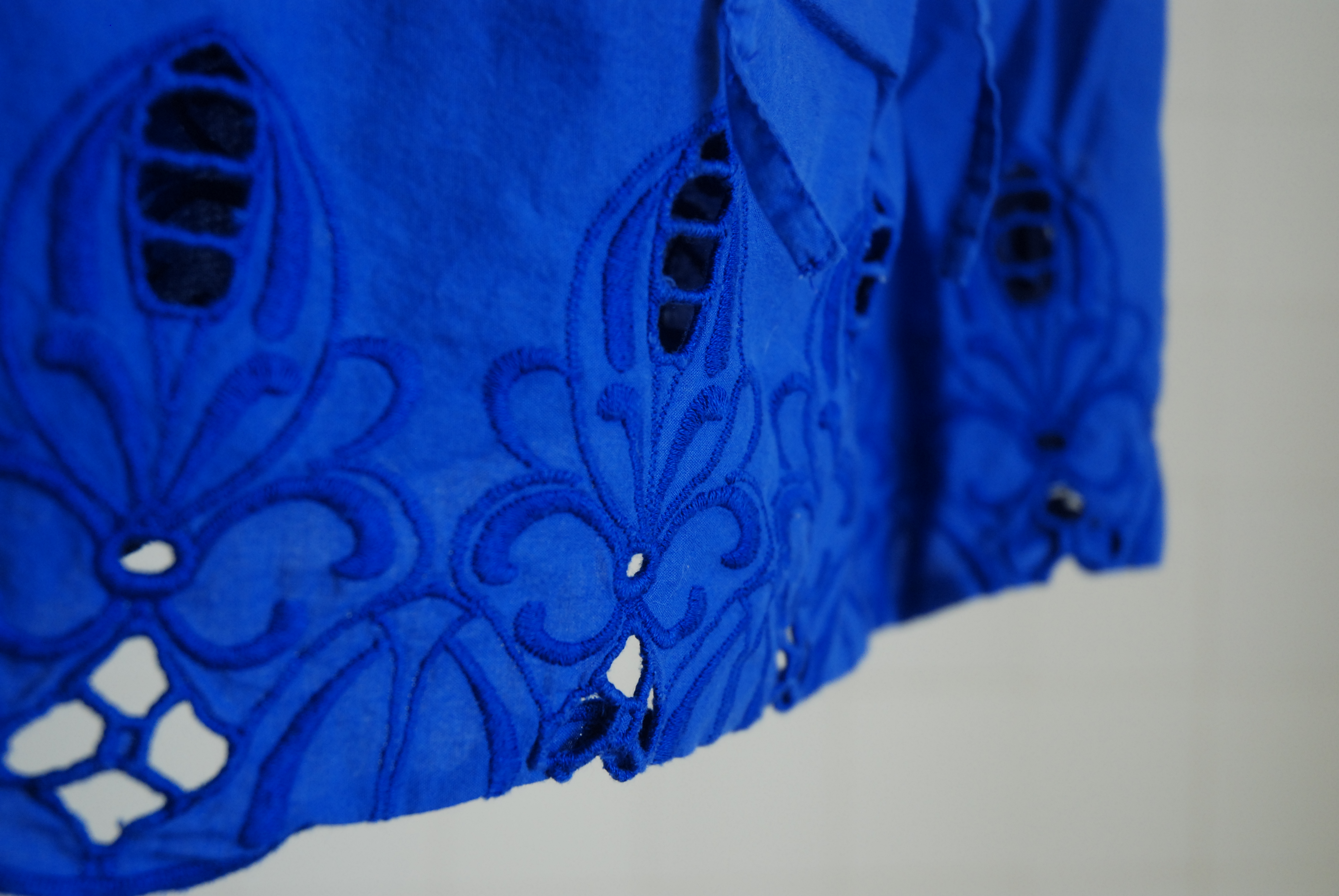
I started off with a tank top that had a stain smack in the middle of it.  I was ready to let go of it as a tank top, but I loved the unique scalloped eyelet bottom.

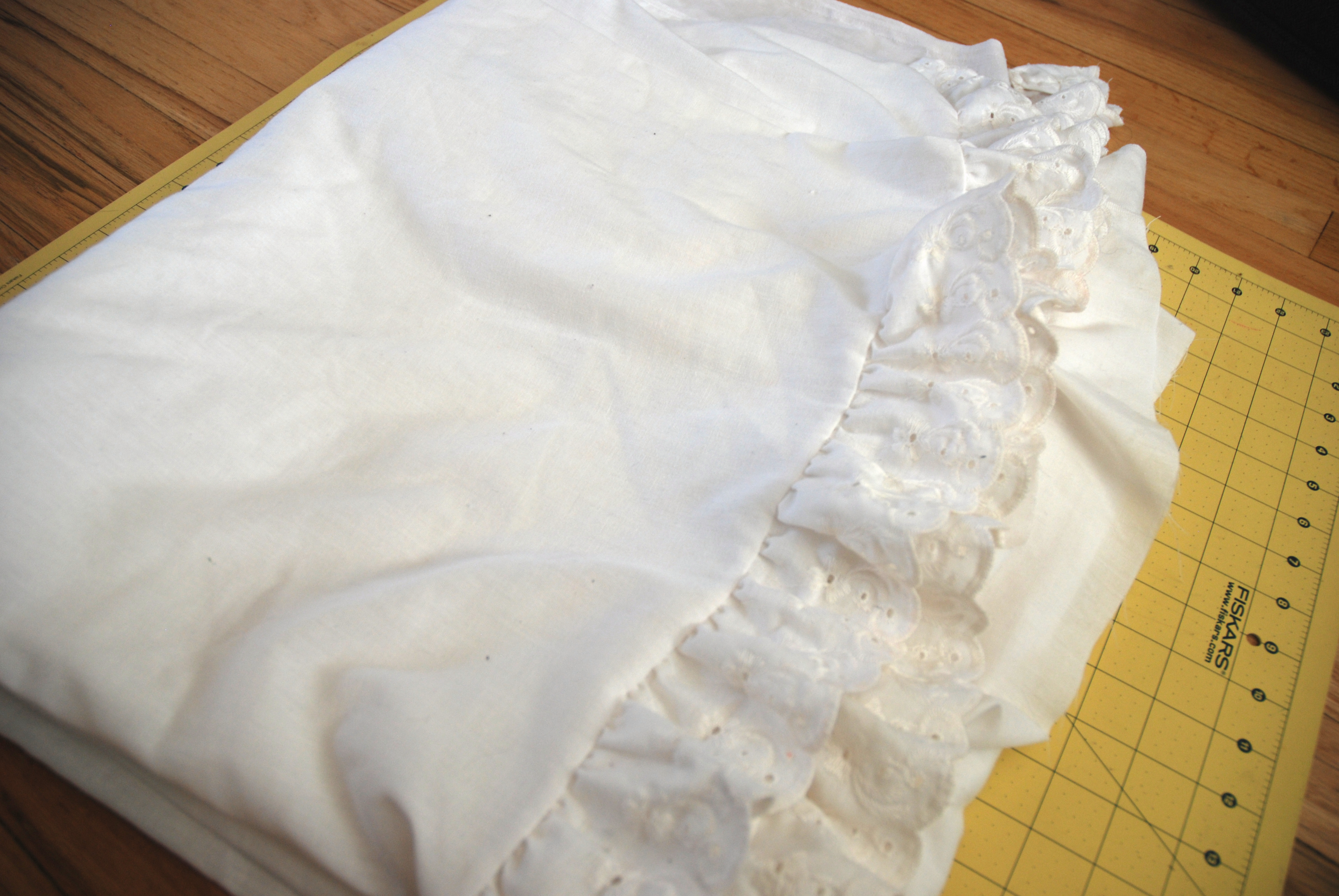
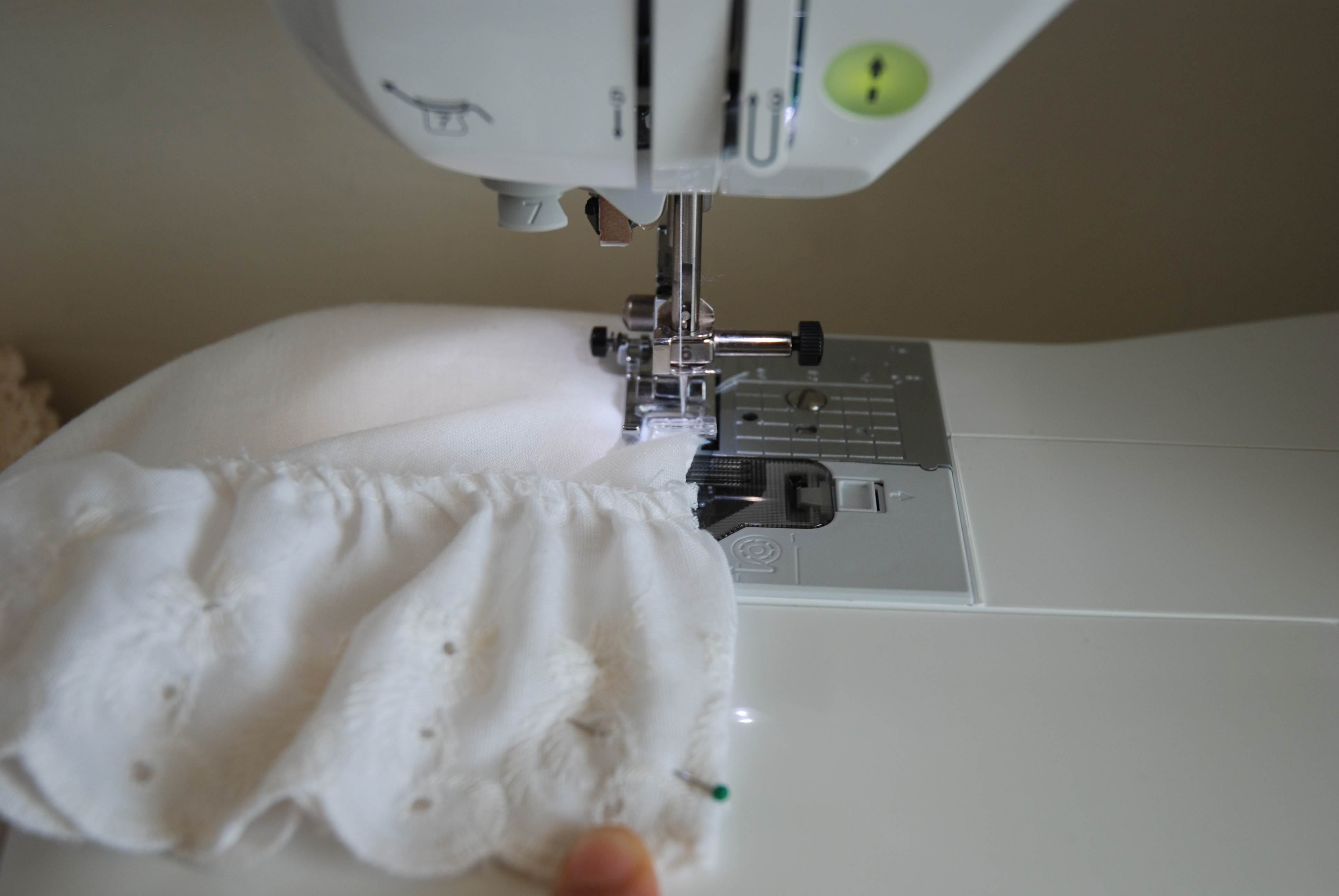
I thought I’d be able to use the material for a skirt for Yuki.  Since it has large eyelets I knew I needed another layer underneath so it would be appropriately modest for my little one 🙂  Luckily I had this old bed sheet I had bought at a thrift store for about a dollar.  I’ve used it to make lining for a pillow case, a mock-up for a jacket, and now this skirt and there’s still tons of fabric left.  What a great deal!  The sheet had a ruffle of eyelet fabric on the bottom that I thought might add some volume and why not add small scalloped eyelet to big scalloped eyelet?  Wouldn’t that be fun??

So let’s make the skirt!!  Like I said, this is variation of the original Simple Skirt Tutorial.  The first tutorial includes more information about materials, measurements, and hemming, which is NOT included in this tutorial, so please refer back to that one if you have any questions.

Materials:
Fabric – You can use two different fabrics, or the same fabric for both layers.  You can also repurpose something or use new material.  It’s up to you!
Elastic – I used 1″ wide elastic and you’ll need it to be as long as the waist measurement plus 1 inch.  If the kid’s (or adult’s) waist measurement is 17 inches, cut 18 inches.

You’ll also need the essentials – sewing machine, iron, thread, scissors, pins, and though it’s optional, a safety pin is super handy.

Let’s get started.

First (and always), wash, dry and iron your fabric.  Then it’s time to cut it.  For more details about measurements, see the Simple Skirt Tutorial.  For this project, I wanted to keep the width of the skirt fabric the same as the tank top so that I wouldn’t lose any of the eyelet and I wouldn’t have to re-sew up the sides (basically, I didn’t cut the tank top yet).  For the bottom layer of the skirt (white) I folded it in half and measured the same width as the top (blue) material plus a 1/4 inch for seam allowance.

For the length, I measured the bottom layer first.  I cut it at exactly the length I wanted the finished skirt to be.  The great thing about using these fabrics is that the bottoms were done and required no hemming!  And yes, you do need a bit of room for seam allowance on top, but you’ll see later why I didn’t add any length to the bottom layer.

For the top layer (blue fabric) I laid it on top of the white fabric at the length I wanted it to be.  Then I added about 1/2 an inch to the top and cut it.

If you are using fabric that needs to be hemmed at the bottom, be sure to add another inch.

Here is my cut fabric:

Make sure the white fabric is folded in half with right sides together, pin and sew up the short end.

If you are using new fabric that is unfinished on all 4 sides, you will need to sew up both short ends on both fabrics.

Turn your fabric right side out and press the seam.  Now you should have two tubes of fabric that are the same width.

Now, with both fabrics right side facing out, you’re going to insert the top layer inside the bottom layer.  So in this case, the blue tube was inside the white tube.  Line them up on the top and pin all the way around.

Sew along the top edge around the entire waist, using a 1/4 seam allowance, back stitching at the beginning and end.

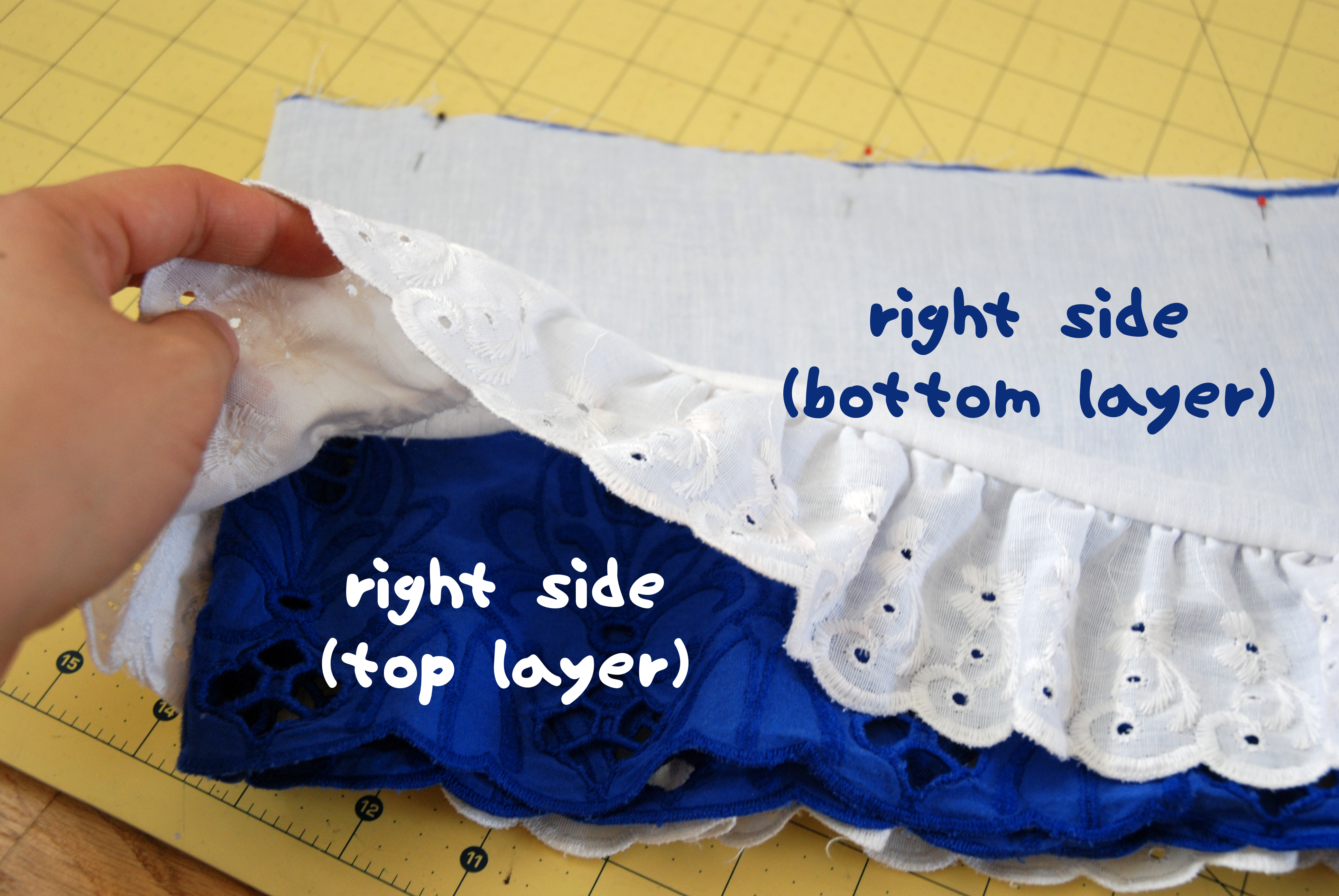
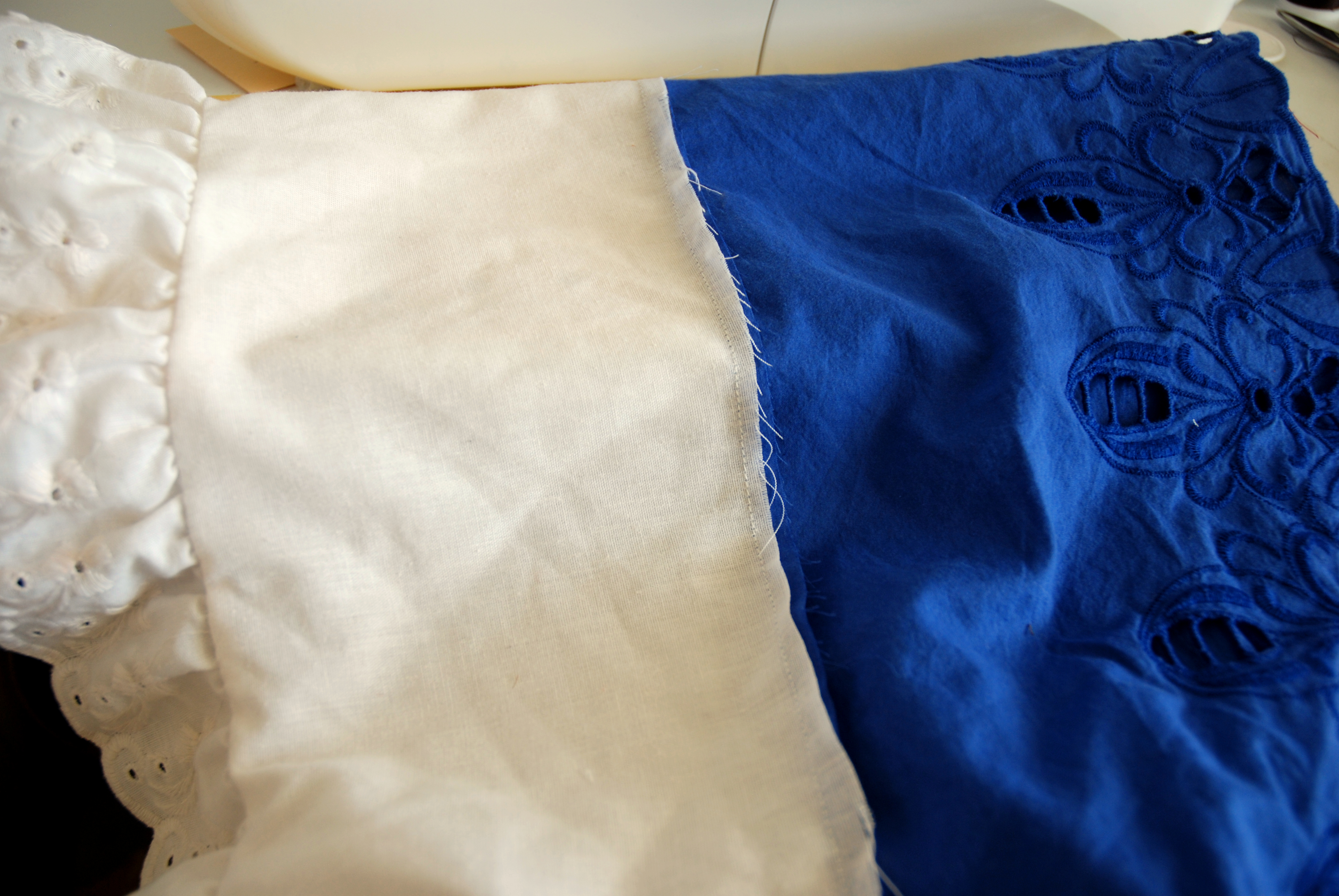
When you are done and you pull the material out from inside, it should look like this.  On the left is the bottom layer, right side up, and on the right is the top layer, wrong side up.

Flip the top layer down over the bottom layer.  I did not want any of the white fabric to show at the top of the skirt, so instead of pressing it open right on the seam, I made the fold with about a 1/4 inch of the blue fabric on the inside of the skirt.  This is why I didn’t add any seam allowance to the bottom layer fabric when cutting the length, but I added an extra 1/2 inch to the top layer – a 1/4 inch for seam allowance and another 1/4 inch to fold over to the inside of the skirt.  Does this make sense??

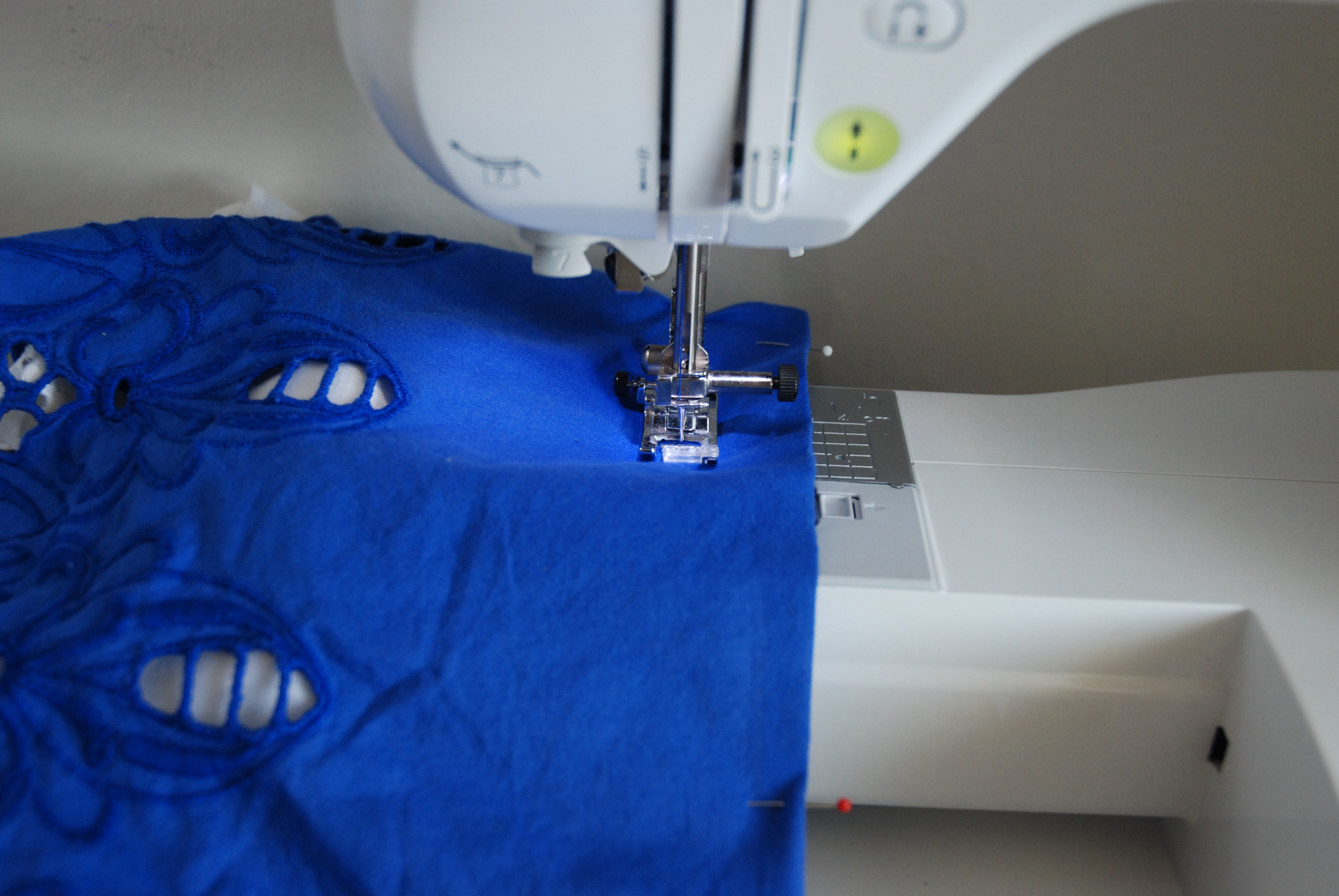
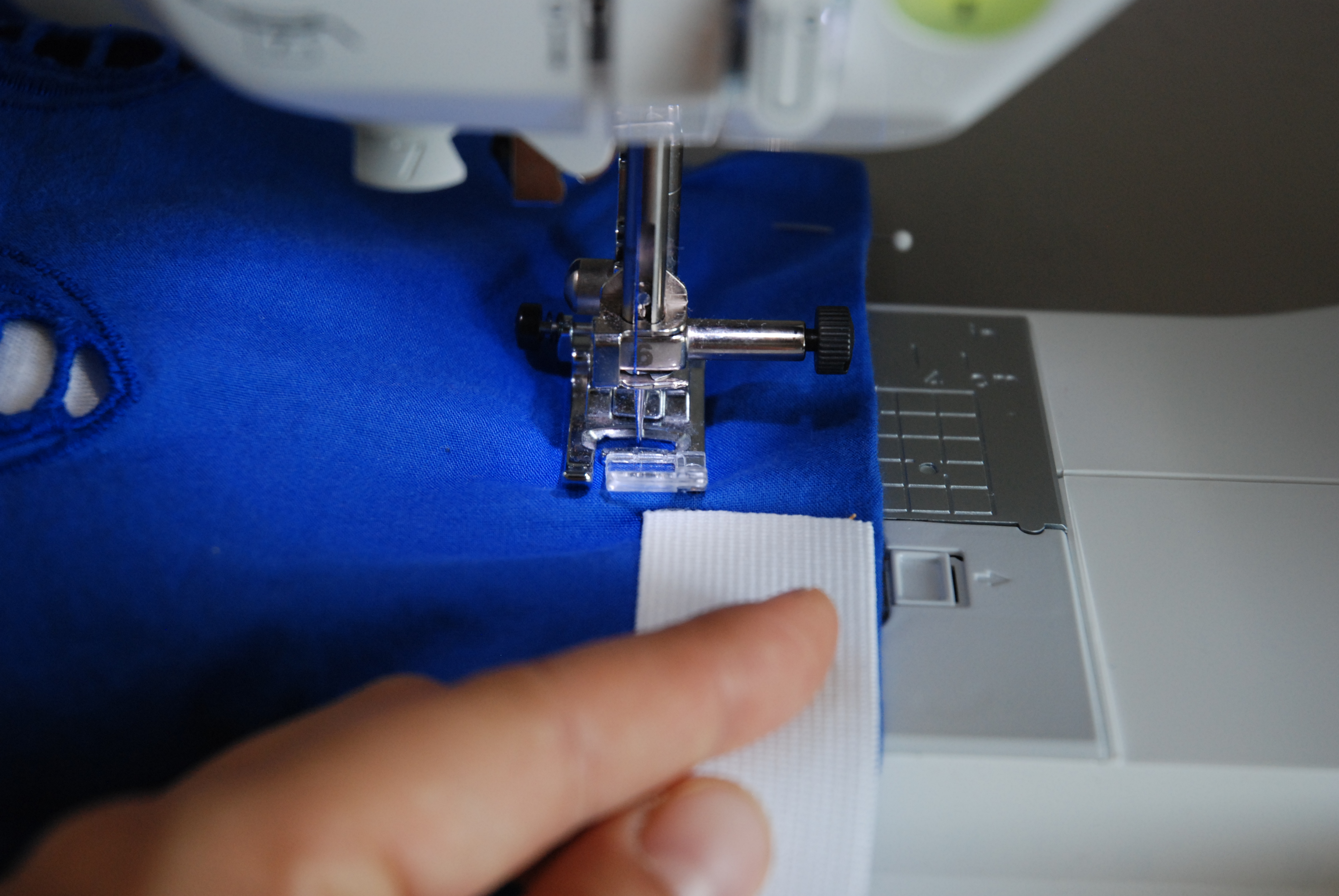
Press all the way around and pin.  Now we’re going to make the casing for the elastic.  Leaving about a 2 inch opening, sew all the way around the waistline, making sure your casing is wide enough for your elastic.

In the picture above, I was using the elastic to make sure I was sewing my casing wide enough.  After you’re done, you should have a 2 inch gap that is open for you to slide the elastic through.

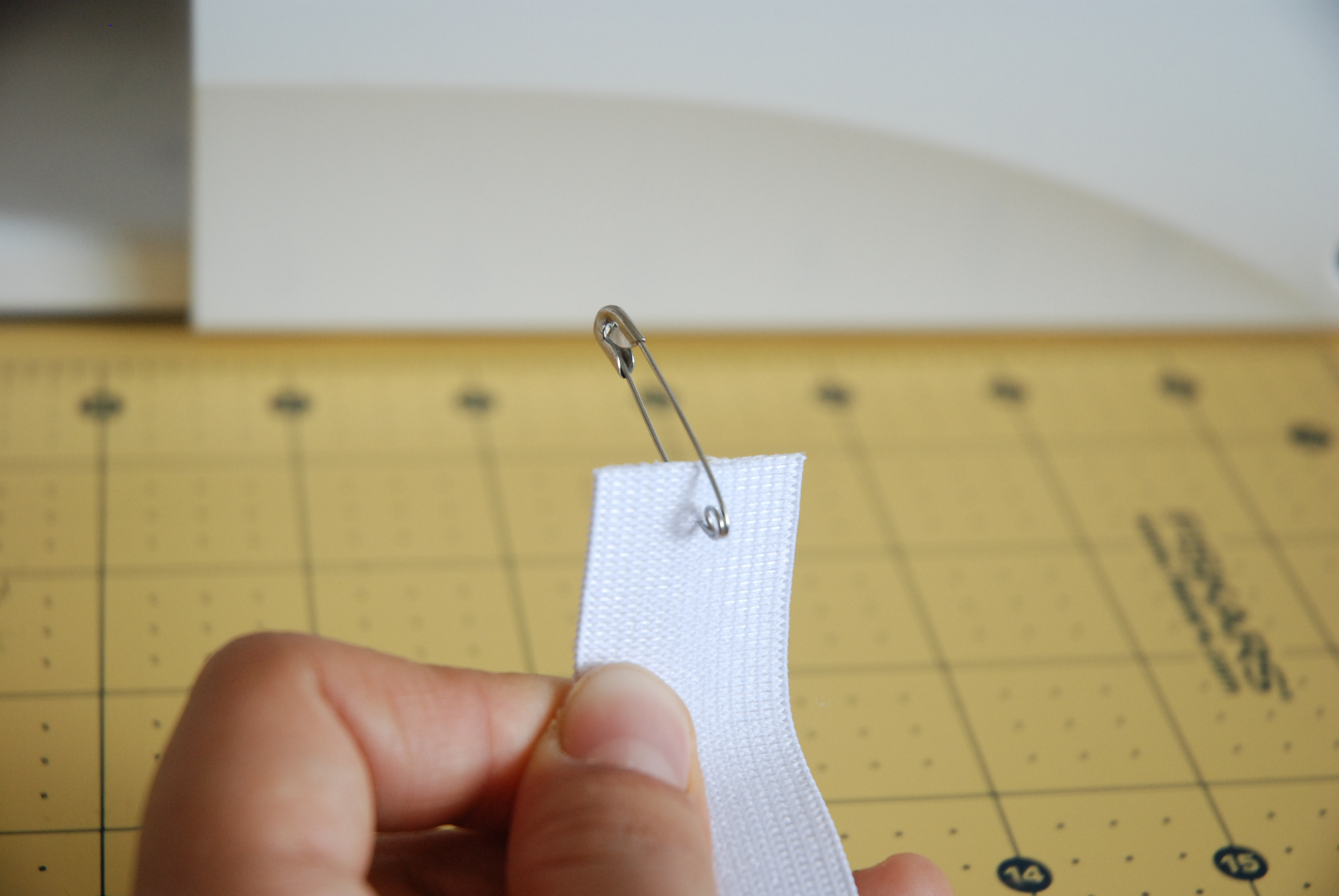
If you have a safety pin, insert it into one end of the elastic.  This will help you guide the elastic through the casing.

Pull apart the two layers to find the opening for the elastic.  Using the safety pin, pull the elastic through the casing.

Pull the elastic all the way around the waist and back out through the opening.  Make sure the elastic hasn’t twisted at all and is laying flat the entire way around.  Overlap the elastic by about an inch and sew them together.

Finish sewing up the casing and you’re done!!

Now, I don’t know if you noticed this, but in the original simple skirt tutorial, I said you needed about double the waist measurement for the width of the fabric.  So for a 17 inch waist, you need 34 inches of fabric.  For this skirt, I didn’t want to cut any of the blue fabric away, so I left it at it’s original width, which was at least 42 inches.  All the extra fabric, plus the extra layer made this skirt really full!!

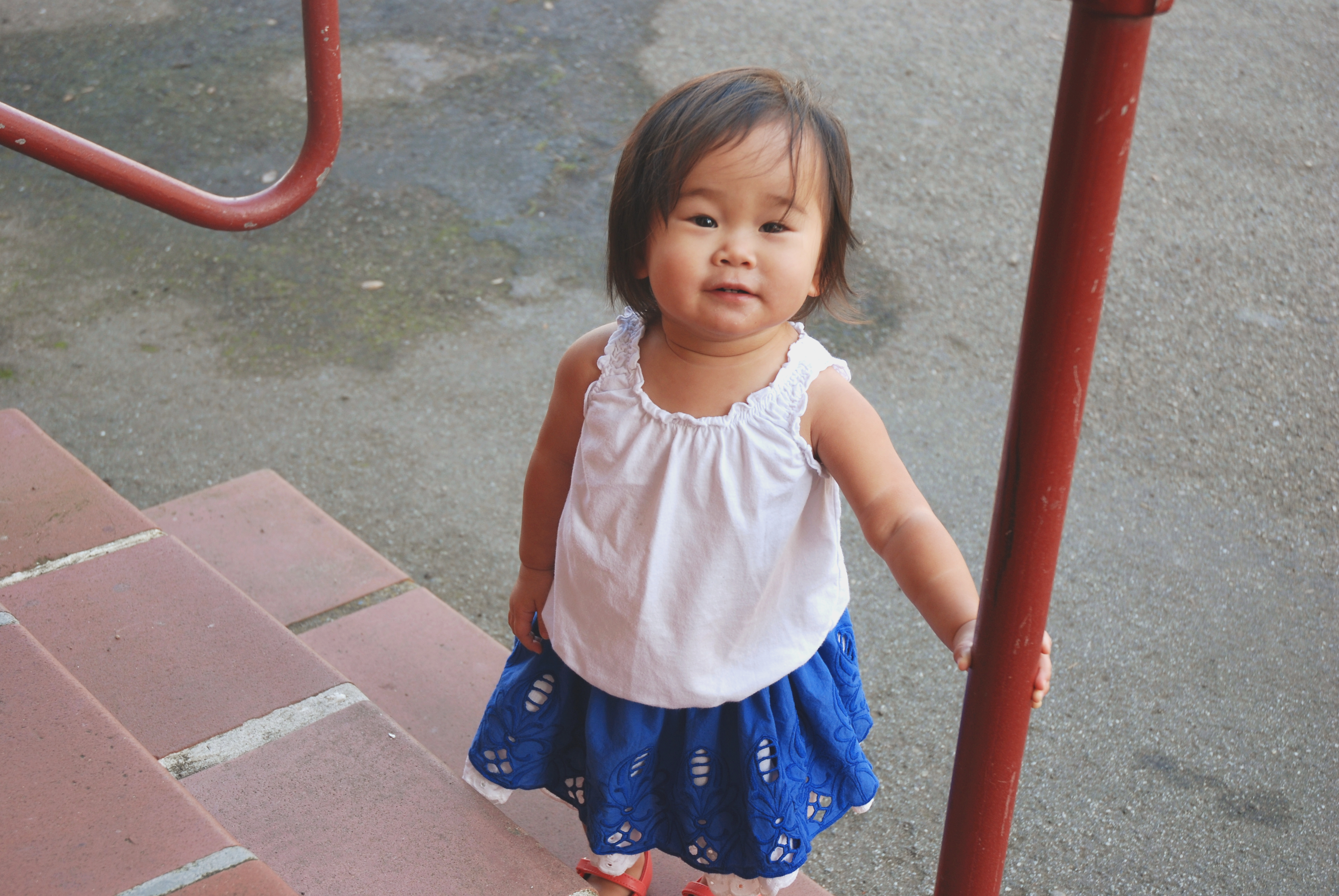
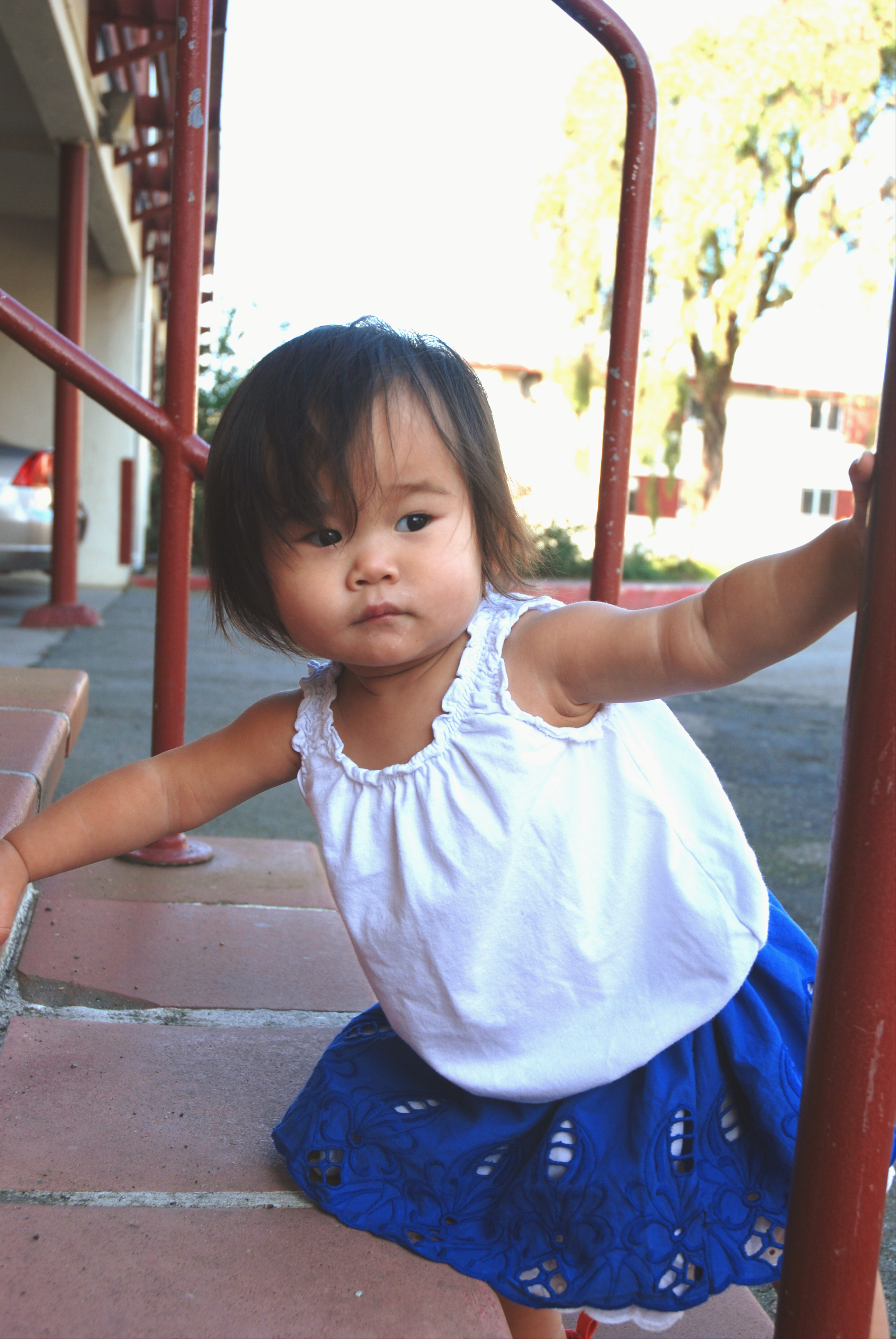
This skirt reminds me of something you’d wear to a tea party or something.  But all our lil’ tomboy wants to do is climb things and play with dirt and rocks.  That’s our girl!

Luckily, we live in California where an outfit like this might still be appropriate for November.  But it won’t last long, so I promise I’m going to start focusing on more winter-ish clothes soon.  Fleece, flannel, and sleeves, here I come.

As for this tutorial, I’d really like some feedback.  When I’m trying to explain the steps, I feel like I’m not being clear and that it’s too confusing.  If you have any suggestions for parts that need clarifying, I’d really appreciate you letting me know.  Or asking me questions if you need help.  I want to help!  🙂  I hope you try a Double Layered Simple Skirt.  And if you do, please send me a photo!!  Have fun!