KCW Spring 13: Little Letter Halter and Parsley Shorts

Quick post for the outfit I made yesterday . . .

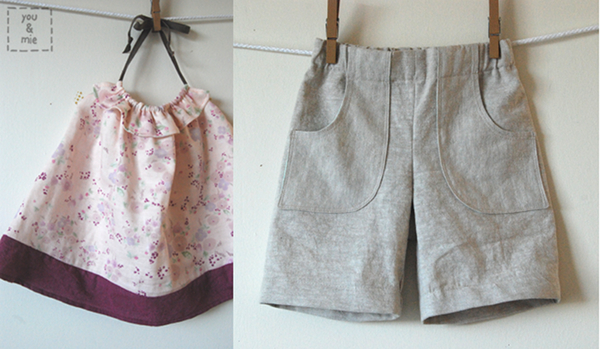
halterandshorts1

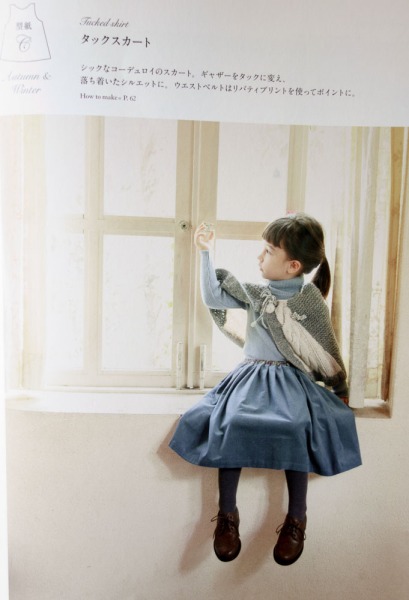
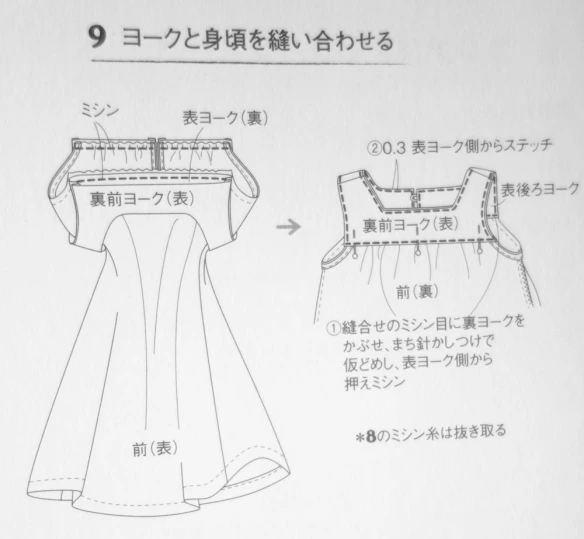
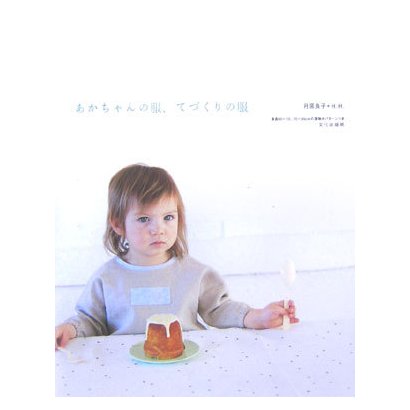
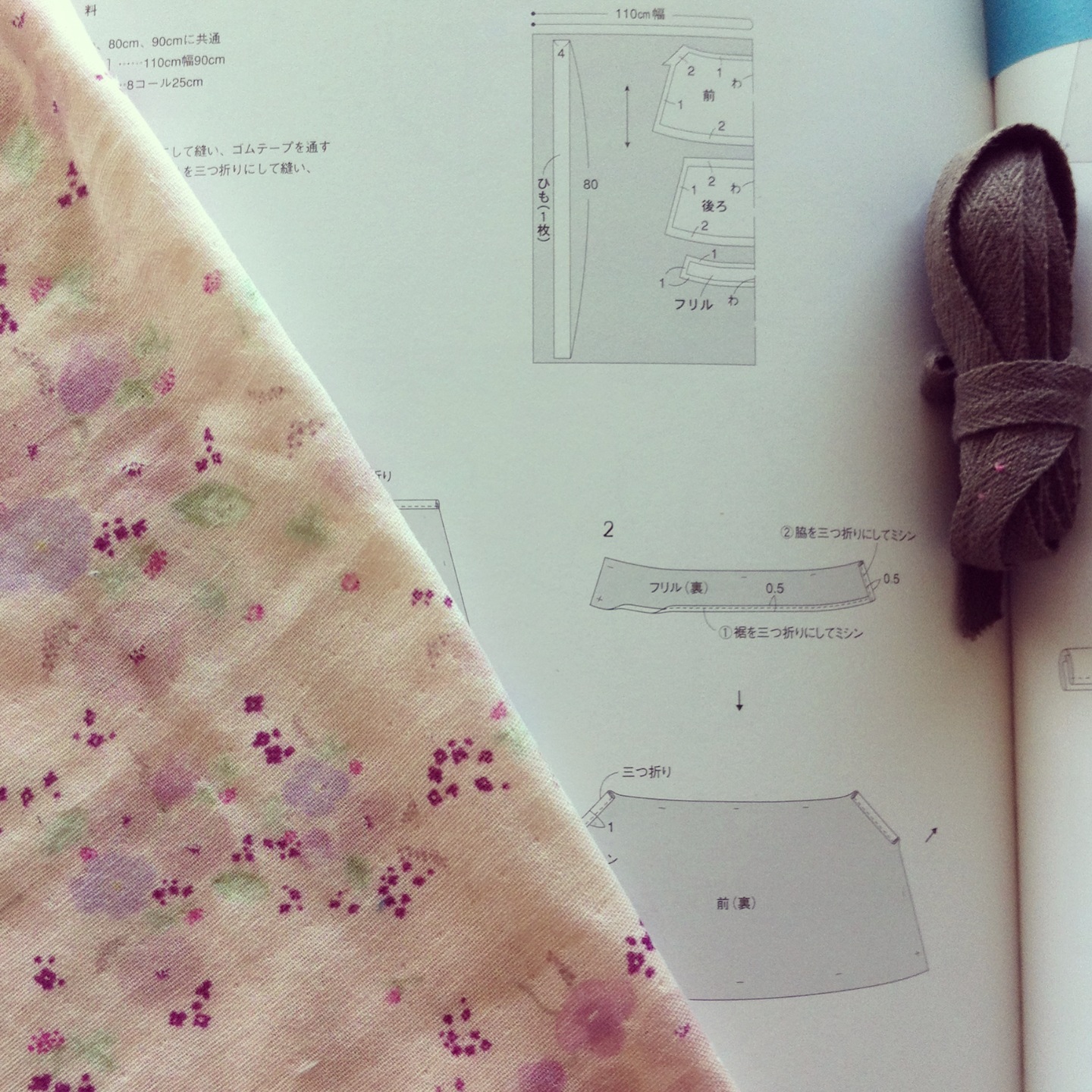
I started with a super cute and simple halter top from the Japanese sewing book, あかちゃんの服、てづくりの服 (Baby clothes, handmade clothes), (also available on Amazon here).

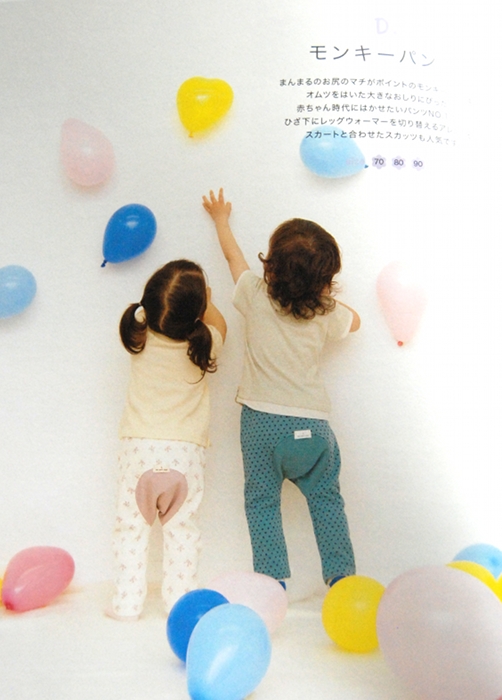
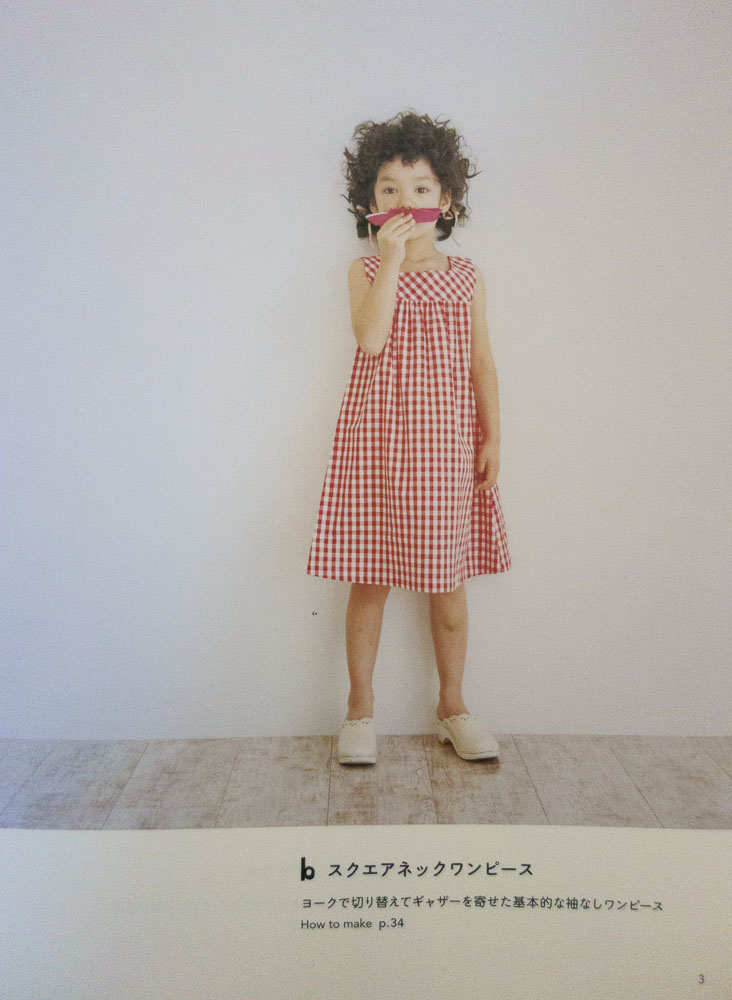
100000009001404289_10204Robin so kindly sent me this book with the clothing swap outfit she made because her daughter had grown out of the sizes already.  It’s got a lot of baby stuff, but some great basics for toddlers too.  When I saw this picture in the book, I nearly died from the cuteness.

photo 6

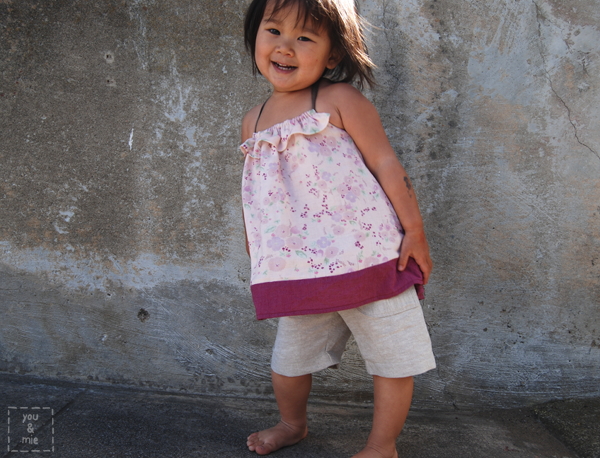
So that became my inspiration for outfit number 1.  The construction of the top is very simple and I made it even more simple by using a piece twill tape instead of making the strap out of fabric like the pattern instructs you to (although I may go back and change it), so it was a really fast sew.

halterandshorts

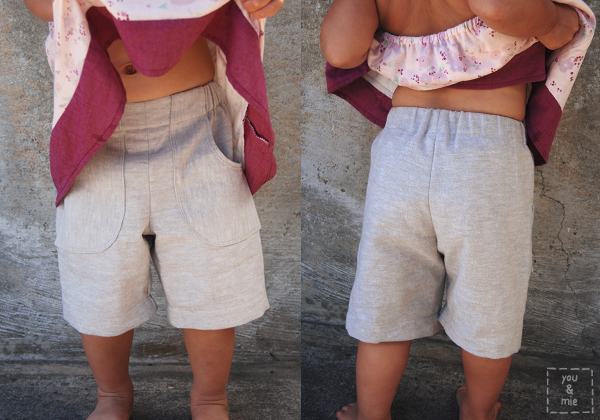
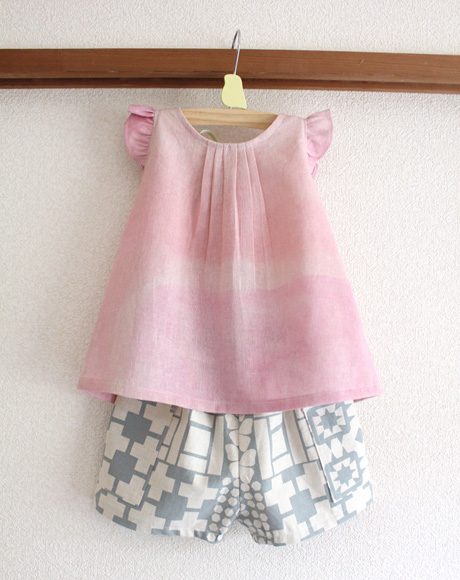
I used the beautiful Nani Iro Little Letter double gauze fabric that I bought from Miss Matatabi (though I can’t tell if that’s the exact same color as the one I used), and I only had half a yard, but it was just enough to cut out the pattern AND the strap if I wanted to.  The color band at the bottom of the halter was a last minute add.  When I saw the picture in the pattern book, I thought the top looked a little short.  And when I was tracing the pattern piece, I also thought it looked a little short.  And then I totally forgot about it and just cut it out anyways.  Well before I was going to hem the top, I really thought that it’d probably hit just at her tummy which would be adorable, but probably too short.  And besides the length, this halter would probably fit for a long time!  So I decided to add some fabric to the bottom and luckily I had some shot cotton leftover from the dress I made Sanae’s daughter and the color (and weight) happened to match perfectly!  I’m glad I added it – it’ll definitely add many more months to the life of this top.

halterandshorts2

The shorts are from the soon-to-be-released JUST RELEASED Parsley Pants pattern by Made by Rae.  Rae was awesome enough to let me help test out the pattern and let me tell you, this pattern lives up to all of the other amazing Made by Rae patterns awesomeness.  After seeing all the versions that Emmmy Lizzzy made, especially her cute shorts, I was inspired to make some for Yuki too.

I used a linen blend, but accidentally cut it against the grain (if you look closely at the picture of the shorts hanging on the line, you might be able to see the lines on the pockets go up and down but the grain on the rest of the shorts goes horizontally).  I don’t exactly know what that means.  Will it wash up funny or change it’s shape?  Well, we’ll find out.

halterandshorts3

The pattern is fantastic.  Super simple sew, so many variations to make, excellent directions and images and great fit too.  I’m planning on sewing up a couple more this week if I have time.

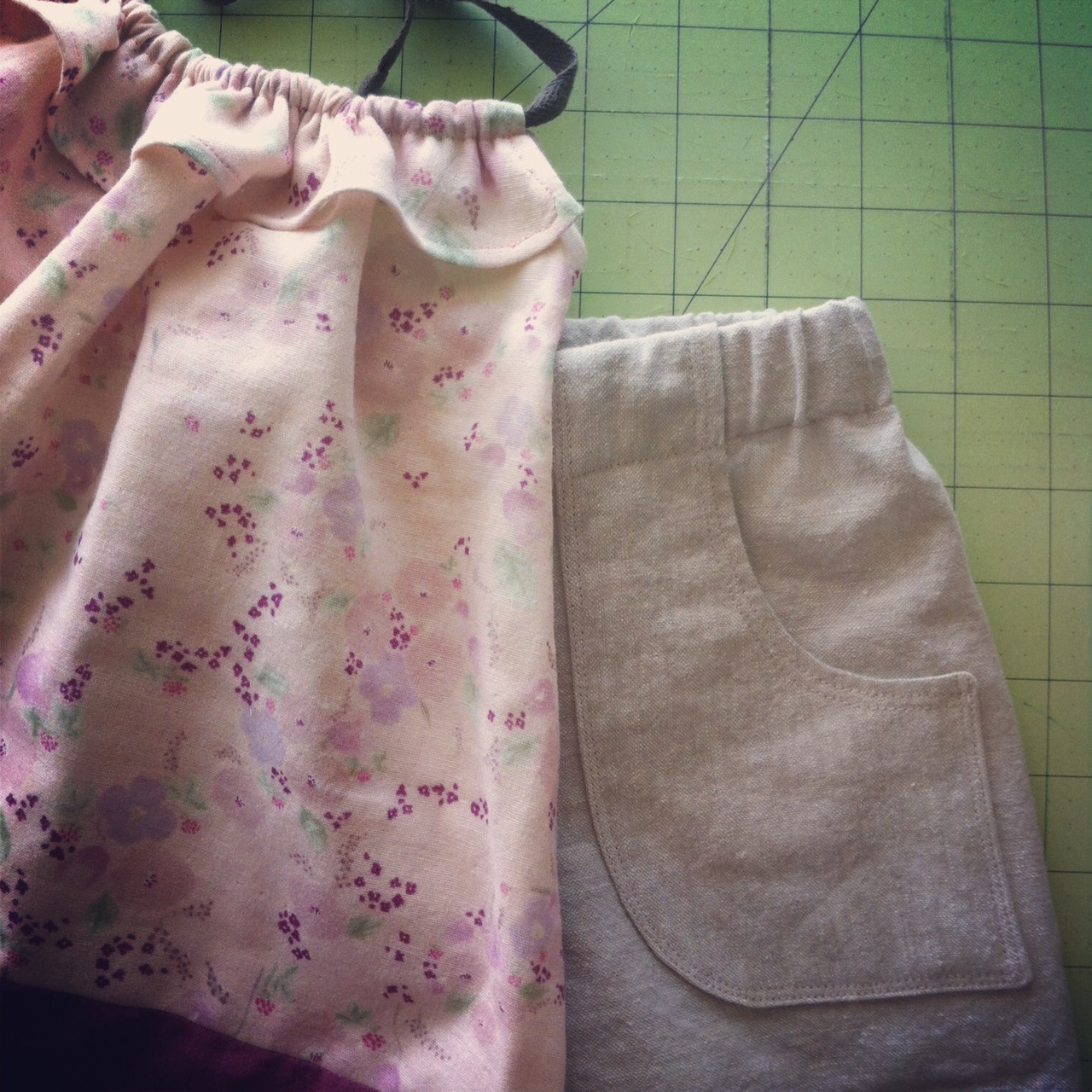
So that was day one.  I only got a little bit of sewing in this morning, but here are a couple little peeks.

photo 4 photo 5I’m off to sew a little more before bed!  How was your day two?  Get much done?

KCW Spring 13: Getting ready

My partner said to me yesterday:

“I’m not a big fan of KCW . . .
except for all of the cute clothes that comes out of it.”

HAH!  Kids Clothing Week is here and it’s definitely caught me off guard a little bit.  Not because I didn’t know about it, but I’ve been so busy with other things that I didn’t really start thinking about it until the weekend and I barely had a chance to get prepped.

So I’m taking it a little easy this time (or so I say) and I’ve made three simple challenges for myself:

  • sew with patterns I already own
  • sew with fabrics that I already own
  • sew super simple projects (so far each project I have planned has only 3 pattern pieces!  score!)

And of course, hopefully I’ll be making things that my daughter will actually wear.  That basically means t-shirts and pants.  No ambitious patterns like the Jump Rope Dress or the Swing Coat this time around.

photo 3

So here’s my pile o projects.  Yes, it looks like a lot and honestly, I probably won’t get through it all.  I should also point out that 7 of the projects come from only 2 patterns.  That’s right – lotsa t-shirts and pants.

photo 1Day one was very productive!  I started with a fun but simple Japanese pattern which I’ll share more about tomorrow when I get some pics of Yuki in it.  I was able to bust out a pair of shorts too!  Sticking with simple patterns can be extremely rewarding 🙂

photo 2

How was your day one?

Geranium in Feathers!

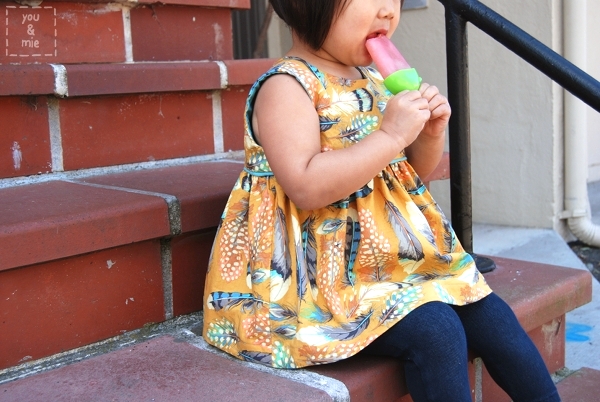
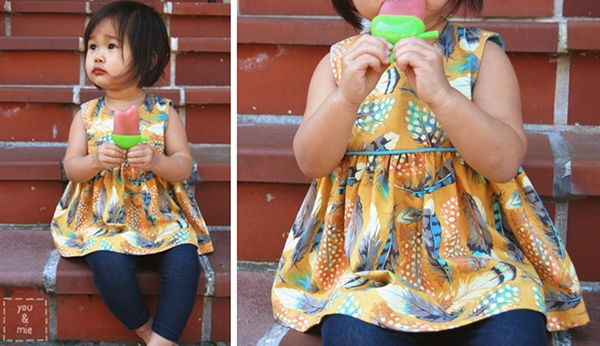
FeatherGeranium2Kids Clothing Week Spring 2013 is starting in a few days and Meg invited me to share my favorite pattern over on the KCW blog as part of the weeklong wind up.  I chose the Geranium Dress/Tunic pattern by Made by Rae.  There aren’t a lot of patterns that I make more than once, but this one is so classic that I find myself coming back to it again and again.  You can see my full review and my past Geraniums over on the KCW blog.

And in honor of the post, I made a fun new tunic for Yuki!

FeatherGeranium3There are a ton of different variations of this top you can make, but I decided to go with something simple – sleeveless tunic, scoop neck, and a gathered skirt – since I had chosen such a busy print.

FeatherGeranium1I bought this feather print by Martha Negley awhile back from Stonemountain and Daughter because I loved it, though I wasn’t sure what I was going to use it for.  One of the great things about the Geranium pattern is how much you can change it up – pick a detailed print and keep the style simple, or choose a simple fabric and really play up the details.

FeatherGeranium5The tunic bodice is lined with some aqua fabric that I had in my stash and I made some piping to match.  The back closes with three blue buttons, which I realize now are totally crooked!  Oops!  😛

FeatherGeranium4I love this pattern!!  And now that the weather is warming up, it’s the perfect time to fill someone’s lil wardrobe with Geraniums!

Have you started planning or prepping for next week?  I’ve barely had a chance to think about it, but my goals are to not buy any new fabric and to sew with patterns I already own.  We’ll see what I come up with!

So what are you going to be sewing next week for KCW??

My Little Flower Girl

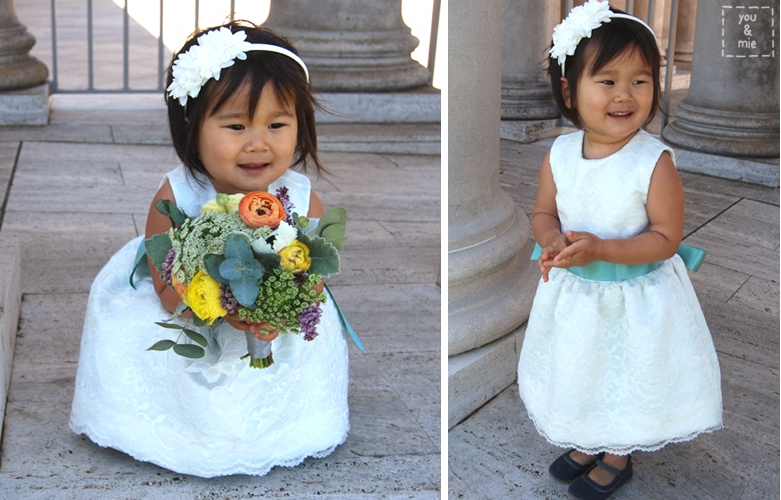
FlowerGirlThis past weekend my sister got married and if you follow me on Instagram (@youandmie), you’ve probably seen some sneak peeks of the fun and beautiful weekend.  The entire week before the wedding was pretty much devoted to wedding prep – I had wedding projects piled up all over the place.  Menus, table numbers, escort cards, signs, and of course, the flower girl dress.  But it all got done and everything went so smoothly – I really don’t think it could have been any more perfect.  The lovely bride and groom put together a really amazing wedding weekend and was surrounded by all of the people who love and support them – it was a really awesome thing to see.

Unfortunately, I didn’t take any pictures, so I can’t show you all of the little projects that I worked on, but as I collect pictures from friends and family members, and of course, the professional photographer, I may be sharing some of those with you.  My only big sewing project for the wedding was Yuki’s flower girl dress.  Since I didn’t get any pictures of her during the wedding, I made her put the dress back on yesterday and quickly snapped some new ones.  Amazingly enough – she really likes the dress!  She wore it for 9 hours straight on Saturday and never once complained or asked to take it off!  And the truth is, I like it too!

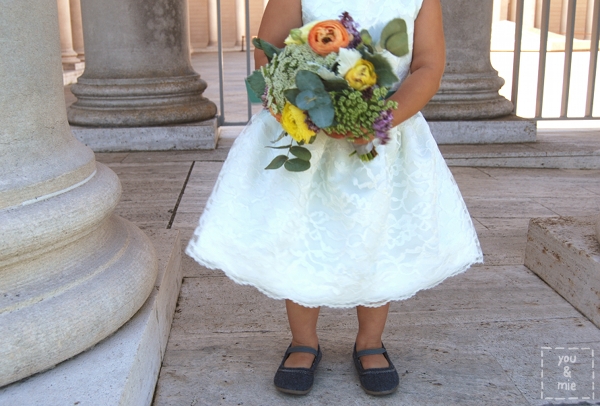
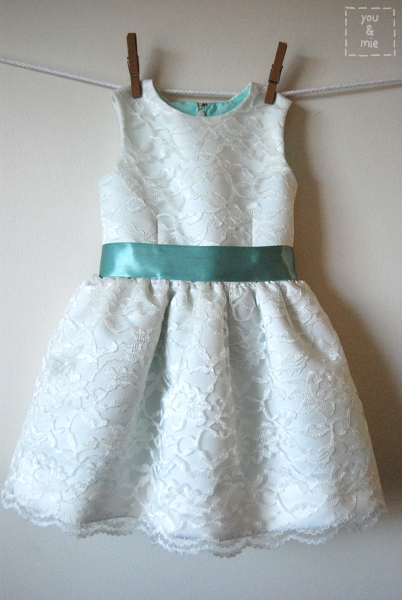
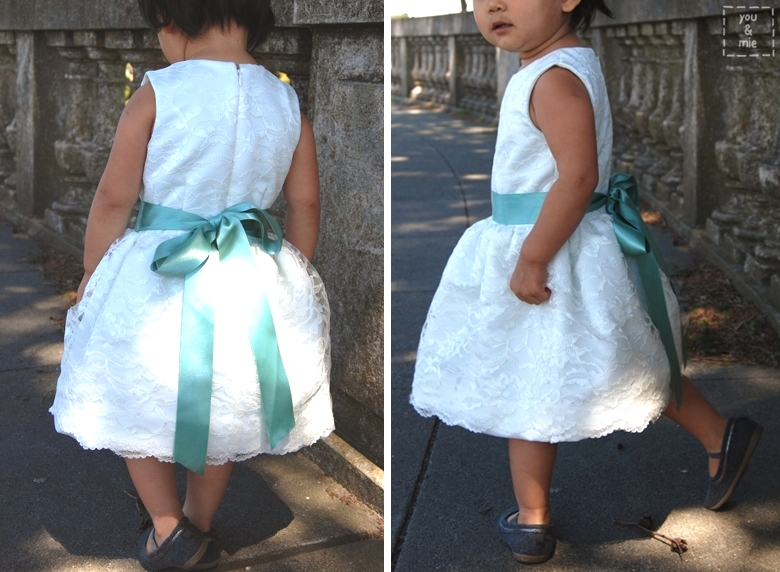
FlowerGirl1The pattern is the Oliver + S Fairy Tale Dress.  The dress is simple in it’s design (which is great for special occasions or for adding embellishments), though it is not necessarily a simple dress to construct, BUT the result is pretty stunning!  The pattern comes with two views: sleeveless and sleeved, with two different kinds of collars, an optional sash or waist tie.  For my version, I made it sleeveless, but omitted the collar and added a ribbon sash instead of the one included in the pattern.  I did, however add a lace overlay and my fabric choices, though they ended up looking exactly how I envisioned, made construction a bit tricky.

FlowerGirl2I made the dress in size 2T and it fits Yuki perfectly.  The bodice (for sizes 2T and up) have darts in both the front and back, which make for that perfect fit and professional look.  It has an invisible zipper in the back and is fully lined.  It also has an optional layer of tulle for skirt volume.  As you can imagine, there are a lot of steps to constructing this dress and I did quite a bit of hand sewing to give it a truly professional finish.  It takes time, but really, I think it was worth it!

FlowerGirl6All the materials besides the lace, I bought at Britex Fabrics.  I decided splurge on something high quality for this special occasion dress.  The main fabric is a synthetic satin in eggshell and is pretty thick.  I think this also made construction a bit trickier in places (the pattern calls for light to mid-weight fabrics) but I really love how well the fabric holds it shape because of the heavier weight.  I used a polyester lining that was a pain in the butt to work with – it was soooo thin and slippery and shifty.  Probably the right choice for this project, but still no fun to work with.  The ribbon is a double sided satin ribbon that was chosen to match the color scheme/bridesmaids dresses.  The lace was a last minute decision and I picked that up at my local Joann’s.

FlowerGirl3The flowers in these pics are not her actual bouquet from the wedding, but rather those from a table at the wedding.  The flowers for the wedding were done by my sister’s friend, Jaclyn K. Nesbitt Designs, and they were all soooo gorgeous!  I wrapped these up in some ribbon so Yuki could have another bouquet.  I think the flowers were the most exciting part of the flower girl job for Yuki!

FlowerGirl5And she was such a trooper the entire wedding.  She didn’t have any meltdowns, she kept her dress on (and UNSTAINED) the entire time and escorted me down the aisle during the ceremony.  She had to leave the ceremony towards the end because she was starting to get bored and when she watched the wedding party walk back down the aisle at the end she started getting really upset saying she “didn’t get married” because she was “too loud.”  Omigosh, it was too cute.  She thinks that all of us who walked back down the aisle got married and she didn’t get to because she was making too much noise.  Poor sweet thing.

FlowerGirl4Anyways, this dress was definitely a labor of love and I don’t even know if she’ll ever wear it again, but I think it was worth it.  She was the cutest flower girl I’VE ever seen and I think she felt pretty darn special.  I think I will use this pattern again, though in more casual and lighter weight fabrics.  I’d definitely recommend this pattern for a special occasion dress!  Like all Oliver + S patterns, it is a high quality pattern with clear instructions and great diagrams.  You know the techniques are legit and you always end up with a professional looking garment.  I feel like I give this same shpeal every time I talk about O+S patterns, but it’s always true – you really can’t go wrong with them!

So it’s been pretty busy around here and just when you think things might settle down, KIDS CLOTHING WEEK rolls around!  🙂  Can you believe it’s already next week?  I honestly haven’t given much thought about what I’ll be making and I probably won’t be quite as involved as I have been the last 2 rounds, but I am looking forward to getting some good ol’ kids clothes sewn.  If you don’t know what KCW is, check out all the important info here and know that it is a TON of fun.  And it’s not too late to get in on the action!  Coming up later this week, I’ll be posting on the KCW blog about one of my favorite patterns, so be sure to check that out 🙂

Handmade Kids Clothing Swap

buttonA few months back, Robin from Nested in Stitches contacted me about this idea she had about rounding up a group of sewists and bloggers who sew kids clothes and having us all sew for each other’s kids.  Sounds like fun right?  Well the best part about it was the amazing group of people she gathered to participate!  And we didn’t know who was sewing for anyone else, so it was super exciting to see the outfits start coming in.  Read about all the details and who was involved in the Handmade Kids Clothing Swap here.

The wonderful Robin herself was the one who sewed for my daughter!  She took a look at my Kids Clothing Inspiration pinterest board and was inspired to make an ADORABLE outfit for Yuki.  Here’s a sneak peek and then a bit from Robin about the outfit she made . . .

sneakpeek_collage

Here’s Robin:

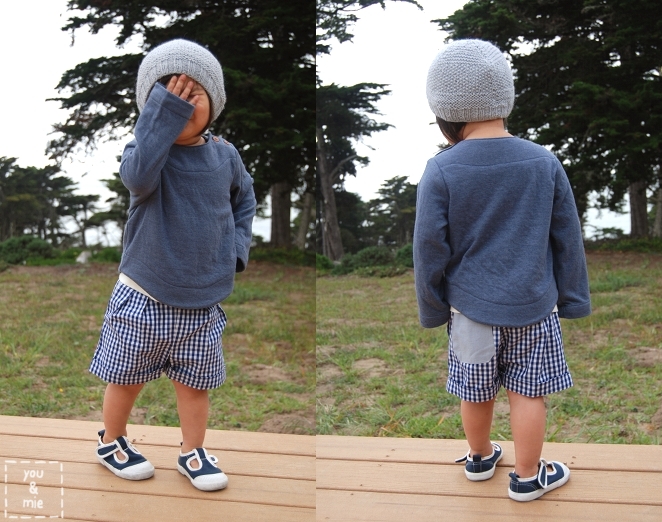
This swap was so much fun to do! Cherie’s pinterest board is full of fun, graphic kids clothing. I know she loves to dress Yuki in unisex clothes, and I know Yuki can rock that look. I also wanted to sew something that I knew a 2-year old would want to wear- and you can’t go wrong with a knit. After happening across some super soft double knit at Bolt, I decided to recreate this look.

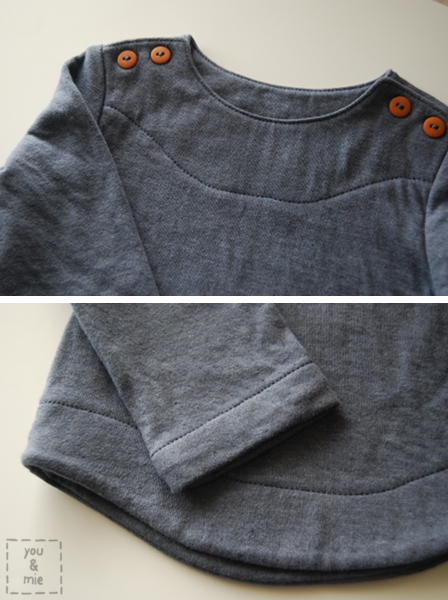
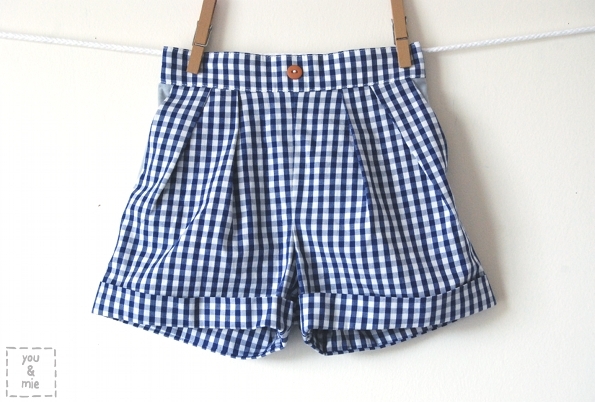
I used the Oliver + S sailboat pattern for the top in a size 2T. Because this pattern uses a facing inside the neckline, it’s a perfect candidate for knit fabric. I ended up sewing the top with the wrong side of the knit facing out because I loved the heathered blue-grey color. (The inside of the top is a solid navy blue). Because of the nature of the double-sided knit, this choice is going to give the top a causal, somewhat wrinkly look. The shorts are sewn from Figgy’s banyan pattern. I used some navy and white gingham shirting I had on hand (and also from Bolt). The sizing on the shorts seems to run a little on the large size, and these are the 18 month size. The pattern is awesome and the shorts are adorable. I took the lazy approach and didn’t sew the zip (or any) fly… I decided that a two-year-old didn’t need a zip fly, and I wanted to keep the look super casual. Finally, to take the whole look to the next level, I knit a little hat for Yuki in a gorgeous grey alpaca yarn I happened to have on hand (the colorway I used is called ash). It’s the perfect cool, every so slightly bluish grey, so was a fantastic match for this outfit. The pattern is Rambled, and I knit it in the smallest size, since I know that alpaca is likely to grown with time.

It was such a blast to sew for Cherie and Yuki! The whole experience is a little nerve-wracking, as you can imagine it would be if you are sewing something for another sewist’s child to wear! But it was so much fun to be able to break out of my own sewing habits and be able to sew something that hopefully embodies someone else’s style. And? It fits! (Phew!)

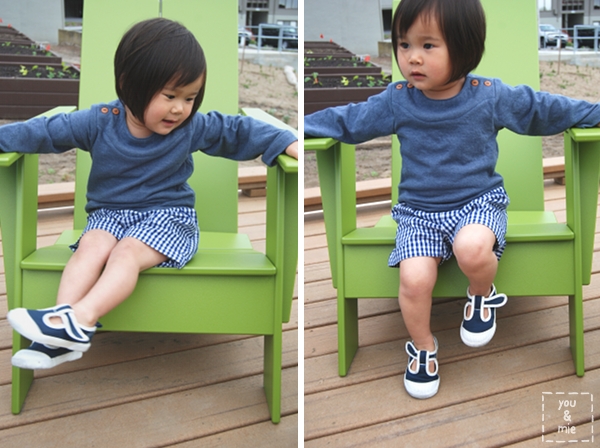
outfit1AND?  We LOVE it.  The outfit fits her perfectly and suits Yuki so well!

sneakpeek_allRobin really hit the target on this one.  The outfit is totally comfy, practical and so so cute.  Not only that, but Robin’s sewing skills are impeccable!

shirtI can definitely see her wearing this outfit all the time and it’s got enough room to fit her for awhile.  The shirt is suuuuper soft and a beautiful heather blue color.  It’s a simple style with just the right amount of detail to make it unique and stylish.

shortsI love the plaid Banyan shorts too.  Robin added some fun elements like gray pockets and a cute button to match the shirt.

And to top it all off, she knit this ADORABLE lil hat for Yuki.  I won’t lie, when I saw it I really hoped that it was for me.  But alas, it didn’t fit my noggin’.

hat1Probably cuter on her anyways.

hat2I just want to give a HUGE thanks to Robin for the truly amazing outfit for Yuki.  I can tell that a lot of thought and care when into crafting these garments especially for my daughter.  And of course for organizing this fun clothing swap and letting me be a part of it!

outfit2

For the outfit I made, I was assigned to Sanae and I was soooo nervous to sew for her!  But it turned out really fun and rewarding, so head on over to her blog to see the outfit that I made for her daughter, K!

outfit

sneakpeekAND be sure to check out all of the participants’ blogs to see the fantastic handmade outfits we swapped!

robin from nested in stitches
danielle from my sparkle
delia from delia creates
gail from probably actually
heather from well-crafted
kristin from skirt as top
meg from elsie marley
sanae from sanae ishida
vanessa from lbg studio

Japanese Sewing Book Series Wrap-up!

JSBS_button500

Phew!  Looks like the Japanese Sewing Book Series is already over!  I’m sad, but so so grateful for my awesome guests for all of their hard work!  I didn’t even realize it until halfway through the series, but this was the first time guest posting for three of my guest bloggers (Sanae, Frances and Robin).  Bet you couldn’t tell though, huh – they were all such pros!

And I’m super grateful for all of you for joining us!  YOU are what made it all worth it!

Thanks to everyone who entered the sewing book giveaway.  I LOOOOOVED reading your comments, and even though I won’t be able to respond to every one, I was really excited to hear that people are feeling more confident about trying Japanese patterns, or that some of you never knew about Japanese patterns before the series.  I’m glad that so many of you learned something new, or have bookmarked the posts to reference when you’re sewing.  When I had the idea for this series, I wanted to do something fun, but also something that would be really informational and serve as a great resource for seamstresses for a long time to come.  I’m hoping the series was a success!

Oh and the giveaway winners!  You thought I’d forgotten?  Congrats to:
Laura who won the Easy to Understand Baby and Little Kids Clothes and
Ajaire who won the Kid’s Clothes Sewing Lesson Book!

You should have received an email from me 🙂

And for those of you who didn’t win, check out Kristin’s post for some ideas for where you can buy your own!

After sewing from a few Japanese patterns myself and reading through my guests’ awesome posts, I think the greatest lesson that I’m walking away with is to just GO FOR IT.  It’s super intimidating at first, but pick a simple pattern and use some not-so-expensive fabric and just take your time to work through it.  Trust your sewing knowledge and instincts.  Refer back to this series or look things up online.  See how it goes.  And then try another pattern.  Things will already feel a little different the second time.  And I’m pretty sure that by the third pattern you sew, you will start to feel more confident, the patterns, words and diagrams will start to look more familiar, and your eye will be trained as to what you need to look for.

This Thursday, I get to share with you a really fun project that I got to be a part of, and though I won’t say what it is yet, I will say that I sewed my third Japanese pattern for it and I’m really proud of how it came out!  And if I can do it – you can do it too!

So here are the 5 posts from the series, in case you missed them or want the links all in one place.  A HUGE thanks again to my wonderful friends and guests, Kristin, Sanae, Meg, Frances and Robin for making this series everything that it was!

JSBS_button_KristinJSBS_button_SanaeJSBS_button_MegJSBS_button_Frances1JSBS_button_Robin

I had so much fun with this series and I feel like there are so many of you out there already sewing with Japanese patterns or interested in starting, that I’ve been thinking about a way to do another series (in the way future) with more of a community aspect – a sewalong perhaps?  Anyone interested?  I’d love your thoughts!

Until next time, happy sewing!

Japanese Sewing Book GIVEAWAY! {CLOSED}

*UPDATE* The giveaway winners are . . .
Laura who won the Easy to Understand Baby and Little Kids Clothes and
Ajaire who won the Kid’s Clothes Sewing Lesson Book!

***

THANK YOU THANK YOU for joining us for the Japanese Sewing Book Series!!  I can’t tell you had much fun I had working with my 5 fabulous guests and how much I learned from them.  I’m honestly so excited to start digging into my Japanese patterns and get sewing!  How about you?

Well to thank you for following along and give you something to start with, I’ve got TWO Japanese sewing books to give away today!

The first is 子供服ソーイング LESSON BOOK (Kid’s Clothes Sewing Lesson Book) and was featured in Miss Matatabi’s post (check out the adorable outfit she made from the book)!

photo by Frances of Miss Matatabi

This book is aptly named, because it really is a lesson book.  It takes you through garment construction step by step and look how many awesome pieces you can make with the book!

Kids Clothes Sewing Lesson BookThe pattern book covers sizes 100-130cm, which according to the book fit ages 3-10 approximately.  It has a great size chart with full body measurements so you can choose the size appropriate for your child.  Go check out a full book review with lots of pictures over at Japanese Sewing Books.

The second book I’ll be giving away is いちばんよくわかる赤ちゃんと小さな子の服 (Easy to Understand Baby and Little Kids Clothes).

DSC_2832This book is geared towards beginners (as you can tell by the title) – it even says on the cover that it’s easy and not stressful for the beginning mama (excuse my rough translation).  And it’s meant for smaller/younger children – which I think is a bit harder to find!

DSC_2836This book has patterns in sizes 70-100cm, (0-3 years old).  Perfect for someone with a younger child.  It’s got patterns for tiny newborns all the way up to cute toddlers.

DSC_2839I can’t wait to sew up these cute summery tops for Yuki!

DSC_2843The photos here are taken of my personal copy of the book, but I’ve yet to sew from it (those little markers are for future projects).  I love the cute and simple projects for little ones.

DSC_2842DSC_2844The best part are the step-by-step photographs for constructing the garments.  Drawn diagrams are great, but I love the full color photographs.

DSC_2840DSC_2858It’s got great basics like t-shirts and shorts, and also accessories like a bib, hat, and leggings.

DSC_2845DSC_2848And look at this cute cape and vest!!!

DSC_2849Two prizes means, two winners!  Both books contain great basics for both boys and girls and have tons of helpful diagrams and photos to aid you as you sew (plus you’ve got the series)!  And since the books are geared toward different ages/sizes, I want you to tell me which you’d like, if you are chosen as a winner.

Giveaway details:
– Giveaway will remain open until Monday, April 1st at 5pm PST
– Winners will be chosen at random and will be contacted by email and announced on the blog on Tuesday, April 2nd.
– Open to international readers
– Void where prohibited

Here’s how to enter: {CLOSED}
– Leave a comment on this post telling me which book you’d like to win: Easy to Understand Baby and Little Kids Clothes (ages 0-3) OR Kid’s Clothes Sewing Lesson Book (ages 3-10) OR “either”
AND (though it’s not required), I’d love it if you shared with me what you thought about the series – something new you learned, a question you still have, a suggestion or tip for our readers – ANYTHING!

Additional entries:
PLEASE LEAVE A SEPARATE COMMENT FOR EACH
– Follow my blog (some people prefer email subscription, some have a favorite blog reader.  I use Bloglovin and really do love it) and leave a comment telling me you do so.
– Follow you & mie on Facebook and leave a comment telling me you do so.
– Follow you & mie on Instagram and leave a comment telling me you do so.

(maximum number of entries is 4)

Good luck and thanks for entering!

JSBS_button500

*This promotion is in no way sponsored, endorsed or administered by, or associated with, Facebook, Bloglovin or Instagram. We hereby release Facebook, Bloglovin and Instagram of any liability. No purchase necessary.  Prizes will ship within 7 days of the end of the giveaway. you & mie takes no responsibility for packages lost by the postal service. Giveaway starts Friday, March 29th at 2pm PST and ends Monday, April 1st at 5pm PST. Once the giveaway ends, winners will be chosen at random and contacted within 24 hours by e-mail. This post will be updated with winners’ names. Winners will need to respond within 48 hours to claim their prize or another winner will be chosen. Giveaway is void where prohibited.*
***
you & mie is an Amazon affiliate.  I will earn a small commission for Amazon purchases made through links provided in this post.

Japanese Sewing Book Series with nested in stitches

JSBS_button_RobinIt’s the last day of the series!  *sniff sniff*  I really hope you’ve enjoyed all the posts my guests have put together for you.  Are you beginning to feel like you can tackle these patterns on your own?  Well today’s guest, Robin from nested in stitches, is going to walk you through all the steps of constructing two garments.  Now this is really helpful if you want to make these specific garments, but you’ll also learn a whole bunch of useful tips and things to look for that you can apply to any pattern!

Robin is another awesome sewing wizard who hails from the Pacific Northwest (seems like there are a lot of them up there!).  She is also a jack of all crafty trades – she sews, she knits, she quilts, she enjoys all things you make with needles apparently.  Her blog is filled with adorable clothes that she’s made for her daughter, like this O+S dress, this apron, and these skirts.  She also occasionally sews for herself and check out this modern crosses quilt!

My absolute favorites though, are the Moonrise Kingdom outfits she made for film petit.  I LOVE that movie and I LOVE Robin’s inspired outfits – she really nailed it!!  You’ve got to check out the 2 outfits she made and the awesome photos of her daughter in them.  Seriously awesome.

I’ve recently been lucky enough to see some of Robin’s handy work up close and not only is it stylish, but the workmanship is gorgeous and high quality.  It looks straight out of an expensive boutique.  And on top of all that, Robin is also just a total sweetheart.  She’s always willing to help out – in fact, during my last sewing project from a Japanese pattern, I got stuck on step ONE.  I felt like an idiot, but she totally helped me figure it out and she’s been a huge help to me with this series too.  So without further ado, here’s Robin to close out the JSBS guest posts . . .

***

Hello you & mie readers! I am so excited to be here today to help guide you through sewing with Japanese patterns. This series has been so awesome and has provided tons of invaluable information that will help you decipher these patterns. I started sewing from Japanese pattern books several years ago, and once I learned a few basics, I figured out how to muddle my way through. I do not speak or read a bit of Japanese, so if I can do it, you can too!

Before I get started, I want to offer my four main pieces of advice for sewing with Japanese patterns.

  1. Know the Japanese characters for back: 後ろ. Google translator says this translates as “behind, back, rear”. I look for that character that looks like a 3 on instructions and pattern pieces. This helps me navigate the instructions a ton.
  2. Remember the seam allowances. As Meg showed you on Wednesday, you need to add seam allowances to all your pattern pieces. The standard seam allowance is 1 cm, but look for places that indicate you should add more. I always add my seam allowances in inches, since my machine has seam allowance demarcations in inches but not centimeters. Whenever I’m supposed to add the standard 1 cm seam allowance, I add 3/8 inch. It just seams like a good standard number to me, so that’s what I do. The main thing is to add whatever seam allowance is easiest and makes the most sense for you, and do it consistently.
  3. Google translator is your friend. If you need help in understanding what the text says, type in what you think it might be in English and see if the Japanese characters match.
  4. My biggest advice to you? Rely more on your own knowledge of garment construction than on specifics of the instructions.While I do follow the instructions,  if something is confusing, I ask myself: what would Liesl do? Just trust yourself. After all, you can always use your seam ripper!

The nice thing about so many of the patterns in these books is that they are pretty simply constructed. If you want to start sewing with these patterns but are still feeling a bit unsure, definitely start with some of the more straightforward patterns- a pillowcase dress, simple top, basic pants or a skirt.

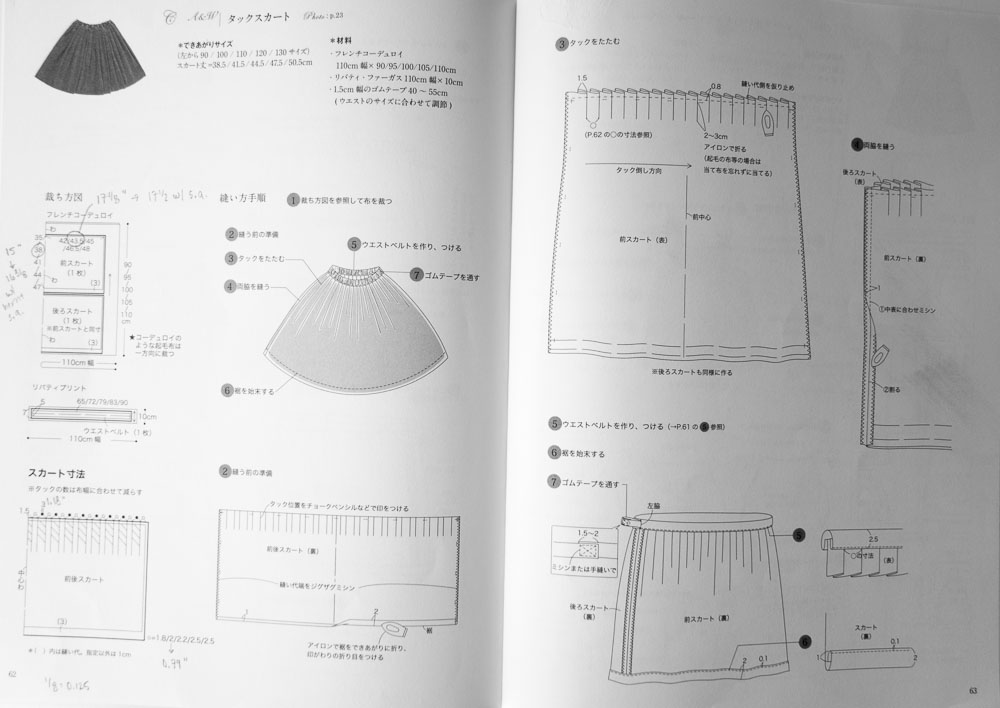
Let’s start with a simple skirt from my personal favorite, A Sunny Spot.
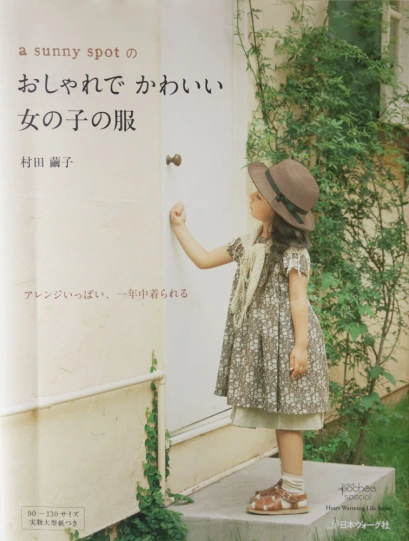
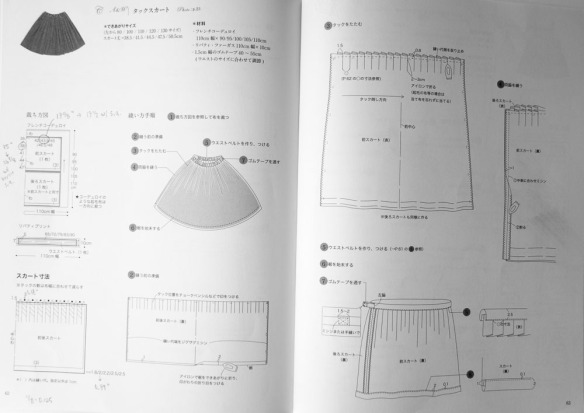
20130328-_DSC016620130328-_DSC0168Turning to the pattern instructions on page 62, this is what you see.
20130328-_DSC0169

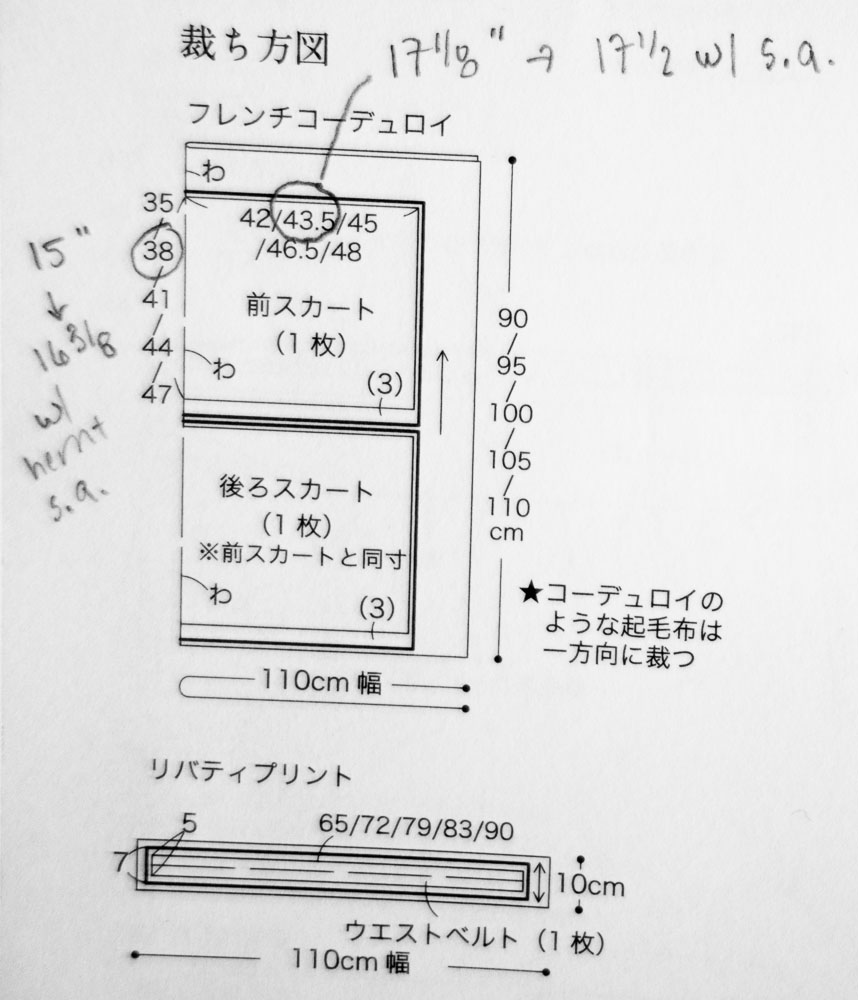
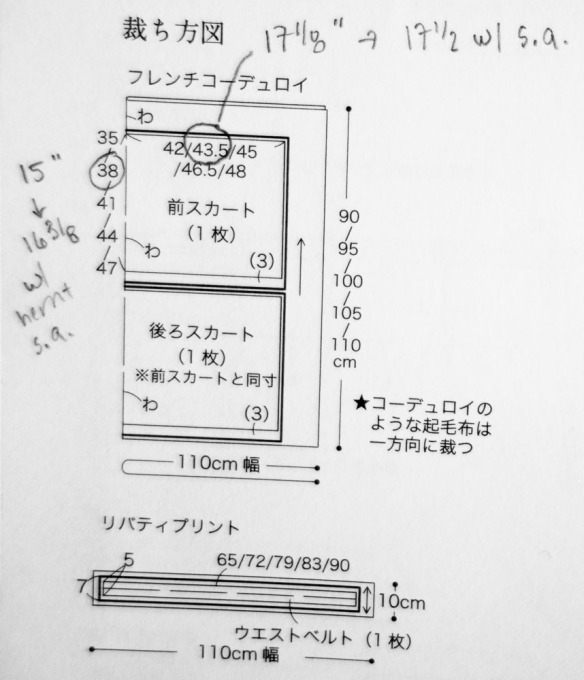
First things first, here is your pattern layout. We’ve got two rectangle skirt pieces cut on the fold, plus one waistband piece that measures 5 cm tall (7 cm with added seam allowances) and 65/72/79/83/90 cm wide for sizes 90/100/110/120/130.
20130328-_DSC0146

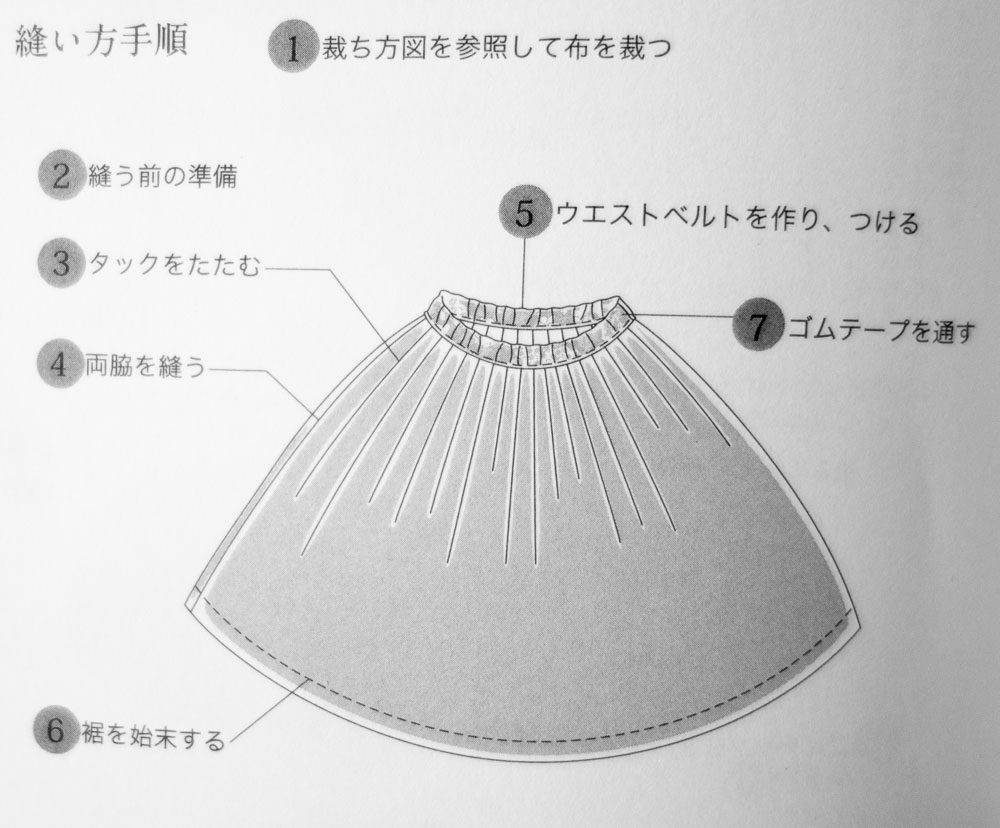
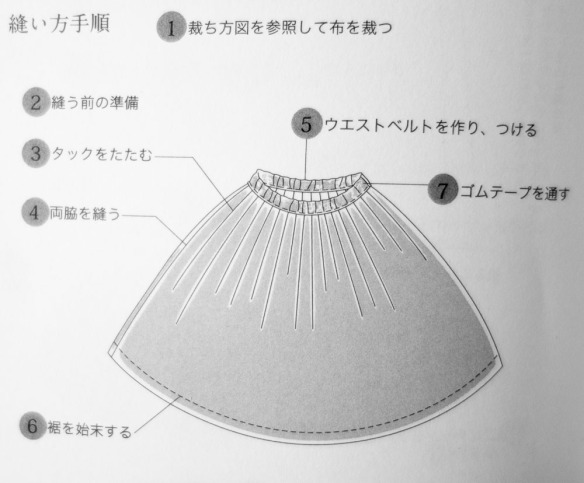
And you’ll notice the handy dandy graphic that shows what the final skirt looks like. This is the money image- it tells you the order in which the skirt is constructed.
20130328-_DSC0147

Step 1: Using the layout diagram measurements, draft the skirt pieces.
(This is from Sanae. Since there were no images associated with step 1, I had no idea what it meant. Turns out I didn’t really need to.)

Step 2: Prepare the skirt pieces.
20130328-_DSC0149

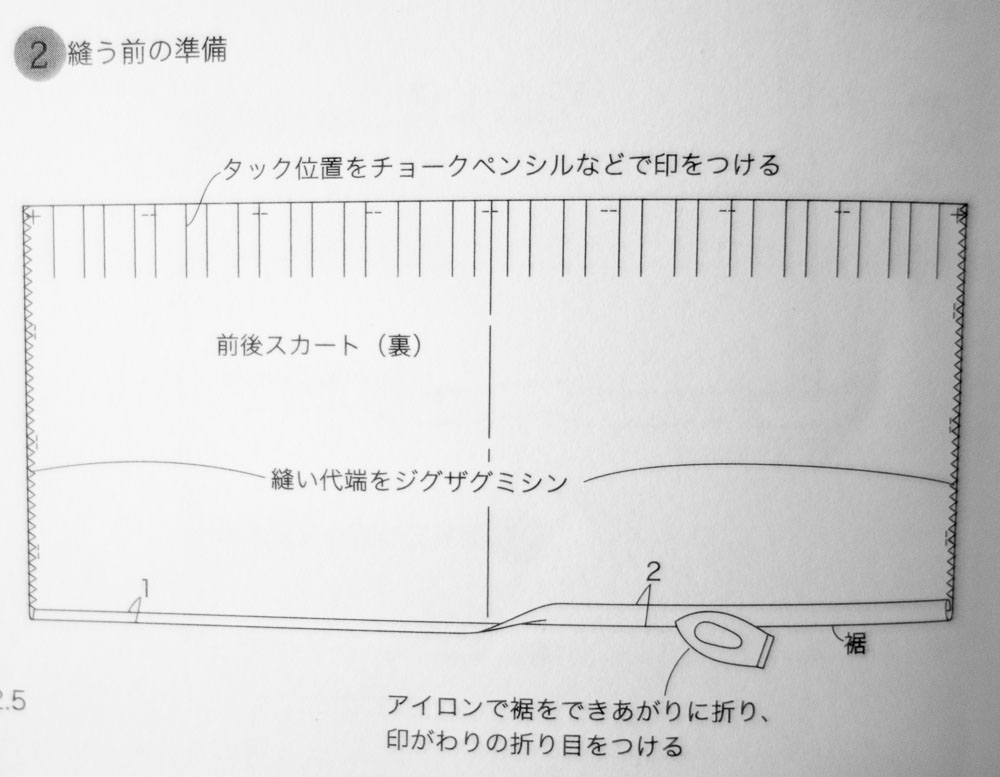
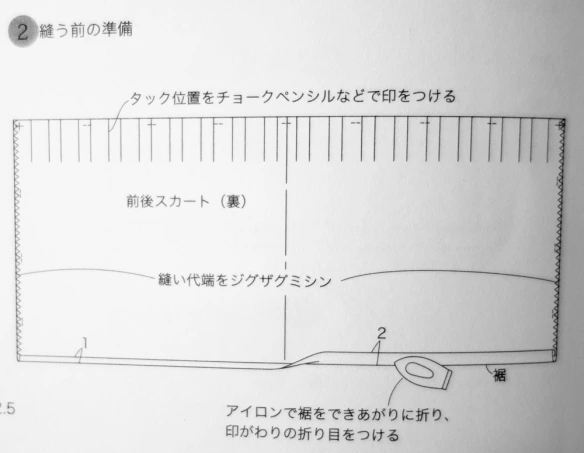
  • Press the skirt hem into place: Looking back at the diagram of the pattern pieces, you’ll see that the skirt has a 3 cm hem allowance. First fold the bottom edges up 1 cm, press, then fold up again 2 cm, and press again.
  • Finish the side seams- of course, you want to avoid cutting into your seam allowance when you do this, since you haven’t sewn the pieces together yet.
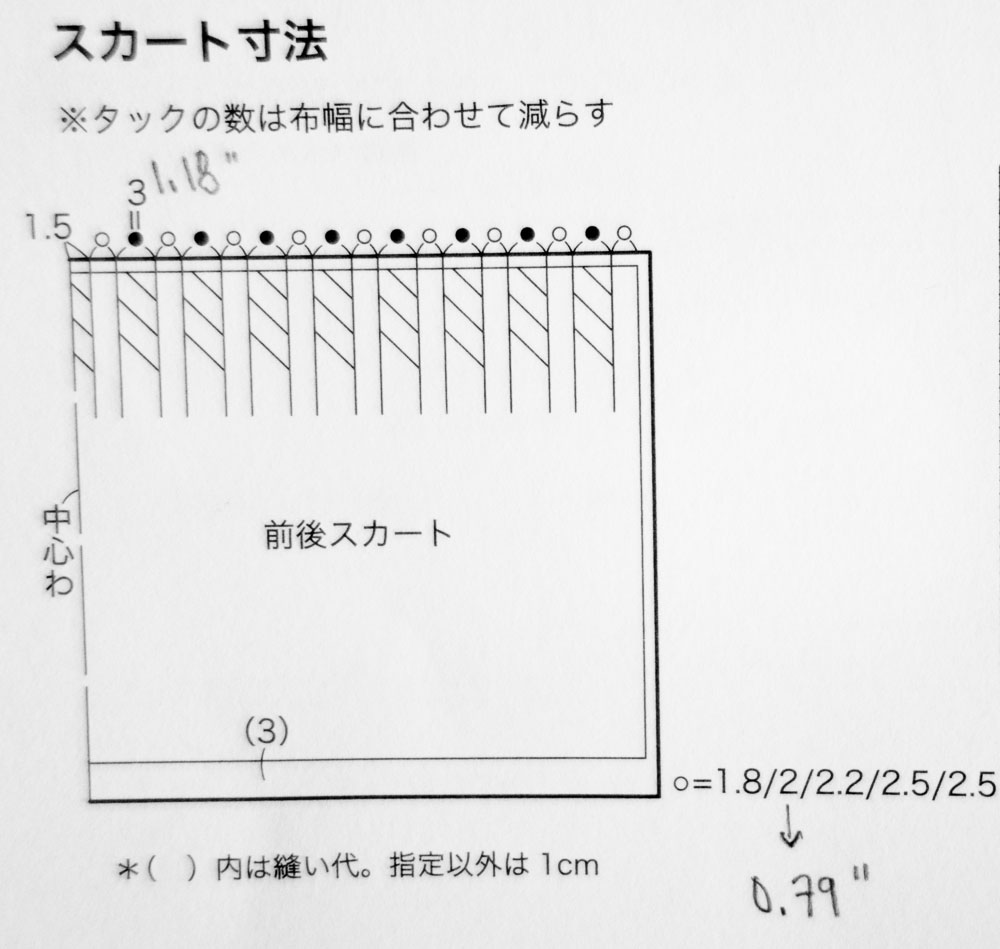
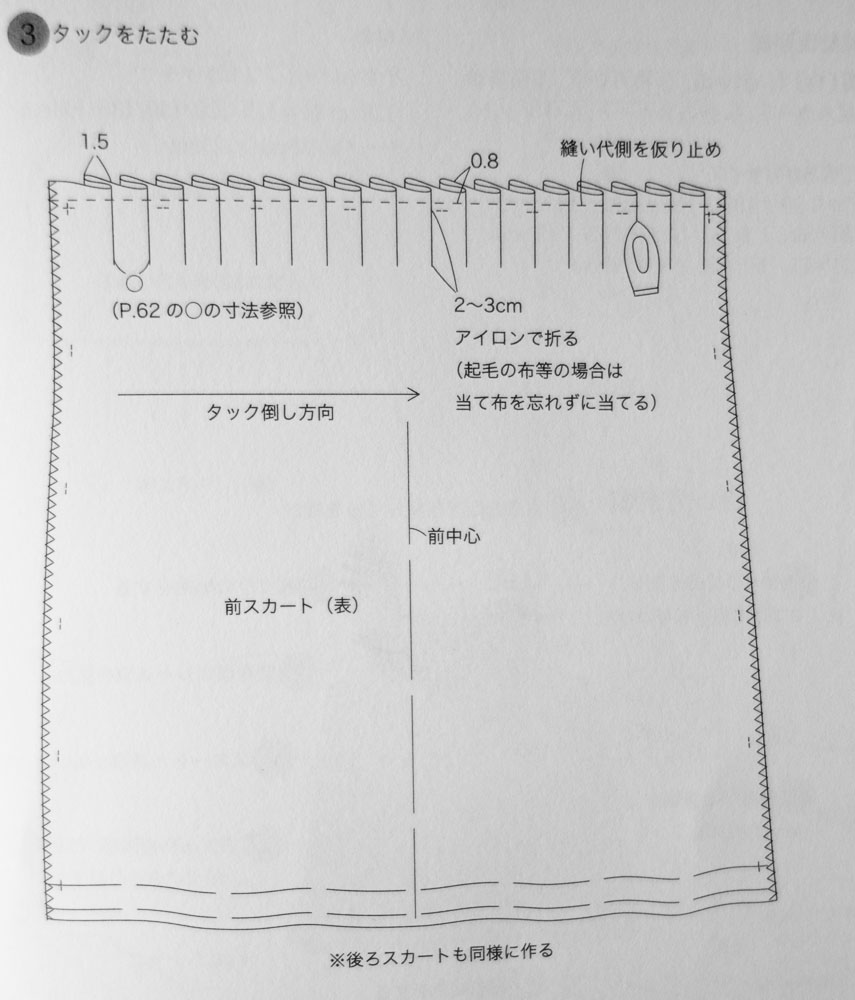
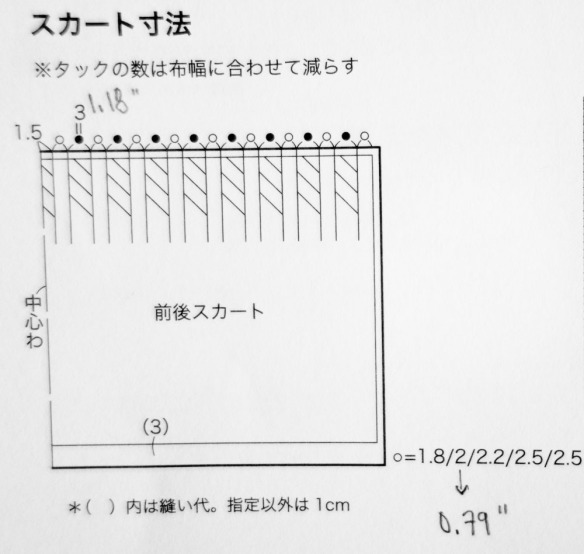
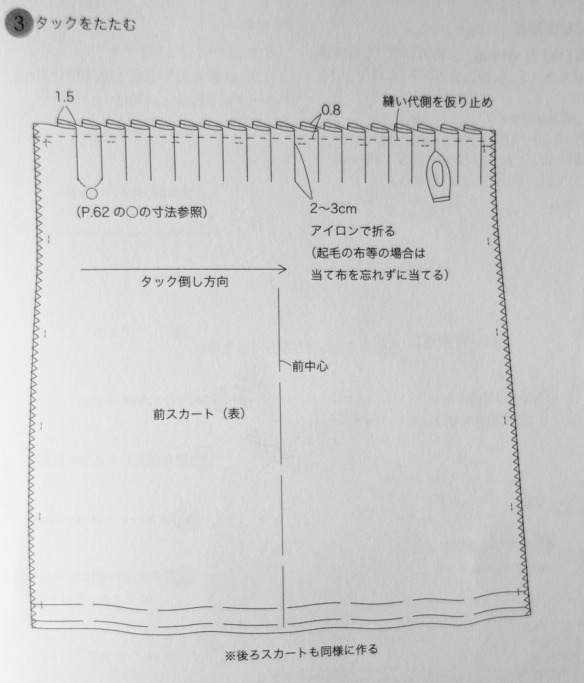
  • Prepare the pleats by marking the top skirt pieces as indicated and press the pleats into place. There is a graphic next to this step that shows you the measurements to use. Following this from left to right along the top, mark the first pleat line 1.5cm in from the fold. You’ll see an open circle that indicates the distance to the next pleat line- this corresponds to 1.8/2/2.2/2.5/2.5 cm for sizes 90/100/110/120/130. Next, there is a dark circle indicating that the distance to the next pleat line is 3 cm. Continue marking the pleats as indicated. The hatched lines indicate that this is where you will fold the pleats.
20130328-_DSC0148

Step 3: Press and sew the pleats in place using a seam allowance of 0.8cm.
20130328-_DSC0150

Step 4: Sew the front and back skirt pieces together at the side seams, press seam allowances open.
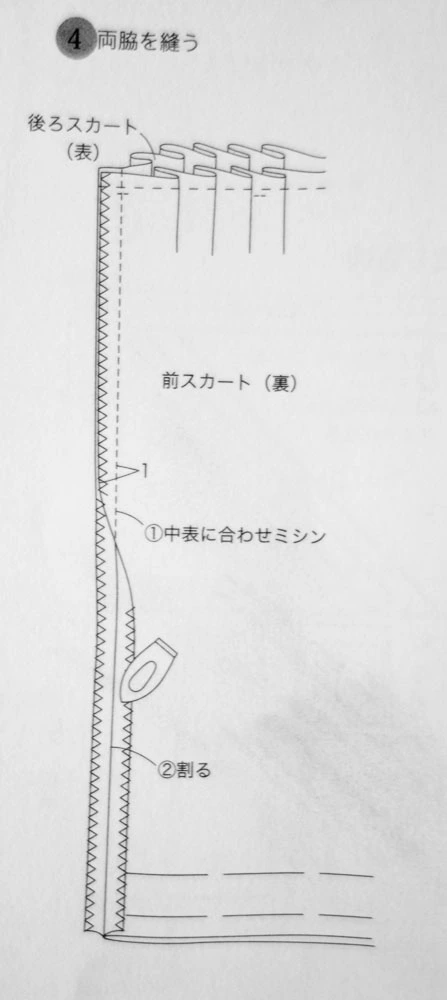
20130328-_DSC0151Step 5: Sew the waistband pieces together. (Notice that here there is text only in the original pictures, which refers you to step 5 on page 61, shown here.)
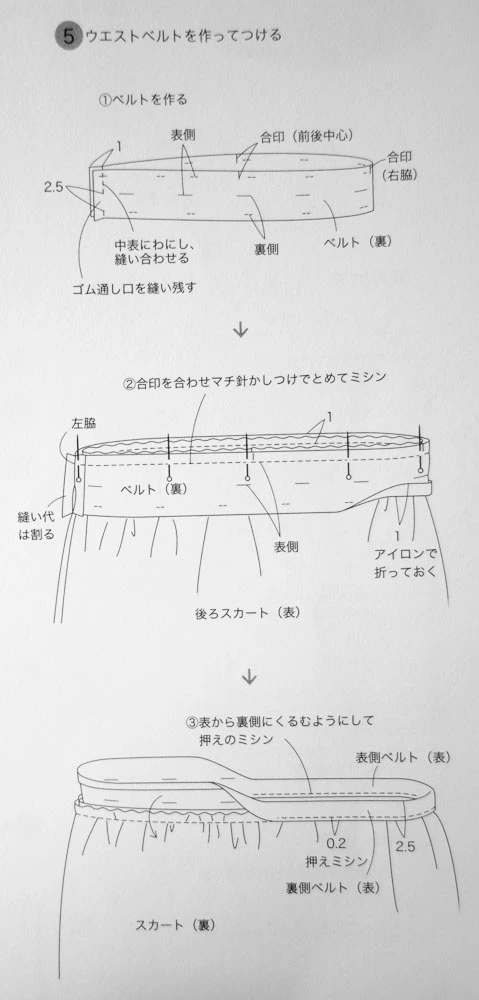
20130328-_DSC0171

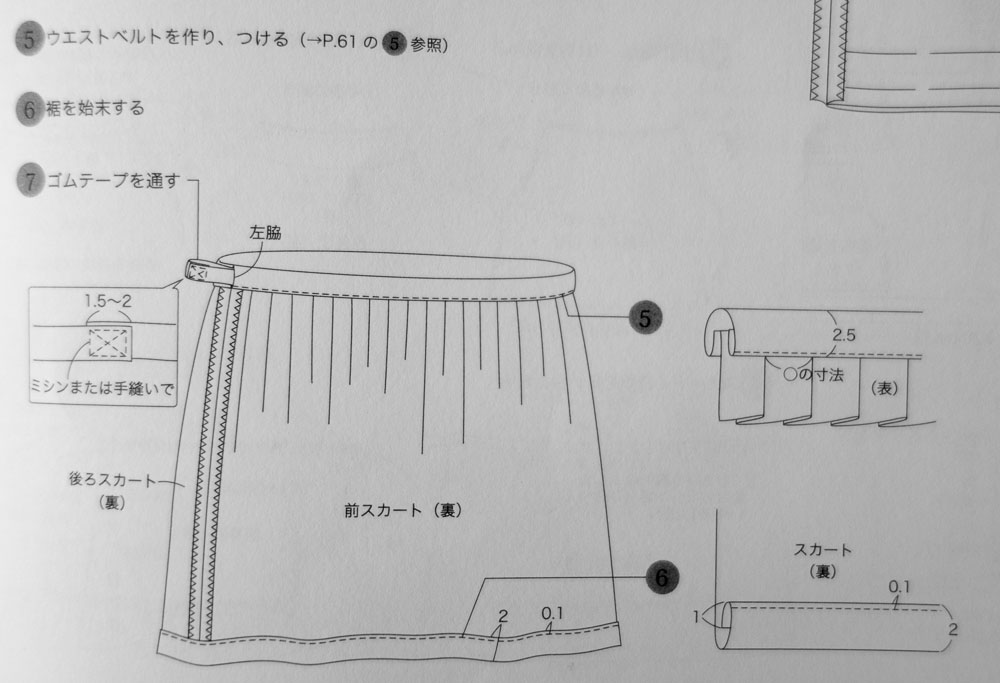
  • There is a 1 cm seam allowance, and notice you want to leave a 2.5 cm opening to insert the elastic in the middle.
  • Now pin the waistband in place along the top of the skirt right sides together, and sew with a 1 cm seam allowance. How do I know it’s right sides together? The waistband has 裏 in parentheses, which means “wrong side”, while the skirt piece has 表 in parentheses, which means “right side”. So the right side of the skirt faces out, and the right side of the waistband faces in.
  • Fold the unsewn edge of the waistband piece up 1 cm and press. (This would of course be done more easily before you sew the waistband on!)
  • Turn the skirt wrong side out (see the 裏 in parentheses?), fold/press your waistband up and then over to the wrong side. Topstitch in place.

Steps 6 and 7: 20130328-_DSC0152
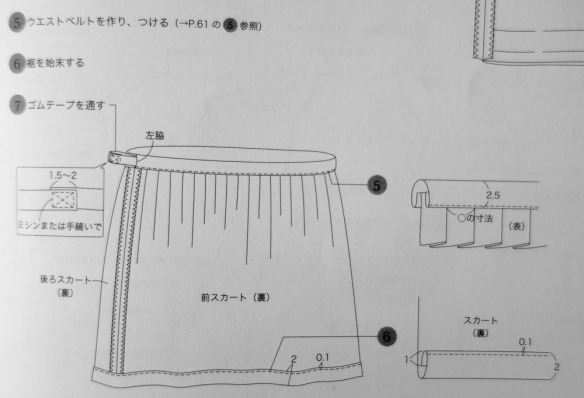
Step 6: Hem the skirt. You had folded and pressed it into place in earlier steps. Topstitch.

Step 7: Insert elastic into the waistband. Stitch the ends together as shown.

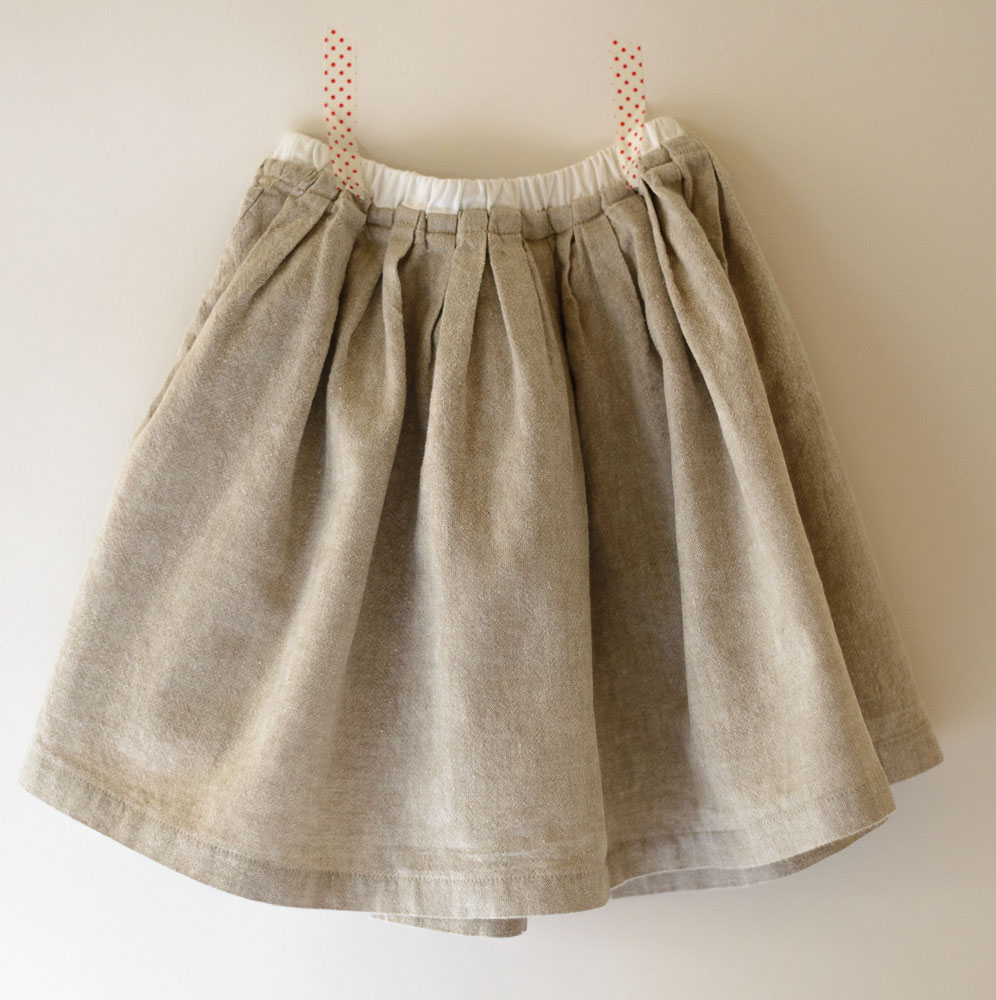
And done! You have a skirt!
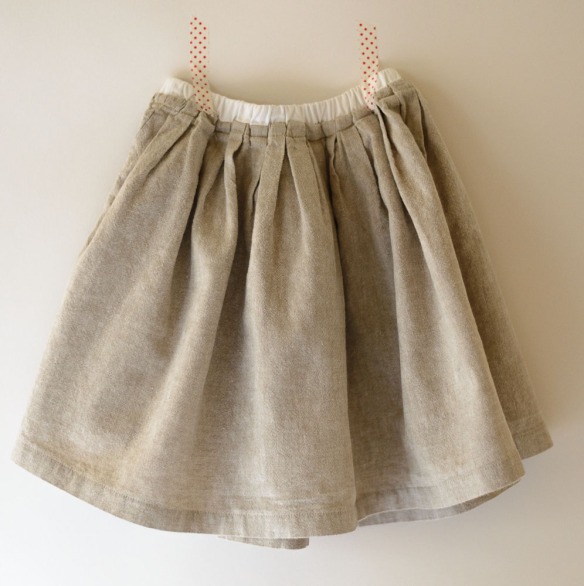
20130328-DSC_2663

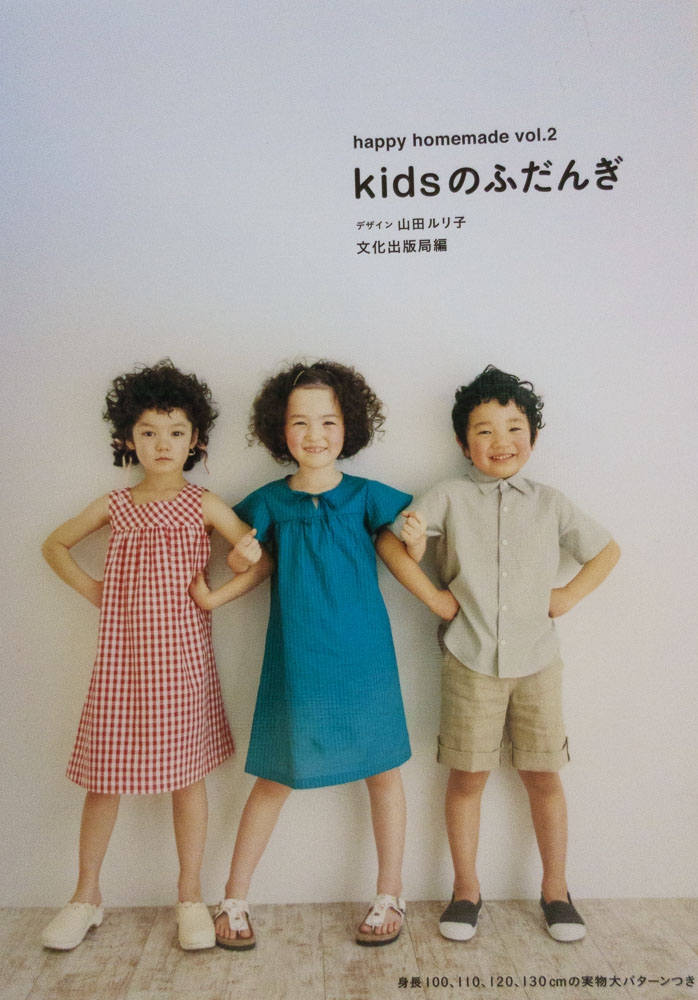
Let’s look at another, slightly more complicated pattern. Since Happy Homemade volume 2 has a lot of good basics for girls and boys, I think it’s a great book to start out with. So I’ll walk you through the pattern that Meg posted about on Wednesday. It’s a straightforward piece, but there are definitely more details than some of the even simpler pieces will have. I also want to point out that while I had Sanae check my translation, nearly everything I am providing below is taken using my four pieces of advice plus a little graphic studying.
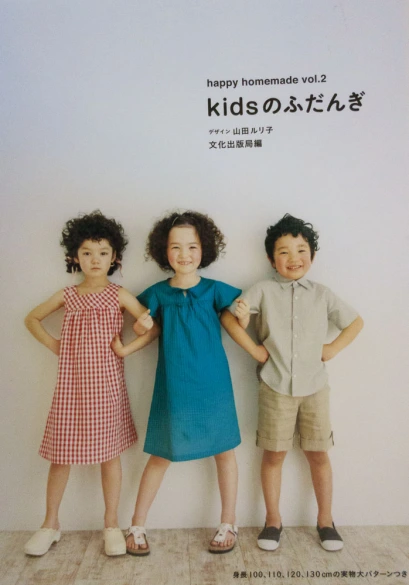
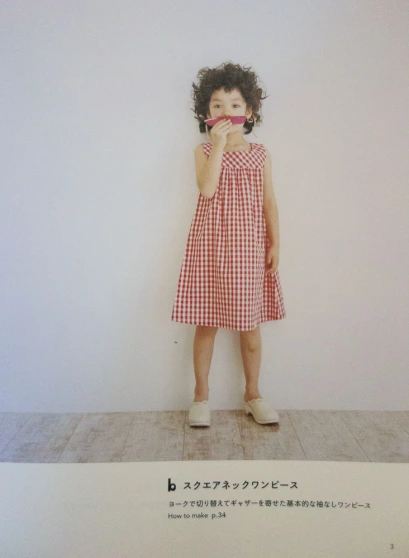
20130327-_DSC0120 20130327-_DSC0121For more detailed steps on how to get to the point at which you’re ready to sew, be sure to check out the previous posts in this series. Sanae gave info on the basics for this book in her post, which is super helpful.

Once you’ve got all your fabric pieces cut out and everything else is ready to go, direct your eyes to this diagram- like the one from A Sunny Spot, this provides a nice visual overview of the steps and the order in which you will construct the garment.
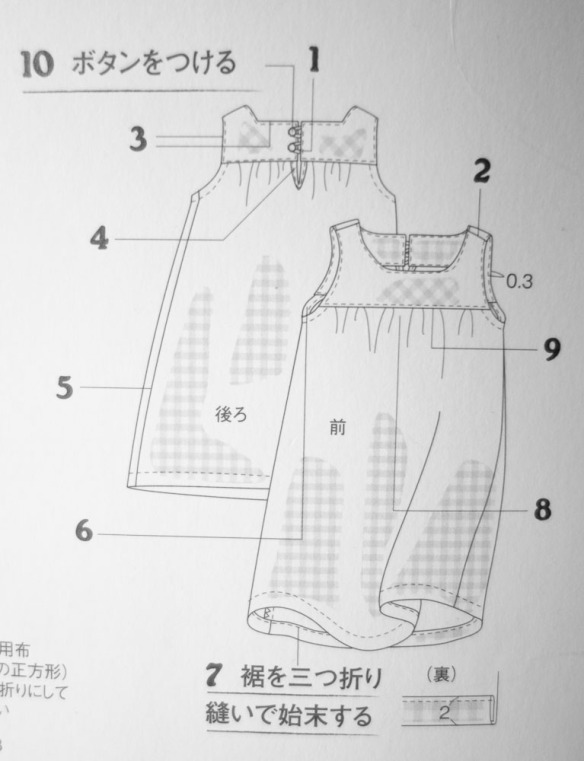
20130328-_DSC0153Before we delve in, take a moment to think about how this pattern would be constructed using the pieces you’ve cut out. We’ve got a lined front and back bodice, a back that closes with buttons and button loops, and a gathered skirt. Pretty familiar, right? Let’s dive in.

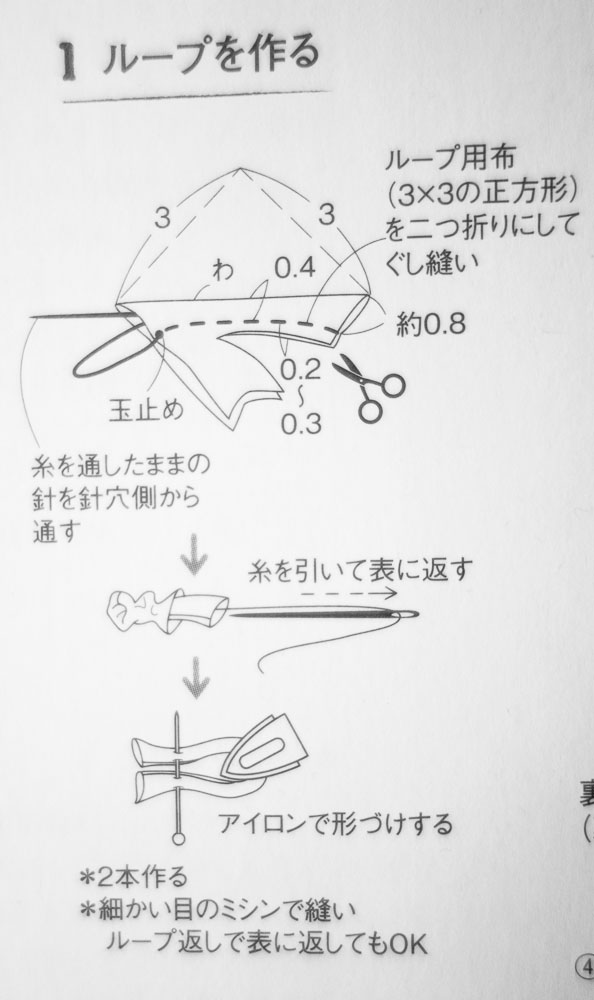
Step 1:  Construct the button loops.
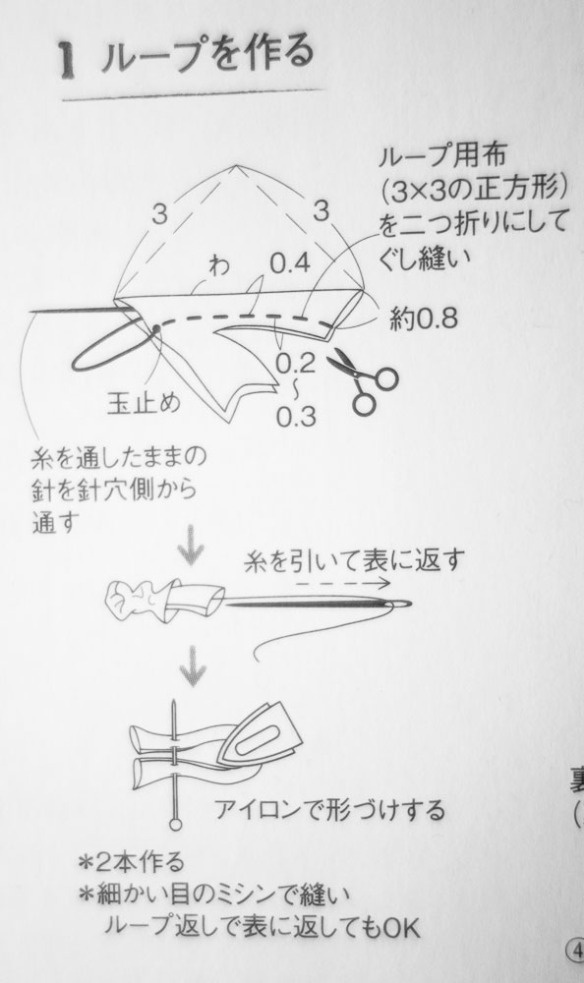
20130328-_DSC0155

  • Sew the two bias button loops from 3x3cm squares, noting the slightly curved seam line.
  • Trim the seam allowance to 0.2 cm.
  • Using a needle and thread, flip that puppy right side out.
  • Press.
  • Make 2.

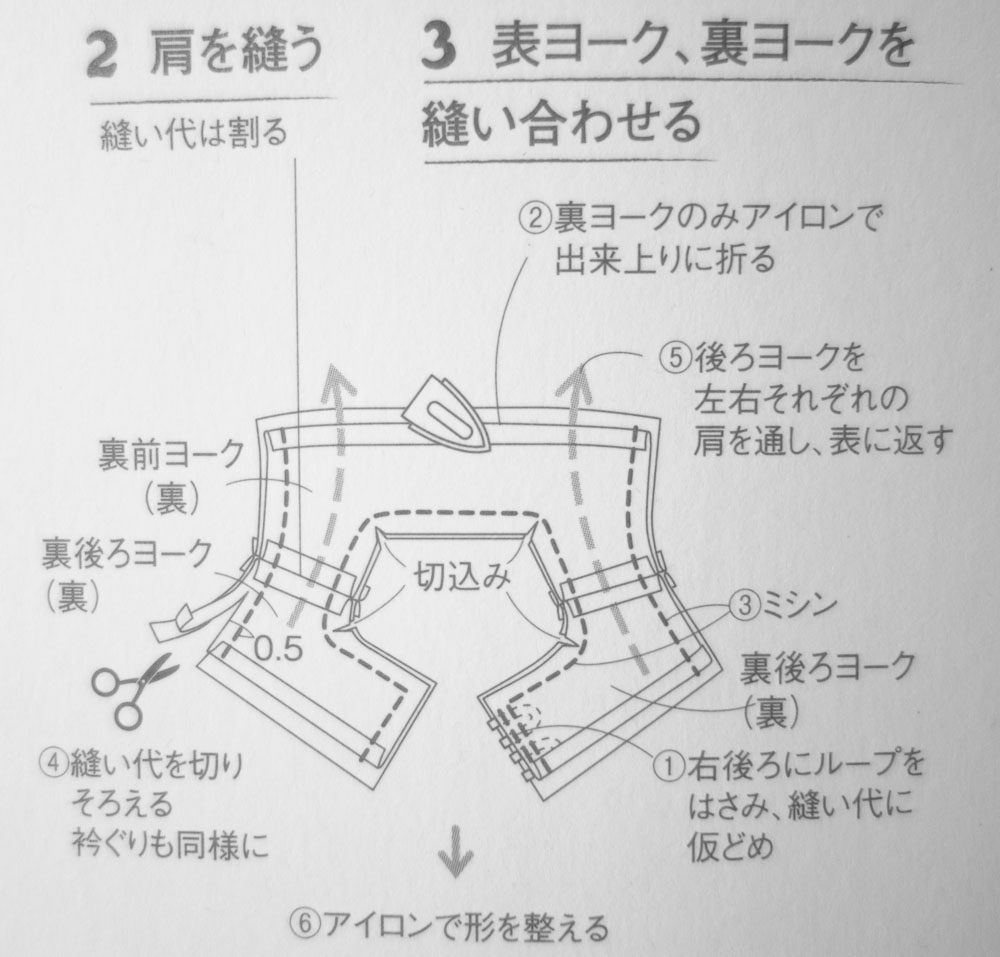
Steps 2 & 3: Construct the bodice (yoke).
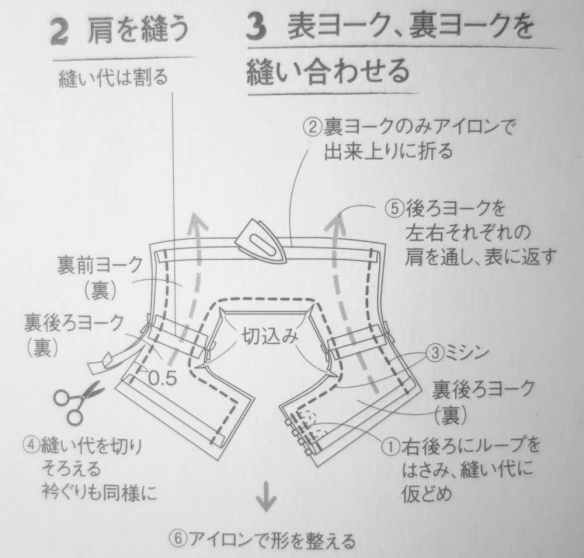
20130328-_DSC0163

Step 2: Sew the shoulders.

  • Sew the front and back bodice pieces together at the shoulder. Remember, these pieces have the standard recommended seam allowance of 1cm (~1/4 inch), so sew these pieces together with that seam allowance. Of course, you’ll want to finish your edges using your preferred method. See how the diagram shows that the seams are pressed open? Press those seams open.
  • There’s a lot of text in this pic. Again. Focus on the pictures and your knowledge of garment construction. It’s easy to feel frustrated that you can’t understand every last bit of the instructions. Don’t be! You know what you’re doing!

Step 3: Sew the front and back bodice (yoke) pieces together. Notice… there’s a lot of substeps here.

  1. Base the button loops to the right side of the back bodice piece so that when you put the outer and inner bodice pieces right side together, it will be sandwiched as shown.
  2. Press the inner front and back outer bodice pieces up along the bottom edges. I don’t see any specific measurements noted here, so I would just press up the seam allowance of 1 cm.
  3. Sew the with right sides facing. Sew along the dashed lines with the 1 cm seam allowance.
  4. Trim the seam allowance in half (from 1 cm to 0.5 cm) along the arm edges. Also clip the curves of the neckline as shown.
  5. Turn the sewn bodice right side out.
  6. I don’t know what this means. But I know how to construct a bodice, and so do you. So I’m gonna go with pressing the bodice. 🙂

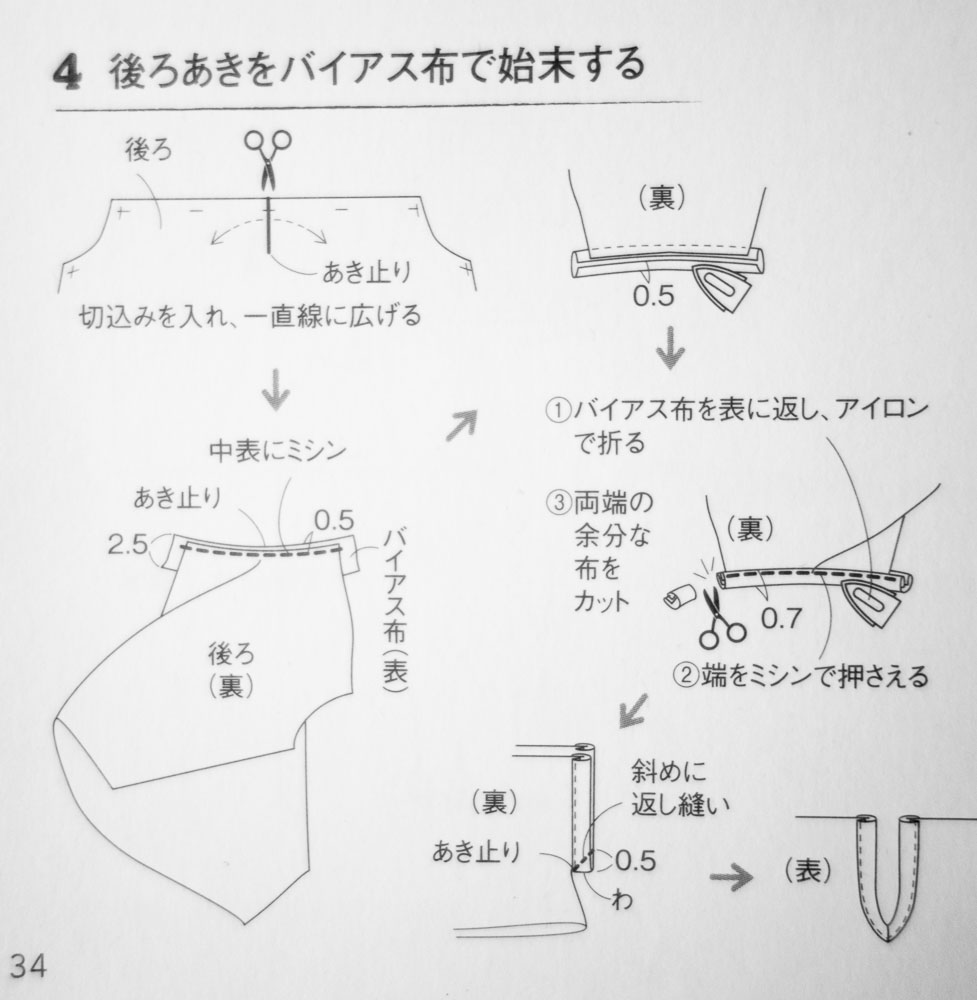
Step 4: Finish back opening/slit with bias strip (I’m not even entirely sure what this means, but we’re going to look at the pictures to figure it out.  See that 後ろ? That means we’re looking at the back. Also, the picture looks like a skirt piece. Let’s take a closer look…)
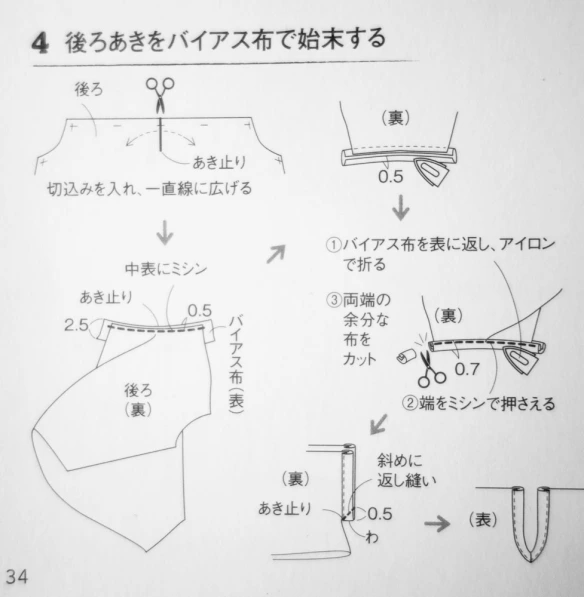
20130328-_DSC0157

  • Cut the back skirt piece. Your pattern piece has a mark indicating how far down you should make this cut.  Spread the piece apart along the cut line, following the arrows out.
  • Moving down, you’re looking at the back skirt panel again- the top part is the slit you just cut spread as horizontally as possible. Here you’ll want to sew one of your 2.5 cm wide bias strips to the right side of the skirt with a 0.5 cm seam allowance. (That character on the skirt in parentheses? 裏 indicates wrong side).
  • Back up to the top right graphic, you see to press the bias strip first out, then press the edge up 0.5 cm.
  • Next, press the whole shebang to the right side and topstitch. Trim the edges.
  • Fold your skirt piece in half and stitch along the bottom of the bias strip on the diagonal as indicated.
  • Turn your piece out… press to the wrong side.

Step 5: Sew your skirt side seams. Finish your edges as desired, press.  (see below for pic.)

Step 6: Finish the armholes on the skirt.
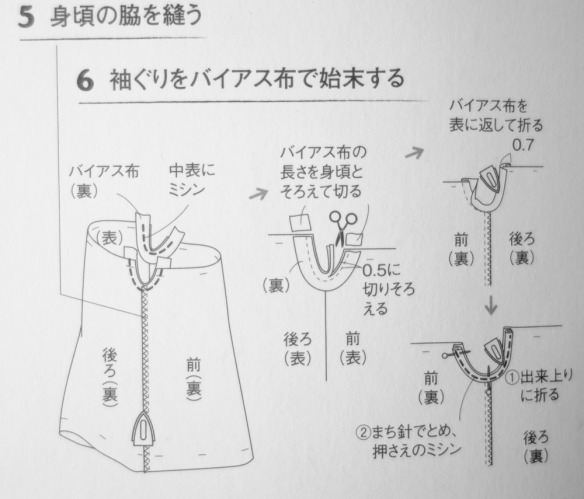
20130328-_DSC0158

  • Right sides facing (see the 表 in parentheses in the middle pick? That indicates its the right side), sew the bias strips to the each armhole on the skirt piece.  Trim the seam allowance in half.
  • Turn the bias strip out, press, then turn the unsewn edge in and press.
  • Press and pin the bias strip in place, topstitch.

Step 7: Hey, there is no illustration for step 7! A look back at the general sewing diagram indicates that here you’ll finish your hem. You should have added 4 cm or so to your skirt pieces for the hem allowance. Press the edge up 2 cm, then again another 2 cm. Topstitch.

20130328-_DSC0153

Step 8: Sew gathering stitches on the front and back skirt pieces.
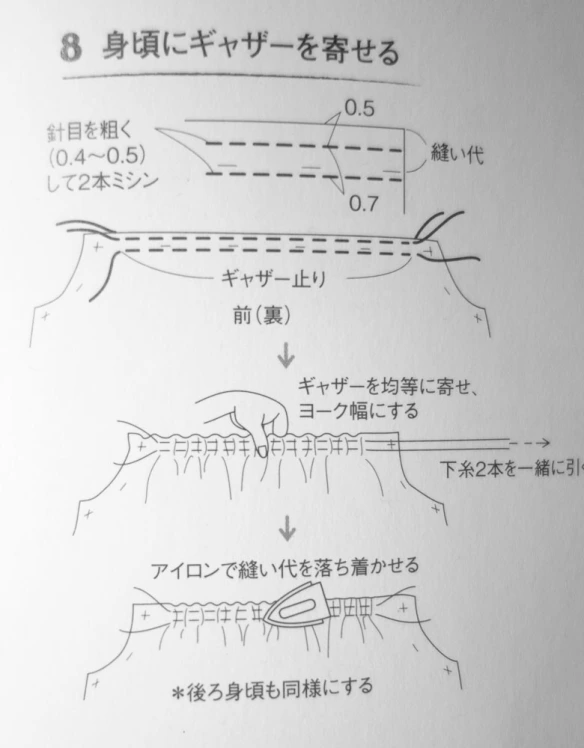
20130328-_DSC0159

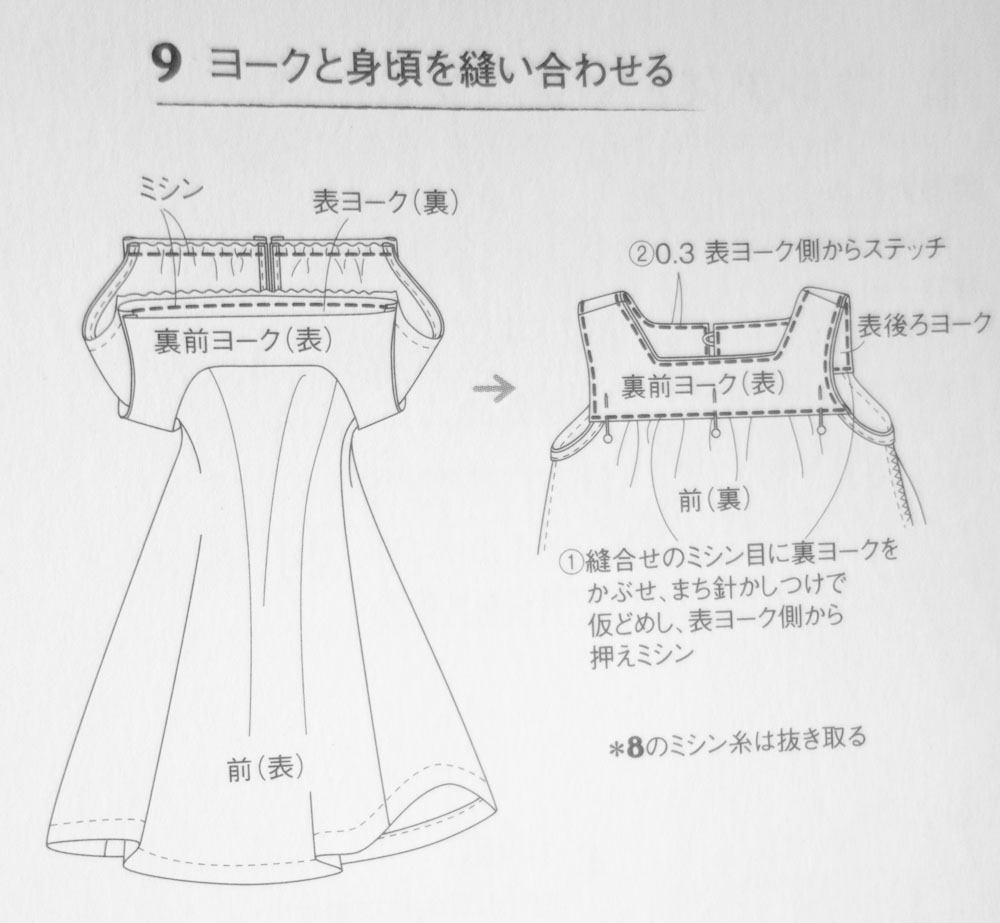
Step 9: Assemble the dress.

20130328-_DSC0160

  • Gather your skirt pieces to match the width of the bodice. Sew the gathered skirt pieces to the outer bodice piece using the standard seam allowance.
  • Flip that bodice up, press, and topstitch as indicated. Here you’ll catch that folded edge of the bodice pieces, stitching it closed will allow you to enclose the top of the skirt.

Step 10. Attach buttons. You have a dress! High five.
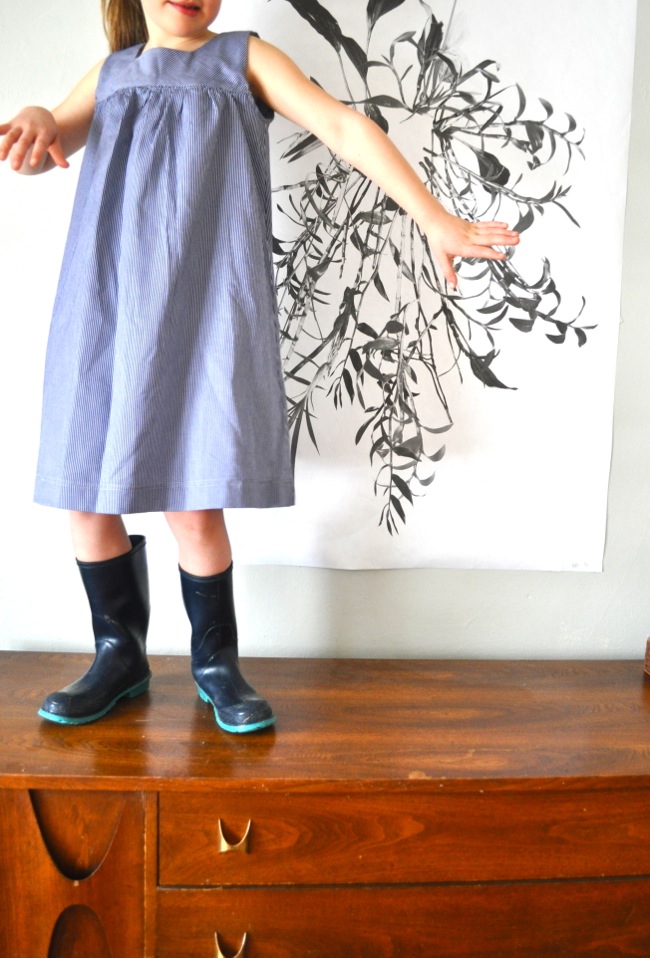
Dress and photo by Meg of elsie marley

***

Thank you, Robin, soooo much for walking us through two patterns and all your helpful hints!  If you’d like to see more of Robin’s awesome creations from Japanese sewing patterns, head over to her blog to check out her round-up!  Along with all her other beautiful work . . .
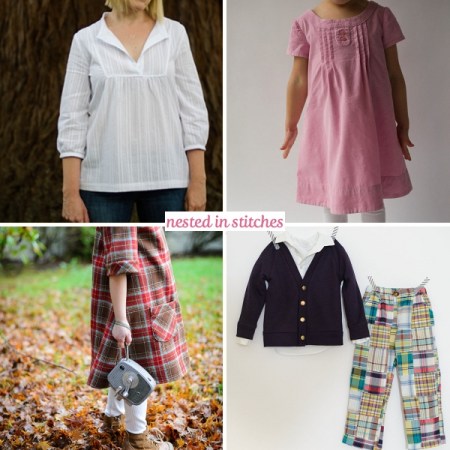
Robin_collageAnd a big thank you to all five of my guest bloggers who have shared such an amazing wealth of knowledge with us this week!  Thank you Kristin, Sanae, Meg, Frances and Robin – this week would have been nothing without you!

We may have wrapped up the guest posts, but the series hasn’t quite wrapped yet.  After all these amazingly informative posts, I think you’re ready to dive into Japanese sewing books, right?  Well check back in later today for the chance to win a Japanese sewing book of your own to dig right into!

Thanks for stopping by!
JSBS_button500

Japanese Sewing Book Series with miss matatabi

JSBS_button_Frances1Welcome to Day 4 of the Japanese Sewing Book Series!  Remember the invaluable little layout picture (see above) that Meg kept referring to yesterday?  Well, today we’re going to break that down for you a bit more and here to help us with that is Frances of Miss Matatabi.

I already introduced Frances a bit last week during her giveaway, but if you missed it, she runs an awesome online fabric shop, Miss Matatabi, that features gorgeous Japanese fabrics that are often very hard to find elsewhere.  Go check out her shop and some of my personal favorites (although it really is too hard to choose, they are all so beautiful)!  If you buy something from her shop, you know that it’s coming from a person who loves fabric as much as you do.  She’s got great customer service, her packages always arrive promptly and packaged so nicely – it really is such a treat to get fabric from her!

On her blog, she shares some of the things she sews, like this adorable Geranium dress for her daughter, or this amazing Washi dress with 3/4 sleeves.  And I REALLY want this scarf for myself!  She’s got impeccable taste and we obviously share a love for Nani Iro, but beyond that I’ve found a true friend in Frances.  She’s incredibly smart, kind and thoughtful and I’ve really loved getting to know her the last few months.  And I’m so excited to have a friend in Tokyo to shop with next time I visit!

Speaking of which, I’m lucky to help introduce a big project that Frances has been working on with her friend, Angela!  It’s called the Tokyo Craft Guide and it showcases some of the best craft shops around Tokyo. With over 50 shop listings organized by neighborhood, they have curated a series of craft-shopping-excursions complete with illustrated walking maps, shop highlights, favorite cafe spots, and even some Japanese-inspired project tutorials. An e-book will be available next month, but in the meantime they will be offering additional shop profiles, events, and interviews on their blog.  You really should go check it out!

Here’s Frances . . .

***

Hello! I’m absolutely thrilled to be here for the Japanese Pattern Book series. Thank you for inviting me to participate, Cherie! I’m Frances, an Australian living in Japan and I blog about my sewing adventures at Miss Matatabi. I have been sewing from Japanese pattern books for about 5 years and I especially enjoy Japanese sewing patterns for children. The styling is wonderful, they are great value for money, and I love being able to think in centimeters rather than inches!

Sewing Lesson Book ISBN 978-4-529-05076-0 : photo by miss matatabi
Kids Clothes Sewing Lesson Book ISBN 978-4-529-05076-0

One good thing about Japanese sewing pattern books is that they usually include a diagram showing the pattern layout. This gives you a clear idea of how your yardage will be used and therefore eliminates any guesswork. This is helpful if you cannot read Japanese. However, there are some terms that will be useful to know which will make your sewing project go even smoother. Japanese Sewing Books has an extensive list of translated sewing terms here.

Today I’m going to talk about how to lay out your pattern pieces and translate the terminology on the pattern diagram. I have chosen two projects from Kids Clothes Sewing Lesson Book (子供服ソーイング LESSON BOOK) and another from Easy to Understand Baby and Kid’s Clothes (いちばんよくわかる赤ちゃんと小さな子の服) to show you.

Let’s talk about the basics of the pattern diagram starting with this very simple pair of shorts from Kids Clothes Sewing Lesson Book.

Kids Clothes Sewing Lesson Book ISBN 978-4-529-05076-0 : photo by miss matatabi
Pattern A : Kids Clothes Sewing Lesson Book ISBN 978-4-529-05076-0

If you are new to Japanese patterns and want to try a simple project these shorts are a good place to start. Let’s have a look at the pattern layout.

Shorts pattern layout : Kids Clothes Sewing Lesson Book ISBN 978-4-529-05076-0

Pattern A : Kids Clothes Sewing Lesson Book ISBN 978-4-529-05076-0

The numbers (in cm) running down the left of the diagram indicate the yardage needed for each size. For example, 50cm of fabric for size 100cm, 60cm for size 110cm, and so on. The number along the bottom shows the width of the fabric. The rest of the markings on the diagram are particular to each pattern, although there will always be some overlap of terms.

I made a size 100cm and so the pattern called for 50cm of fabric. As you can see there are only two main pattern pieces and two pockets. The main pattern sheet has only one pattern piece for the shorts and one for the pockets, as they are identical. Take care when tracing patterns to make sure you make enough copies of each piece. The diagram shows you to place the fabric right side up and cut without anything on the fold. Easy! Please keep in mind that if you are using a directional print or stripes and want the left and right side to match, you may need to use more fabric than the pattern calls for. I wanted to match the print I used so I prepared around 65cm of fabric.

As Meg mentioned yesterday, you are going to need to add the seam allowances to your pattern. The numbers along the edge of the pieces refer to the seam allowance, for example the waist has 4cm seam allowance. Where there are no numbers a standard 1cm seam allowance is required. Some people like to trace the pattern as is, then add the seam allowance directly on to the fabric. I prefer to add the seam allowances when I am tracing the pattern. You can choose which way works best for you.

Kids Clothes Sewing Lesson Book ISBN 978-4-529-05076-0 : photo by miss matatabi

Pattern H-1 : Kids Clothes Sewing Lesson Book ISBN 978-4-529-05076-0

Next is a ruffle sleeve blouse, which is a little step up in terms of difficulty and pattern layout wrangling.

Ruffle blouse pattern layout : Kids Clothes Sewing Lesson Book ISBN 978-4-529-05076-0

Pattern H-1 : Kids Clothes Sewing Lesson Book ISBN 978-4-529-05076-0

The fabric is arranged right side up here, and the selvedges are folded underneath to meet at the back. The main blouse pieces are cut on the fold, while the ruffle sleeves, arm facings, and back opening are not. Lay your main blouse pieces on the fabric as shown in the diagram and then cut them both on the fold. You will need to cut 2 fabric tab pieces. There is only one pattern piece so cut that on the double layer, although not on the fold. Unfold the fabric to cut the other pieces on a single layer of fabric. The back facing piece has diagonal stripes in the diagram which indicates that you need to cut one from fabric, and another from interfacing. Be sure to transfer any markings on the pattern, like pleat marks, to your fabric too.

This book is unique in that it includes patterns for pieces which are simple squares or rectangles. Many Japanese sewing books require you to draft your own. Don’t worry though, it is very easy to do but also important to know which measurements you need for the size you are making. Let’s have a look at a baby shirt pattern from Easy to Understand Baby and Kid’s Clothes (いちばんよくわかる赤ちゃんと小さな子の服).

baby tunic pattern layout : Easy to understand baby and kids clothes : ISBN 978-4-529-04842-2

Pattern B : Easy to understand baby and kids clothes ISBN 978-4-529-04842-2

The top diagram shows a very similar layout to the patterns mentioned above. The fabric folded around to the front so wrong sides are together and the main pattern pieces cut on the fold. You can see here too that no extra seam allowance needs to be added to the neck and arm lines. The bottom diagram shows the pocket and front opening facing both of which are pieces provided on the pattern sheet. The front opening facing has shading which indicates that you need to cut one piece out of interfacing. A pattern piece which requires interfacing is most often shown with diagonal stripes or shading. The loop, armhole facing, and neck facing are pieces you will need to make yourself. They are cut on the bias and have the measurements written beside each one. The shirt comes in sizes 70cm to 100cm and the numbers next to the facing pieces reflect the measurements for each size. If you are making size 70cm you need to cut two armhole facing strips 4.4cm wide x 27cm long. For the neck facing you need one strip measuring 4.4cm wide x 37cm long. The loop is the easiest! Cut a piece 2cm wide x 6cm long and you are all done!

Sorry to interrupt Frances’ post, but I wanted to add just a couple things that I thought might be helpful to know along with all of the great information provided above.  Some of this has been touched on already, but sometimes another graphic is helpful 😛

layout(click image for a larger size)

  • The line along the bottom of the image shows you how to lay your fabric.  If it’s just a straight line, you lay your fabric out flat.  If it has a curve in it (like this one), you’ll need to fold your fabric.  The dots on either end of the line represent the fabric selvedges.  One edge of the fabric is lined up with the dot on the right and then the fabric is folded under where the line curves.  The dot that is about 1/3 of the way in is where the other fabric selvedge should end.  That way the sleeves, pockets, yoke and other small pieces are all cut on a single layer of fabric, while the dress front and back are cut on the fold.
  • わ ‘wa’ means fold.  You’ll see it a lot in these layout diagrams and also on the pattern pieces.  Be sure to place these pieces on the fold of your fabric.
  • 枚 ‘mai’ is a Japanese counter for thin, flat objects like paper or a piece of fabric.  There will always be a number in front of it like 1枚 or 2枚, which tells you that you need to cut 1 or 2 of that pattern piece from the fabric.
  • Frances already mentioned this above, but when you see shading or diagonally striped pieces, that indicates that those pieces need to be cut from the fabric and also need interfacing.

Ok, back to Frances 🙂

How do you feel about all that? Please let me know if you have any questions. I hope you are going to try sewing from Japanese pattern books. Don’t let any language barrier put you off. Enthusiasm is more important than being able to understand each word in the pattern so jump in and give it a go. You can do it!

Ruffle Blouse and shorts by Miss Matatabi

If you are interested in seeing a cheeky monkey wearing the above outfit come say hi to us over at Miss Matatabi today.

Thank you so much, Cherie!

***

Oh that outfit she made for her daughter is SO cute!  Thank you, Frances, for all the amazing information and for sharing it with us today!  Definitely stop by her blog and her shop for more gorgeous goodies and don’t forget to check out the Tokyo Craft Guide!

Frances_collage

Can you believe tomorrow is that last day already!?  Join us for the fantastic conclusion to the series and . . . oh yeah, did I say something about a giveaway!?  Hmm . . . guess you better check back for more details 😛

JSBS_button500

Japanese Sewing Book Series with elsie marley

JSBS_button_Meg

It’s already day three of the series and we’re really starting to get into the meat of these books. Honestly, when I tried sewing from a Japanese sewing book for the first time, the most intimidating part for me was unfolding the huge pattern sheet and not being able to figure out which pieces I needed for the garment I was trying to sew. And the most time consuming part, by far, is still tracing the pattern and adding seam allowance. But here to offer us some helpful tips is Meg from elsie marley.

I’m assuming that you all know Meg from elsie marley (and if you don’t, you should, like right now) because she is one of those “must follow” bloggers if you’re into sewing children’s clothing at all. Everything that comes out from under her presser foot is pure gold. Seriously original and stylish clothes that are not too flashy, but always cool. And she was one of the bloggers that turned me on to Japanese sewing books in the first place! I think this adorable top must have been one of the things I’d seen on her blog and it had me hooked on both her style and Japanese patterns.

She is probably most well known for being the creator and host of Kids Clothes Week (formerly known as Kid’s Clothes Week Challenge or KCWC for short). Meg came up with an idea to challenge people to devote one hour per day for an entire week to sewing children’s clothes and ended up creating what is one of the most popular, most anticipated, and most fun sewing events out there. For one week, literally hundreds and hundreds of people are sewing together, sharing their creations, being inspired, forming a community, being productive and having so much fun doing it! There is another one coming up soon, so be sure to check out the brand-spanking-new KCW blog for all the details.

Not only is she an awesome seamstress with the power to motivate hundreds to create a sewing army several times a year, but she is also ridiculously funny (her posts always crack me up) and seems so real – no fake shiny veneer on her blog – just real glimpses into her real life. Awesome cook, talented photographer, crochet-er, rockin’ mom (check out this cloud loft bed and her chalk paint!) and all around cool person. Here’s Meg . . .

***

Hello you & mie readers! I’m so happy to be here discussing one of my favorite topics–Japanese sewing books! I love the modern and simple shapes of the clothes and can’t resist the beautiful books. Each book is like a new puzzle to solve. It is an extra challenge, but a fun one! I promise after this series you will be practically fluent in Japanese sewing books. That said, I neither speak nor read a lick of Japanese. I can look at pictures and follow arrows. And that, my friends, is pretty much all you need.

***************************

happy homemade vol 2

I’m going to lead you through a few confusing areas in Japanese sewing books:

  • how to determine what pattern you need
  • how to locate it on the pattern sheet
  • how to add seam allowance

Ready? Here goes…

pattern (b)

How to Determine What Pattern you Need

After Kristin’s and Sanae’s posts you know that the photos are in the front of the book and the directions in the back. Now you only need to match the pretty picture of what you want to make with the instruction to make it. If you look at the picture there will be, in most books, a letter of the alphabet somewhere on the picture (i.e. A, B, or C, not a Japanese character). Some book will use numbers, but most use letters. The dress above is pattern b. If you look closely you’ll see it also says, “How to Make p. 34.” This is super helpful, but sadly not in every book. If there is no page number on your pattern picture, head to the back to look for your letter (or number). They won’t usually be in alphabetical (or numerical) order. The directions are in whatever order the author thought best, but keep looking, you’ll find it.

pattern sheet from Happy Homemade vol 2

How to Locate your Pattern on the Pattern Sheet

Once you find it, you will be ready to start tracing your pattern! Easier said than done, you are thinking. I mean look at that crazy thing up there! Relax your eyeballs and you’ll be fine. All pattern sheets are different, but they do actually want you to find you pattern so there is order in that chaos somewhere. In this book (Happy Homemade Vol.2) there is a key: on one side are patterns a,b,c,d,f,g….and on the other side e,h,i,l,m…

pattern key

Other pattern books do it differently. On all pattern sheets there are two or three colors. Look for you pattern letter. Is it green? Then your pattern (and all the markings that go with it) will be drawn in green. Is it black? Your pattern will be black. Once you start to decipher the code, the crazy pattern sheet starts coming into focus.

bodice pattern

Some pattern pieces will be for two or three different garments. I’m making dress b, can you see the bodice piece I need up there? It is in the upper, middle of the photo, drawn in black. That piece is also used for dress a. See the little line drawn from the letters to the pattern? Those are your arrows and they are very helpful. Follow the arrows, people.

pattern piece layout

Okay, after you know–sort of–where your pattern pieces are, go back to the direction page and look for the pattern piece layout picture. This little picture is invaluable. It will show you all the pattern pieces you need (and need to find on the pattern sheet). It will also tell you what pattern pieces aren’t on the pattern sheet. Oh that’s right, some are not there, but don’t worry they are usually just long rectangles or something simple. On the pattern for dress b, I need bias tape 2.5 cm wide and 15 or 20 cm long. Or maybe both. Or maybe one 15cm long and two 20cm long. I don’t know, because I can’t read it! This is where you have to look at the rest of the pictures and puzzle it out. Look at pictures and follow arrows. You can do it!

adding seam allowances

How to Add Seam Allowances

Now you know–pretty much–what pattern pieces you need. Go back to the pattern sheet and locate all of them. To trace (and you have to trace, there is no cutting that pattern sheet up) the patterns I use freezer paper, but use whatever you like. Japanese patterns are a bit odd because they have no seam allowances. Let me say that a little louder, THERE ARE NO SEAM ALLOWANCES IN JAPANESE PATTERNS. I’ve sewn many patterns from these books and I still have to remind myself every time. So how do you add seam allowances?

I like to use a trick my friend, Mary Jo taught me.

  1. Tape two pencils together.
  2. Draw a line with both at the same time.
  3. Measure the distance between them.

It is usually about 1/4 in or 1 cm–the perfect seam allowance. Now you can trace the pattern and draw the seam allowance at the same time. (In the photo above, my pattern shifted a bit, but I was drawing with my left hand and taking a photo at the same time, so cut me some slack).

pattern piece layout

One more thing about seam allowances and then I’ll be done. Go back to the pattern piece layout picture. It’s invaluable, remember? You can see that the pattern pieces are drawn and then the seam allowances are drawn darker. The default seam allowance is 1 cm, but sometimes they want different seam allowances in different places. In the picture above do you see the 4 with the arrow drawn to the bottom? For dress b the seam allowance on the bottom edge is 4 cm. You can’t use the pencil trick for this, you’ll have to get out your handy ruler. Sometimes there will be edges that require no seam allowance; these will be marked 0. Keep referring back to your pattern piece layout picture and you’ll be good to go.

When in doubt follow arrows and look at more pictures. Good Luck!

***

She makes it seem so easy, doesn’t she? But Meg is right, you CAN figure it out, you just have to train your eye a bit and know what to look for. Now be sure to head over to elsie marley to see this adorable dress she made for her daughter.

DSC_0525And here’s some more eye candy for you – all to be found on elsie marley. Thanks Meg, for being here and dropping some of your knowledge on us.

Meg_collage

Only 2 days left of the series!! We have two more great posts coming up this week AND a giveaway! Anyone interested in winning a Japanese sewing book?! Well, be sure to check in the rest of the week so you don’t miss a thing 🙂

JSBS_button500